Designing a guest room that doubles as an office can be a real puzzle, but it’s such a smart way to make the most of your space. The trick is to keep things comfy for guests, yet practical for work—think versatile furniture and a layout that just makes sense.
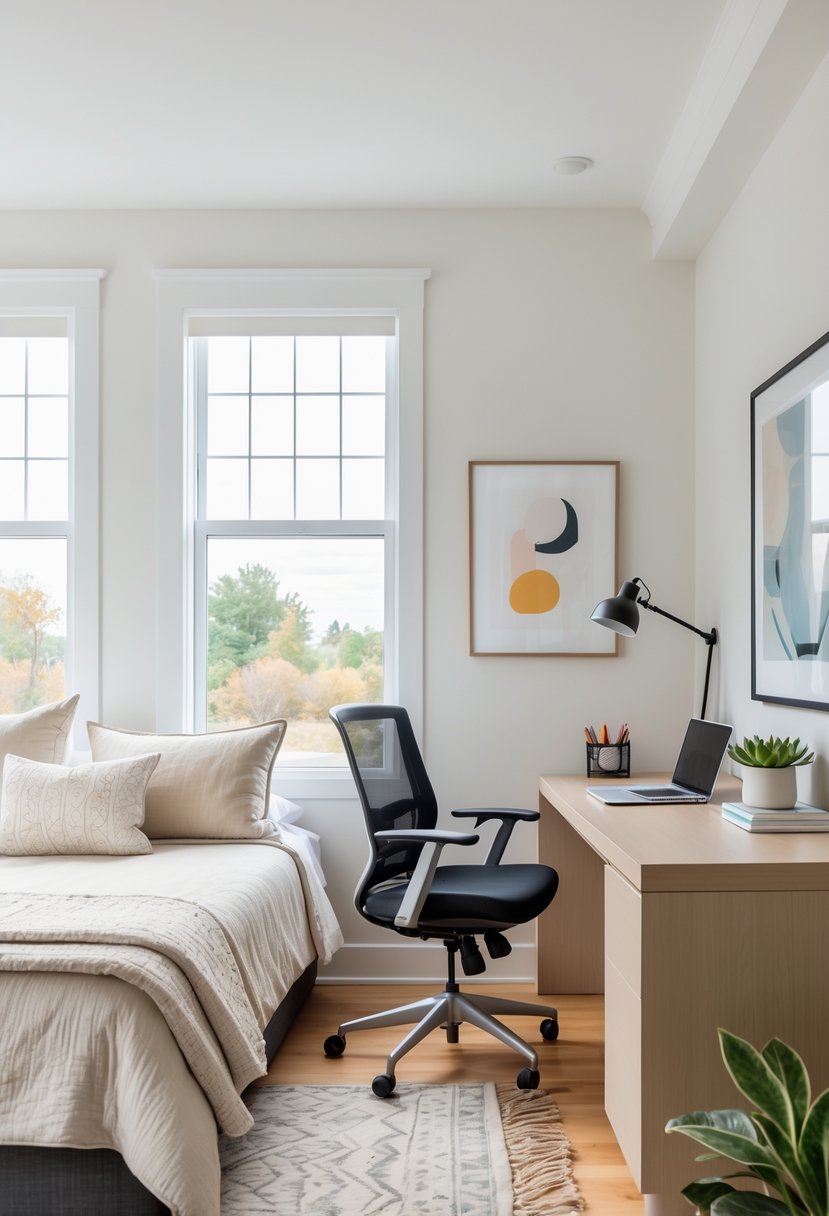
We all want a space that welcomes visitors but doesn’t leave your work area looking like a disaster zone. Swapping in a pull-out sofa, sneaking in hidden storage, and sticking with neutral colors can really help the room feel calm for both sleep and productivity.
Lighting and decor matter too. They set the mood—professional when you need it, cozy when you want it.
Understanding the Guest Room Office Concept
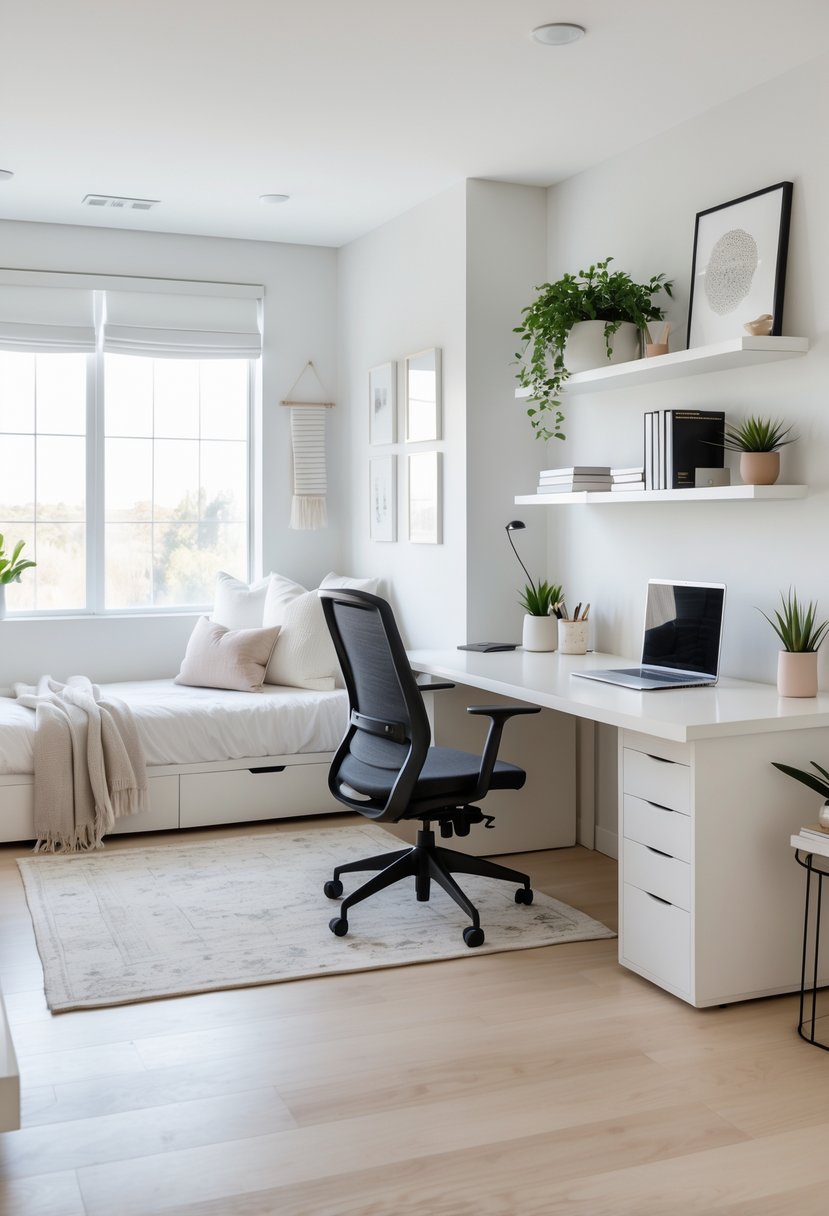
A guest room that works as an office brings together function and comfort in one spot. Getting that balance right means making smart choices with furniture and staying organized.
This kind of setup saves space, but you’ve got to plan it out or you’ll end up with chaos. Nobody wants a room that’s both cluttered and awkward.
Benefits of a Dual-Purpose Space
A guest room office combo helps you squeeze every bit of usefulness out of a small home. You get a comfy spot for visitors and a real workspace for yourself.
Having a dedicated office in the guest bedroom means you’re not sacrificing a whole room just for work. It keeps your office stuff contained, away from the rest of the house.
Multi-use furniture—like foldable beds, sleeper sofas, or wall desks—really makes the most of a tight spot. Plus, keeping work and rest areas in check can help you draw a line between your job and your downtime.
Common Guest Room Office Challenges
Trying to blend a guest room with an office can get messy fast if you’re not careful. Storage is usually the big headache—where do you put both your office supplies and your guests’ stuff?
If you don’t organize things, the room ends up feeling cramped. Guests want privacy and comfort, but you still need a spot that helps you focus.
Noise and visual separation matter, too. It’s tough to get the vibe right for both sleeping and working.
Keeping the room tidy means you’ll want furniture and storage that hides your gear and personal things. Lighting should work for both heads-down work and winding down at night.
Key Planning Considerations
When you’re planning, it helps to zone the space. Define a work area and a rest area, even if it’s just with a rug or clever furniture placement.
Go for furniture that does more than one thing—Murphy beds, fold-away desks, storage ottomans. It’s all about saving space and pulling double duty.
Don’t forget about ergonomics. Your chair and desk should actually be comfortable to use, and the bed should be good enough for guests to sleep well.
Lighting is huge. Layer it up with different options so you can switch from work mode to chill mode in seconds.
Tech stuff matters, too. Make sure you’ve got enough charging spots and a way to wrangle cords so they don’t take over.
Good storage keeps guest items and office supplies separate. Shelves, labeled bins, hidden compartments—all of that makes it easier to keep things neat.
Optimizing Layout and Space
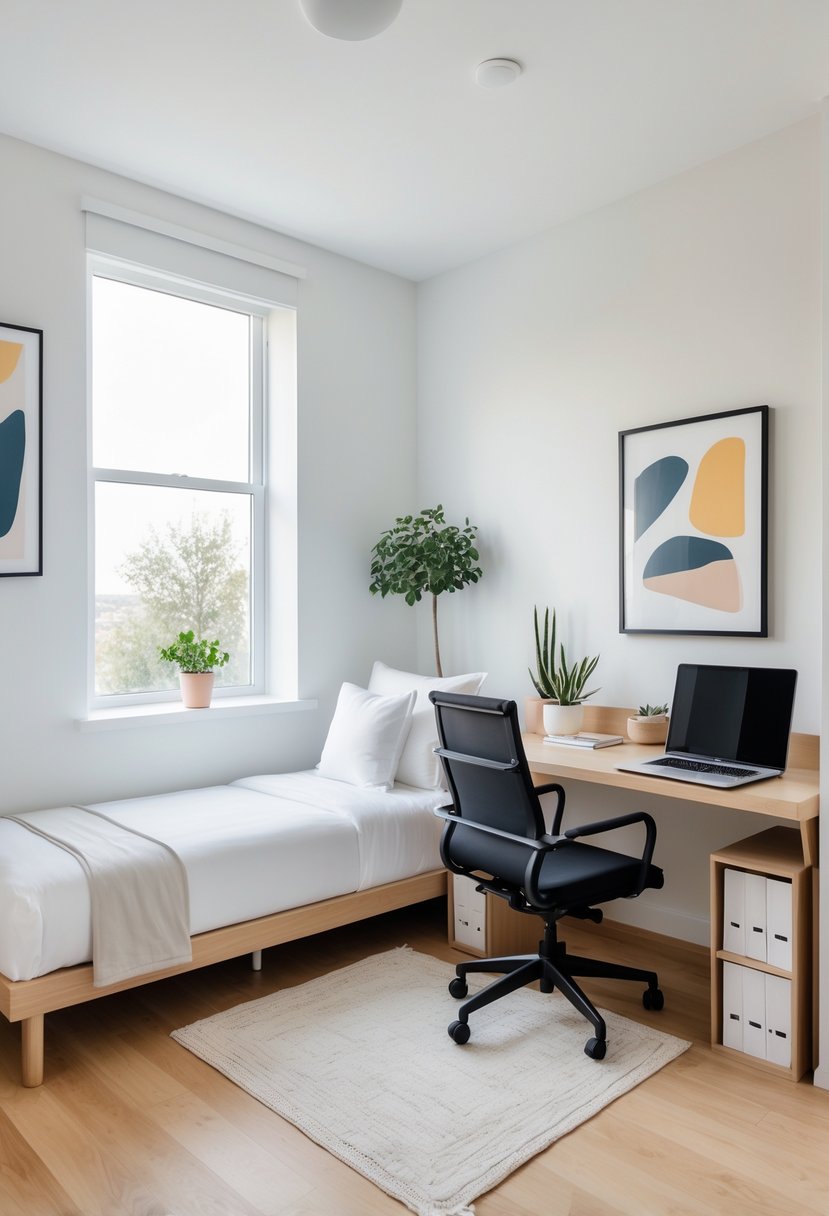
A guest room office combo has to feel both comfortable and actually usable. You’ll want to think about where the room is, how you use every bit of space, and how you split things up for both work and hosting.
Choosing the Ideal Room Location
Choosing the right room is a big deal. Pick a quiet spot, away from the busiest parts of your home, so you can focus and your guests can relax.
Natural light makes a world of difference—work feels easier and the guest area is more cheerful. If you can, pick a room with space for both a bed and a desk that doesn’t feel crammed.
Being near a bathroom is a nice bonus for guests. It just feels more private that way.
Maximizing Small Spaces
Small rooms need a little creativity. Go for furniture that multitasks, like a pull-out sofa or a daybed.
Built-in or wall-mounted desks save precious floor space. Use shelves and wall cabinets to keep the clutter off your desk and out of sight.
Light colors and mirrors open things up and make the room feel bigger. Keep the decor simple and purposeful so the space doesn’t get overwhelming.
Room Zoning Techniques
Zoning is your friend. Use curtains, screens, or a shelving unit to create a sense of separation.
Set the desk by a window or tuck it into a corner to define the work area. Keep the bed on the other side to give guests their own spot.
Lighting helps, too. Task lights at the desk and softer lamps by the bed make it easy to shift the mood.
Selective Furniture Solutions
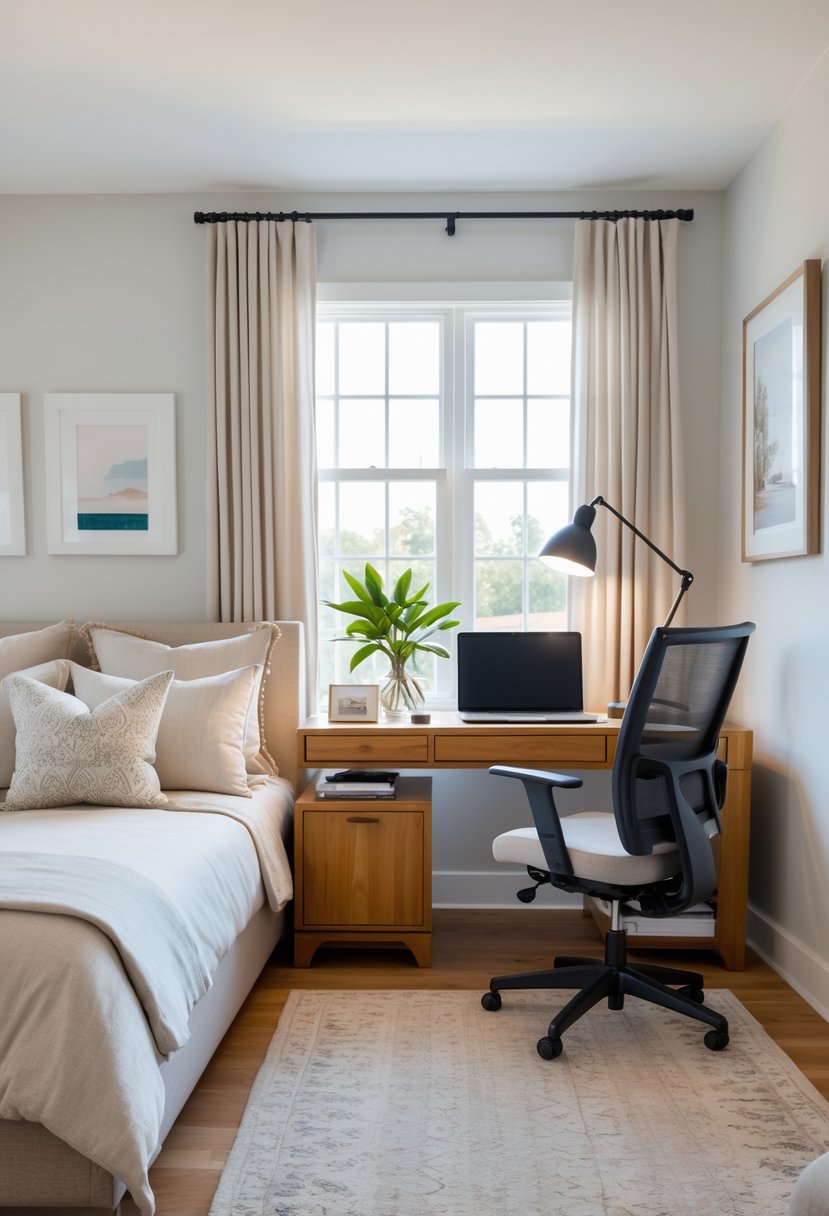
Picking the right furniture is everything in a guest room office. Look for pieces that save space, offer flexibility, and can do more than one job. That’s how you keep things comfy for guests and practical for work.
Multi-Functional Furniture Overview
Furniture that does double duty is a lifesaver. Desks with storage or fold-down tops keep your work stuff organized but out of the way.
Ottomans with hidden compartments give you extra seating and stash space. Modular and mobile pieces mean you can rework the room when you need to.
Nesting tables are handy—they show up when you need them and disappear when you don’t. The goal is to get both style and function out of every piece.
Sofa Beds and Daybeds
Sofa beds and daybeds are classics for a reason. During the day, they’re a comfy seat; at night, they turn into a bed.
If you’re picking a sofa bed, go for one with a memory foam mattress. Your guests will thank you. Some even have built-in charging ports and lights—super convenient.
Daybeds work well if the room is really tight. They’re cozy for lounging or working, and they don’t eat up space.
Murphy Beds for Space Saving
Murphy beds are game-changers. They fold up into the wall or a cabinet, so you get your floor back during the day.
Look for a model with a smooth mechanism and a finish that matches your style. Some Murphy beds come with built-in storage or even a desk, which keeps the workspace ready even when the bed’s down.
It’s a solid option if you’re trying to get the most out of a small room.
Workspace Design for Productivity
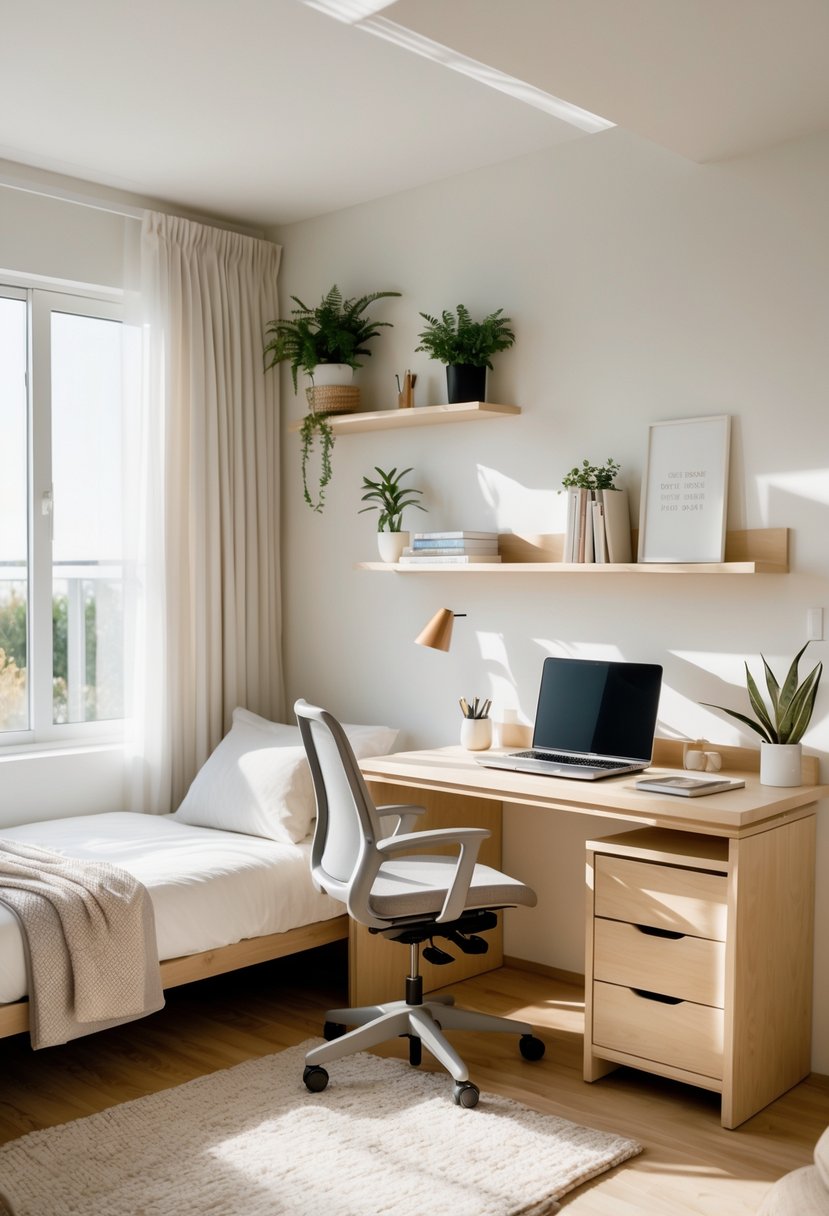
A workspace in a guest room has to feel good to use but shouldn’t take over. The right desk, chair, and tech setup can make all the difference.
Built-In and Compact Desks
A built-in desk fits right into a nook or corner and keeps the floor open. Shelves or drawers help keep clutter at bay.
Compact desks or skinny console tables are great if you’re short on space. You get just enough room for a laptop and some papers, but it won’t dominate the room.
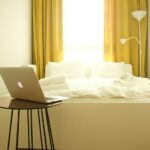
Setting up near a window gives you natural light, which is always nice. Wall-mounted desks are another way to save space and can even double as a standing desk.
Ergonomic Seating Selection
A good chair is non-negotiable if you’re working a lot. Go for one that adjusts, supports your back, and doesn’t leave you sore after a couple of hours.
If space is tight, folding or stackable chairs with a bit of cushion work in a pinch. Lounge chairs add some coziness, but they’re not great for long work sessions.
Try to pick a chair that fits the look of the room but still does the job.
Tech and Power Management
Easy-to-reach outlets and charging spots make life easier. Surge protectors with USB ports let you plug everything in without a mess.
Cable organizers keep wires from taking over. You can even build a charging station into your desk or use wireless chargers to cut down on cords.
Strong Wi-Fi in the guest room is a must. Nobody wants dropped video calls or slow downloads.
Guest Comfort and Hospitality
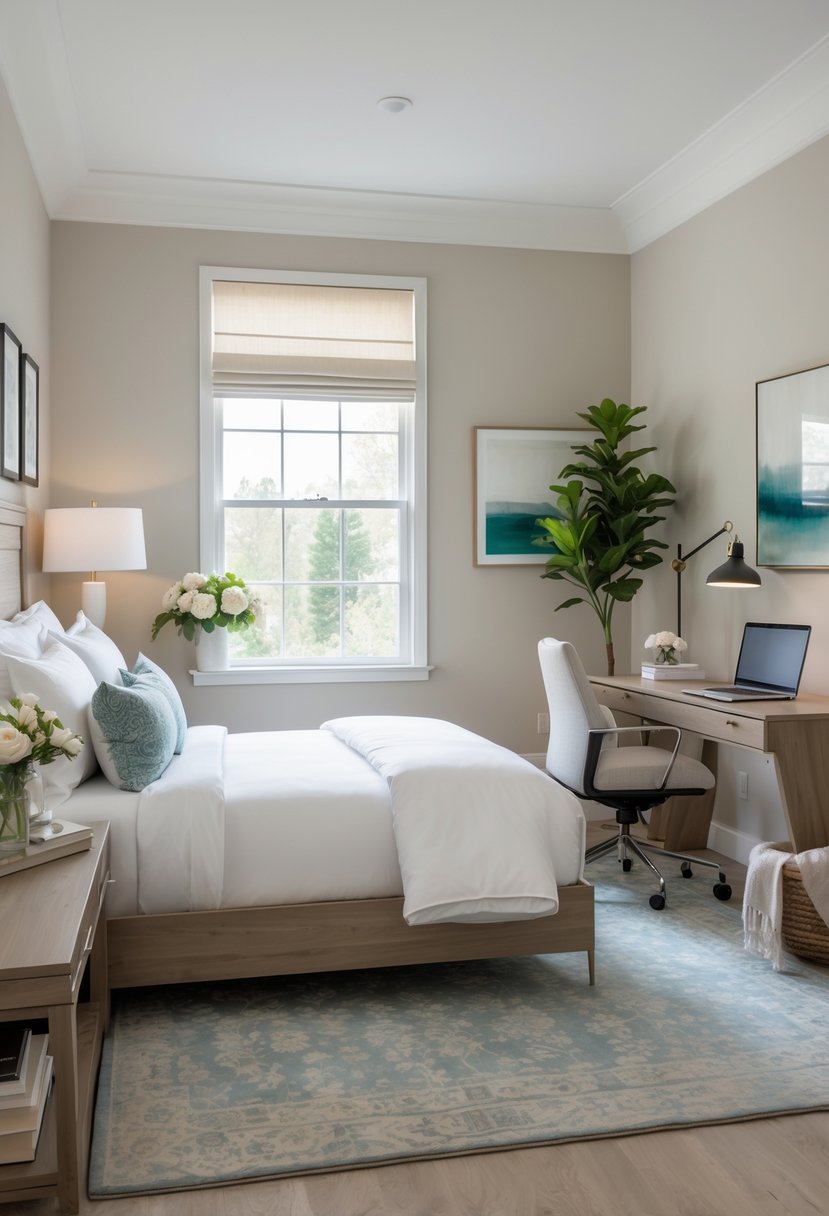
If you want guests to feel at home, it’s all about the details. Good bedding, thoughtful storage, and a few personal touches go a long way.
Bedding and Sleeping Essentials
Don’t skimp on the mattress or sofa bed. Support matters, even if people are only staying a night or two.
Layer the bedding so guests can adjust if they get too hot or cold. Soft cotton or linen sheets are always a safe bet.
A thick comforter, extra blankets, and plenty of pillows (at least two per person) keep everyone happy. If you can squeeze in a daybed, it’s a nice way to add both seating and sleeping space.
Stick to neutral bedding—it’s easier on the eyes and works for everyone.
Storage for Guests
Even in a small room, guests need somewhere to put their stuff. A nightstand with drawers or a bench with storage helps keep things organized.
Hooks on the wall and clear surfaces make it easy for guests to unpack a little. Shelves or wall racks use up vertical space and keep the floor clear.
If you can, add a small dresser or a bit of closet space. It makes the room feel more like a real bedroom.
Personal Touches for Visitors
A few little extras really make guests feel special. Fresh flowers or a plant are a nice touch and even help the air feel fresher.
Leave a basket with toiletries—shampoo, soap, toothpaste—so guests don’t have to ask. A bedside lamp with adjustable brightness helps, too.
Toss in a couple of magazines or a book, just in case. A cozy throw blanket and some decorative pillows finish things off and make the space feel warm.
Styling and Decor Tips
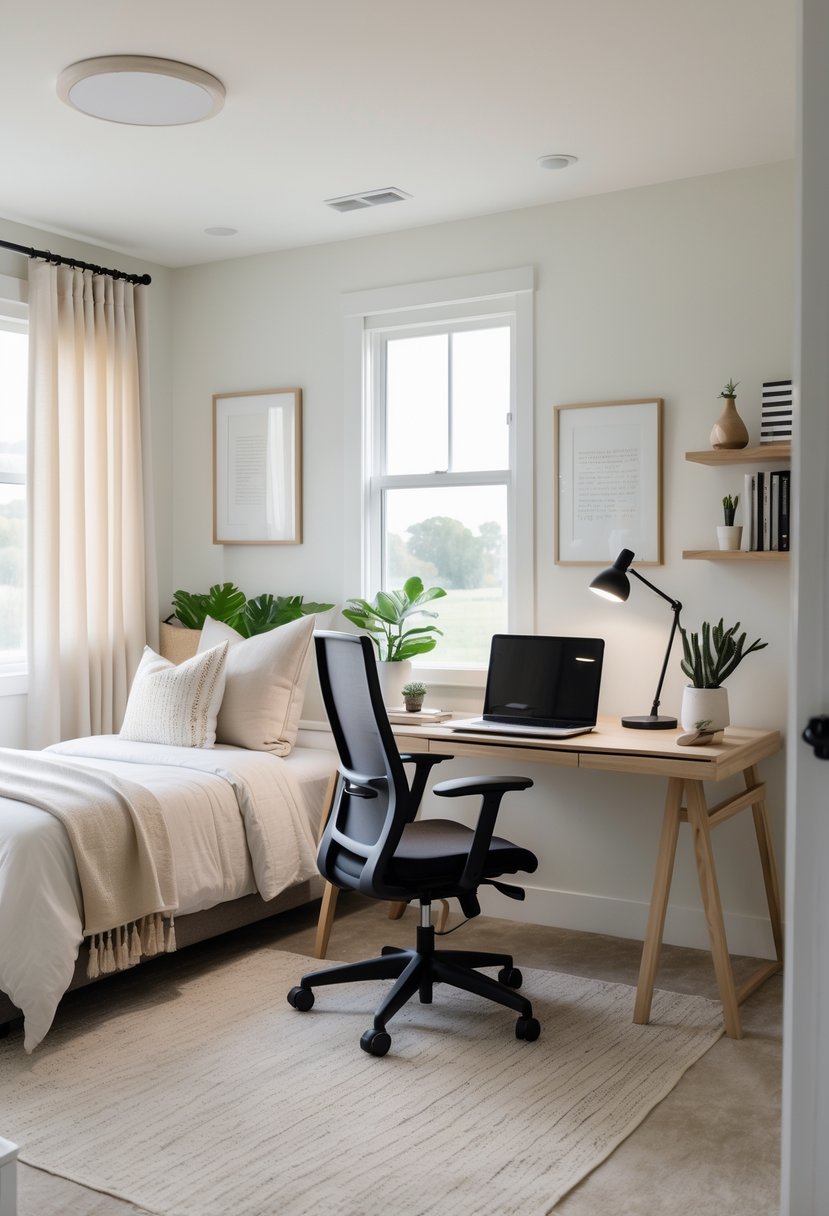
Getting the look right is about more than just picking pretty colors. It’s about making the space feel open, organized, and easy to be in.
Neutral Color Palette Choices
Stick with neutral colors—beige, soft gray, warm white. They make the room feel bigger and calmer.
Neutrals let you swap out accent pieces or decor without a big overhaul. Wood and textured fabrics in similar shades add warmth without making things busy.
It’s just easier to relax and focus in a room that isn’t shouting at you with color.
Accent Wall Ideas
An accent wall can add a little personality without making the room feel crowded. A muted blue or gentle taupe works well with neutrals.
Textured wallpaper or subtle stripes can add interest without being loud. Put the accent wall behind the desk or bed to highlight those areas.
It’s a simple way to define zones and keep the room feeling balanced. One wall is enough—no need to go overboard.
Incorporating Floating Shelves
Floating shelves save floor space and make it easier to organize work and guest essentials. We can stash books, office supplies, or a few favorite decorative pieces up high, which keeps the desk clear.
Try putting shelves above the desk or close to the bed for quick access. Choosing simple shelves in natural wood or white usually works well with neutral walls.
Let’s not cram too much onto the shelves—leaving a little breathing room keeps the space feeling open.
Lighting Design Strategies
Good lighting really makes or breaks a room like this. Mixing ceiling lights with desk lamps lets us switch from bright work mode to a softer guest vibe.
Dimmable lamps work great for both focused tasks and winding down at night. A lamp by the bed is a nice touch for late-night readers.
Whenever possible, it’s smart to get the desk near a window. Sheer curtains let in plenty of daylight but still give some privacy.
Frequently Asked Questions
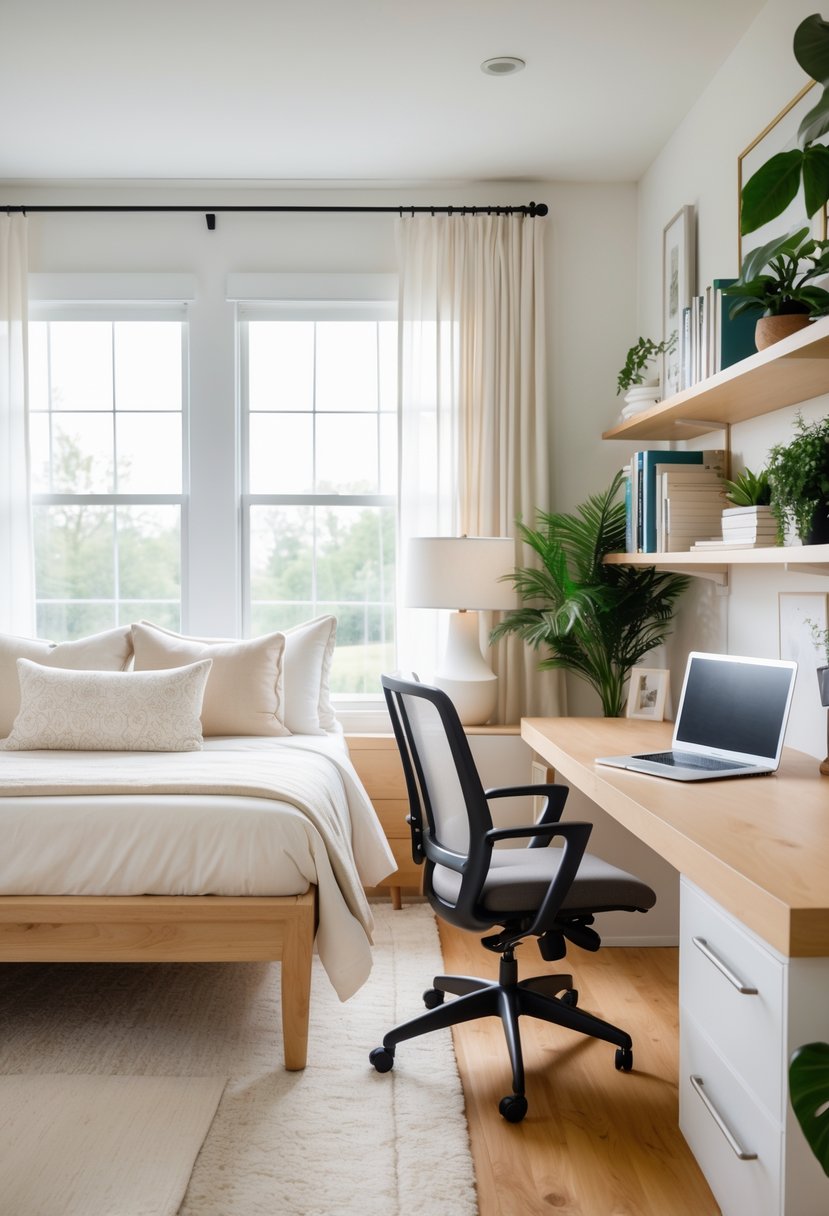
What are essential furniture pieces for a dual-purpose guest room and office?
A versatile bed—think pull-out sofa or Murphy bed—saves a ton of space. The right desk matters too; wall-mounted, narrow, or built-in options can squeeze into almost any room.
We need a comfortable chair for work, but a daybed or sofa makes sure guests don’t feel like they’re sleeping in an office.
How can I maximize space in a small room to accommodate both guests and a home office?
Multifunctional furniture is a lifesaver in tight spaces. Built-in storage around the bed, trundle beds, or benches with drawers all help hide clutter.
Try facing the desk toward a window or into the widest part of the room. Curtains or simple dividers can mark off zones, no construction required.
What are the best color schemes for a guest room that doubles as an office area?
Neutral colors calm things down and help with both focus and relaxation. Wood accents add a bit of warmth, and little pops of color—maybe yellow or green—can spark some creativity.
White or pale walls make the room feel bigger and keep it looking fresh. It’s a simple trick, but it works.
How can I ensure adequate lighting for both office tasks and guest comfort in a combined space?
Dimmable lamps let us set the mood for work or for guests who want to relax. Using both ceiling and desk lights gives us options.
Natural light is the best, honestly. If possible, put the desk near a window to get the most out of it.
What storage solutions are recommended for a multi-use guest room and office setting?
Open shelves are perfect for books and a few decor pieces. Baskets or boxes can hide the messier office stuff.
Nightstands with drawers and benches with storage keep things tidy. If you can, add shelves or cabinets above the desk to make the most of vertical space.
How do I create a comfortable and functional workspace without compromising the welcoming feel of a guest room?
We go for furniture that looks good and works well—think upholstered chairs, not boring office ones.
Plants and art? Those add a splash of life and make everything feel less stiff.
Toss in cozy bedding, some soft pillows, and lighting you can adjust. That way, guests feel at home, but you can still get stuff done.