
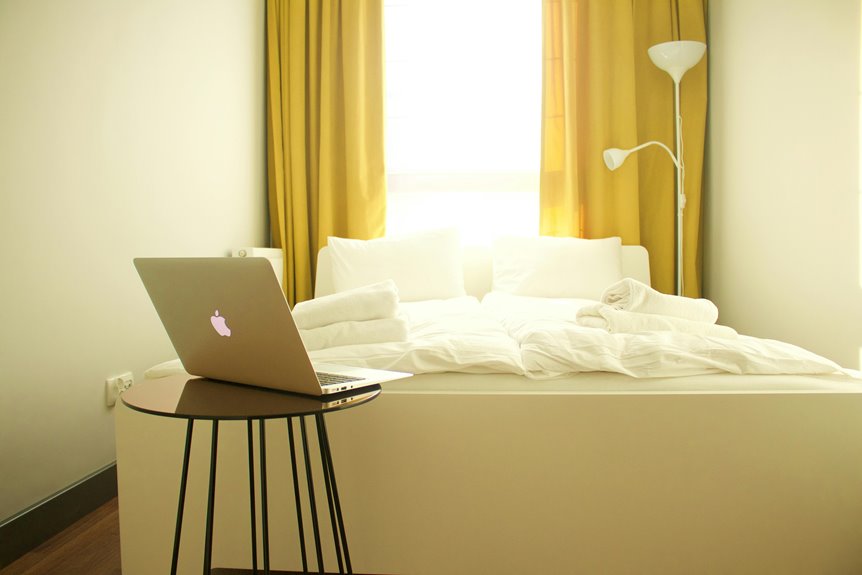
Millennials didn’t kill the guest room—rising housing costs and smaller households did. When you’re paying $2,000 monthly rent for 650 square feet, that spare bedroom becomes your home office, not a rarely-used guest space. We shifted priorities: a dedicated workspace beats an empty room. Air mattresses ($30–$50) and quality sofa beds now handle overnight visitors. Sure, mountain West regions still maintain guest rooms, but dense urban centers prioritize function over formality. The real story’s more nuanced than generational blame.
When Guest Rooms Meant You’d Made It
Remember when having a spare bedroom actually meant something? Your grandparents understood this perfectly. A guest room wasn’t just extra space—it signaled you’d genuinely made it. You’d furnished it carefully with yachting books, memoirs, and prints arranged just so. Cedar-lined closets held blankets wrapped in mothballs, filling the air with that distinct scent of refinement. After World War II, suburban homes expanded dramatically, making dedicated guest rooms feasible for middle-class families. Suddenly, you could afford aspirational living. That separate room conveyed hospitality, demonstrated hosting potential, and whispered of stability. Today’s housing crisis has erased this marker entirely. Millennials inherit cramped apartments and starter homes where a guest room feels laughably impossible, not because we don’t want one, but because we’re priced out of that dream entirely.
Suburban Sprawl Made Guest Rooms Possible
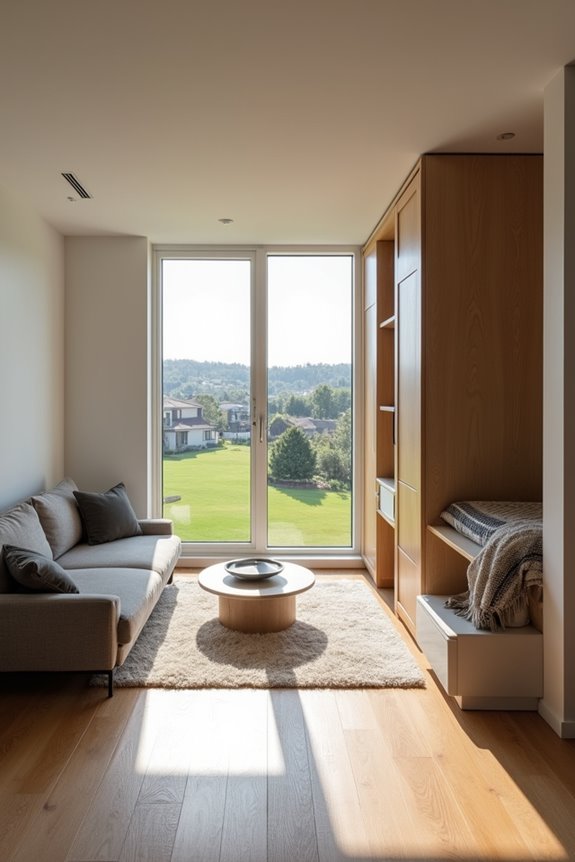
What made the guest room possible in the first place? Suburban sprawl. After World War II, developers built homes with actual space—bedrooms weren’t squeezed into four-hundred-square-foot apartments. You’d get a master bedroom, kids’ rooms, and here’s the thing: an extra bedroom nobody used daily. That spare room became your ticket to showing you’d made it. You weren’t just surviving; you were thriving enough to dedicate square footage to visitors. The suburban layout made this happen naturally. Houses stretched across larger lots, and builders kept adding rooms because land was cheap. That guest room signaled something important about your place in society—you had resources, stability, and hospitality to offer. It wasn’t luxury; it was achievable respectability, and suburban sprawl handed it to you wrapped up in drywall and possibility.
How Housing Costs Killed the Spare Room
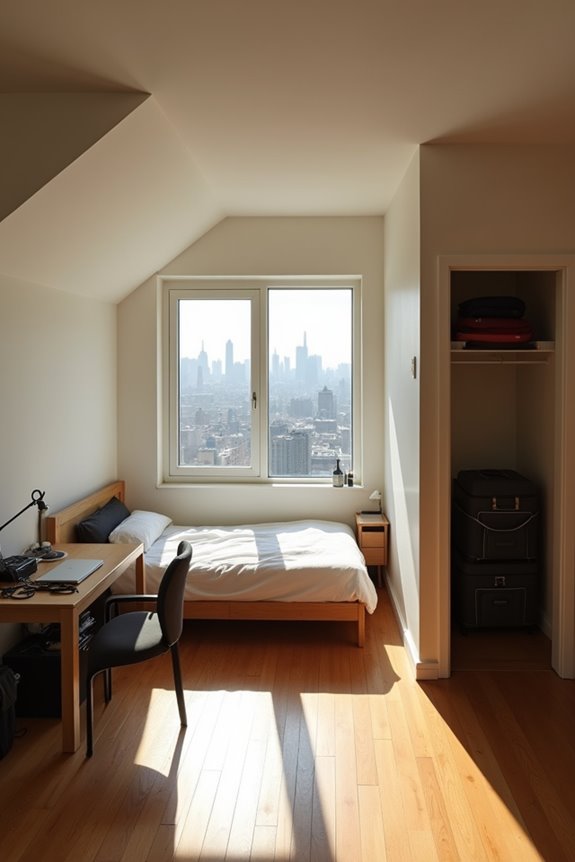
How’d we get from suburban homes with sprawling layouts to cramped apartments where a spare bedroom’s basically a luxury fantasy? Housing costs skyrocketed, that’s how. When your rent or mortgage consumes half your paycheck, you’re not thinking about guest rooms anymore—you’re thinking about survival.
I’ve watched this shift firsthand. Families used to build homes with extra bedrooms for visitors. Now, we’re squeezing into smaller spaces because we can’t afford anything larger. The numbers tell the story: average household size dropped from 3.1 people in 1970 to 2.5 today, yet we’re still fighting for affordable housing.
That spare room became a luxury nobody could justify. Instead, we’re converting offices into sleeping spaces, multitasking rooms into everything simultaneously. Housing costs didn’t just kill the guest room—they fundamentally rewired how we think about home itself.
Renting vs. Owning: Why Renters Skip Guest Rooms
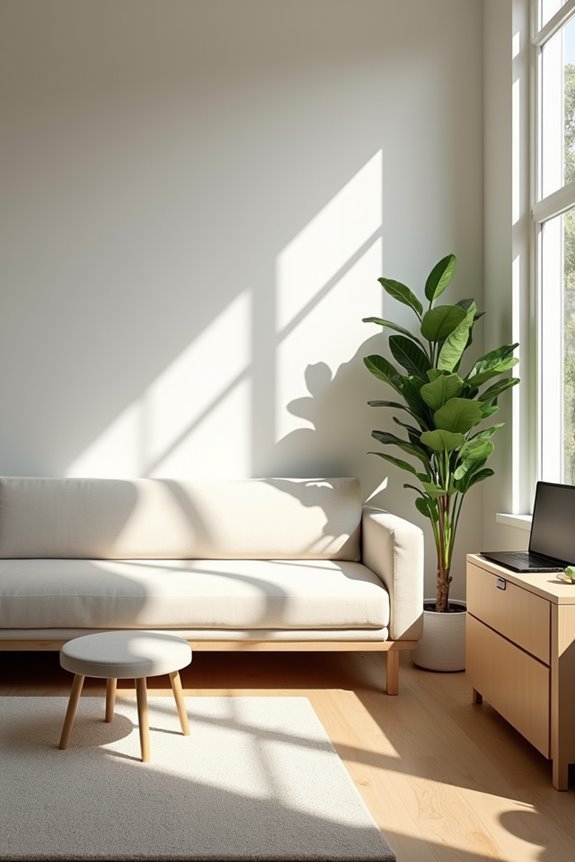
When I’m looking at a 650-square-foot apartment in the city, I’ve got to choose: spend an extra $300 a month on a spare bedroom that sits empty most of the year, or use that space for a home office where I actually work. Renters like me face a fundamentally different equation than homeowners—we’re not building equity in square footage, we’re paying monthly for every inch, which means a guest room becomes a luxury we can’t justify when rent’s already consuming 40% of our paycheck. The economics are straightforward: that dedicated guest bedroom could be a photography studio, a workspace, or simply extra room in an apartment where every 100 square feet costs real money.
Space Premium In Rentals
Why’d we ever think renters could afford the luxury of a dedicated guest room? In cities, square footage costs serious money—we’re talking premium pricing for every single foot. When you’re paying $1,500 for a 650-square-foot apartment, that spare bedroom becomes a home office, storage zone, or hobby space instead. We’ve shifted toward multipurpose rooms because we need flexibility. A Murphy bed tucked behind shelving, a futon doubling as seating—these solutions let us welcome guests occasionally without spending heavily on empty space year-round. It’s not laziness; it’s survival. Renters understand that dedicating a full room to occasional visitors while working from home, storing belongings, and juggling rising costs simply doesn’t make financial sense anymore. We’re making practical choices with what we’ve got.
Ownership Versus Rental Economics
Maybe the real question isn’t whether we want guest rooms—it’s whether we can actually afford them. I’ve watched my peers choose between paying rent and keeping space empty. The rental economics are brutal: housing costs consume 30-40% of our income, leaving nothing for luxury. We’re renting, not building equity, so dedicating a bedroom to occasional visitors feels irresponsible.
| Factor | Renters | Owners |
|---|---|---|
| Monthly Cost | $1,500–$2,500 | $1,200–$1,800 |
| Space Flexibility | Limited | Expandable |
| Guest Room Priority | Low | High |
| Long-term Investment | None | Building equity |
| Square Footage Pressure | Extreme | Manageable |
When you’re paying premium housing costs with stagnant wages, that spare bedroom becomes storage, a home office, or simply reclaimed breathing room. We’re not killing the guest room—economics killed it first.
Your Roommate Lives in Your Guest Room
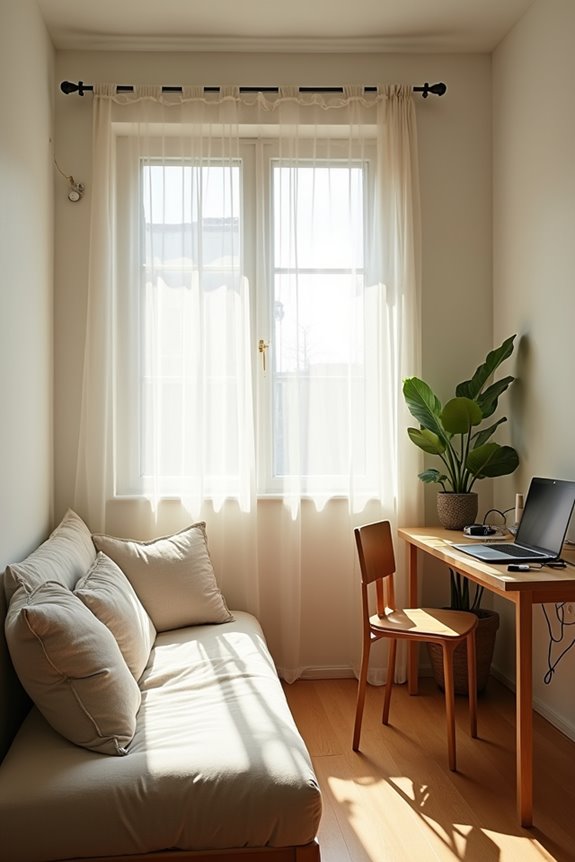
As soon as you mention that spare bedroom to friends, they ask the inevitable question: “You mean my roommate’s room?” That offhand comment cuts right to the heart of how we’re actually living now, doesn’t it?
What used to be a dedicated guest space has become something else entirely. Your roommate lives there. They’ve got their bed, their stuff, their life happening in what was supposed to welcome visitors. Guest rooms have become roommate living arrangements out of pure necessity. Housing costs pushed us toward shared spaces, and suddenly that hospitality symbol vanished. We’re not choosing this setup because we love cramped quarters—we’re doing it because we have to. The economics demanded it, and our homes shifted accordingly. That’s the reality we’re navigating together.
Why Smaller Households Mean Fewer Guest Rooms
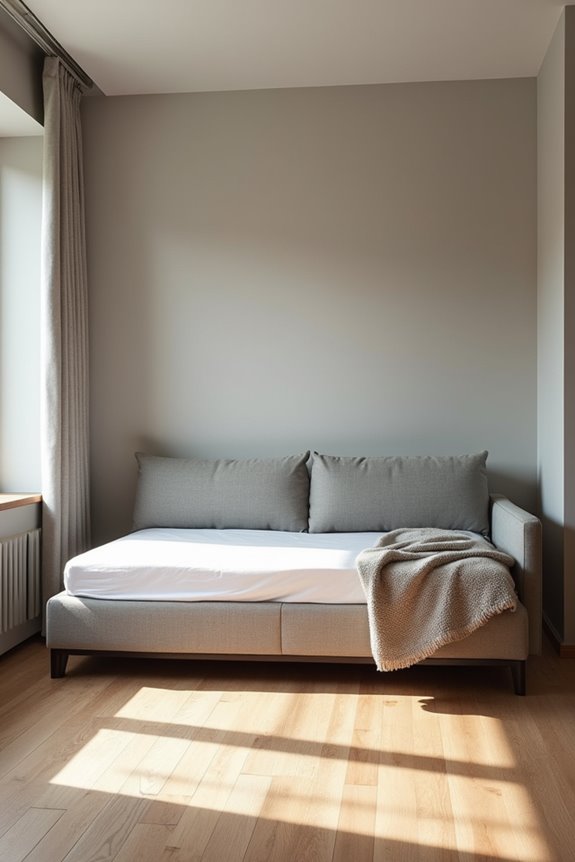
We’ve got more bedrooms than we did fifty years ago, but fewer people living in them. In 1970, the average household had 3.1 people sharing 2.5 bedrooms. Today, we’re down to 2.5 people in 2.8 bedrooms. That math doesn’t add up to guest rooms—it adds up to flexibility. We’re converting spare bedrooms into home offices, workout spaces, and storage areas because we need multi-use spaces more than we need places for occasional visitors. Smaller households mean we’re not designing around guests anymore. We’re designing around ourselves, our work, and the stuff we can’t seem to part with.
Guest Rooms Become Home Offices and Hobby Studios
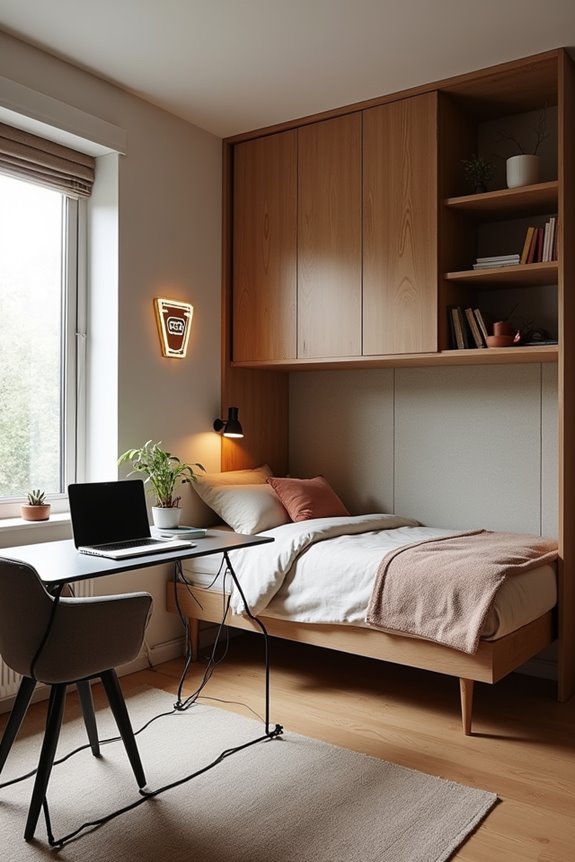
I’ve watched my own spare bedroom shift from a dusty guest room into my creative workspace, and I’m not alone—you’ve probably done something similar. Instead of keeping that extra space empty for visitors who rarely come, we’re claiming it for what actually matters: home offices where we work, music studios where we create, hobby rooms where we build projects. The numbers back this up: as households shrink to an average of 2.5 people and homes gain more bedrooms (averaging 2.8 per house), we’re repurposing these rooms into spaces that serve our daily needs rather than occasional guests we might see once a year.
Multi-Purpose Space Evolution
Where’d the guest room go? I realized mine became something I actually use every day. My adaptable space now functions as a home office by morning, art studio by afternoon. I ditched the traditional bed frame for a sofa bed that blends into the room’s design. This multi-use approach changed how I inhabit my home.
The shift reflects what we need: flexibility over formality. Instead of keeping an empty room reserved for occasional visitors, I’ve created a space that works harder. Storage solutions line the walls, supporting both my creative projects and guest accommodation. When friends visit, they’ve got a comfortable sleeping option without sacrificing my daily productivity.
It’s honest design that mirrors how we actually live now.
Hobby-Driven Room Redesign
That sofa bed I mentioned? It’s honestly just taking up valuable space. We’re converting our spare rooms into something we’ll actually use—hobby studios, art spaces, music rooms. Here’s what makes this shift work:
- Designate zones for specific activities (painting corner, instrument stand, workspace)
- Install adequate lighting and storage for supplies and equipment
- Create flexible furniture arrangements that adapt throughout the day
- Keep a sleeping surface for occasional guests (Murphy bed or quality futon)
My generation gets it—we’re not hosting guests weekly anymore. Multi-purpose spare rooms let us pursue what matters: our passions. The Mountain West and Southern homes with extra bedrooms particularly benefit from this approach, while urban dwellers maximize limited square footage. It’s about building a life we actually want to live in, not maintaining rooms for hypothetical visitors.
Work-From-Home Claimed the Spare Bedroom
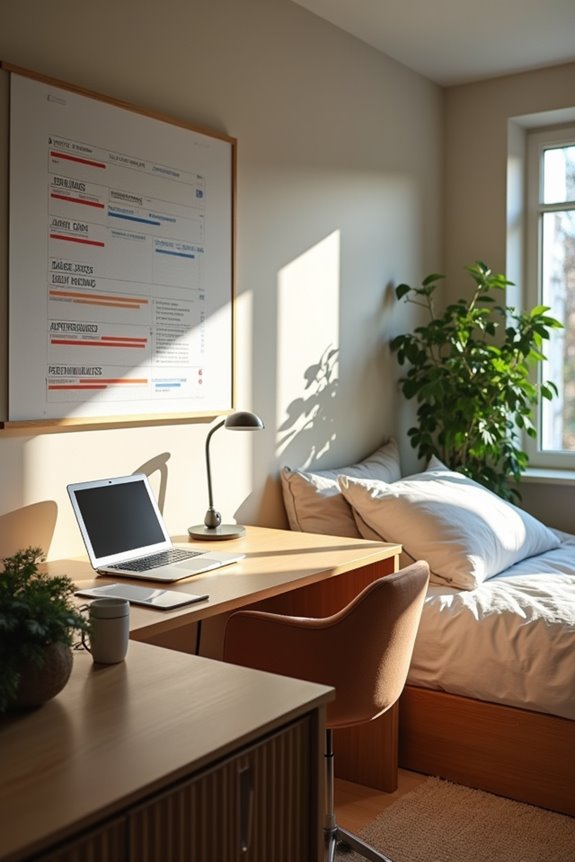
When did your spare bedroom stop being a guest room? For me, it happened gradually. First came the desk, then the filing cabinet, and suddenly I’d claimed the space entirely. Work-from-home changed how we use our spare bedrooms. What used to welcome visiting relatives now hosts conference calls and spreadsheets. The pandemic accelerated this shift dramatically. We needed dedicated offices, and those spare bedrooms offered practical solutions. Offices require stability—proper lighting, ergonomic chairs, consistent temperature control. Guest rooms demand flexibility. I couldn’t ask friends to sleep near my work setup. The math was simple: one room, two purposes, zero compromise. So I chose productivity. My spare bedroom became essential infrastructure for my career, leaving guests to navigate couches and air mattresses instead.
Where Guest Rooms Still Thrive (Mapped by Region)
I’ve noticed something happening across America’s regions—while dense cities like New York and Miami have practically eliminated spare bedrooms (Miami sits at just 5.9%), places like Ogden, Utah have guest rooms at 12.2%, and the entire Mountain West and South regions are following suit. The reason is straightforward: when you’ve got more land, lower building costs, and established patterns of constructing homes with extra bedrooms (we’re talking about that consistent 2.8-bedroom standard that’s held steady for a decade), families naturally end up with more space than they need. So what’s actually driving these regional differences—is it just geography and economics, or are there deeper cultural attitudes about hospitality and home design that keep guest rooms alive in some places while they’re disappearing elsewhere?
Mountain West Dominance
While urban centers like Miami struggle to carve out space for guests—with just 5.9% of homes maintaining spare bedrooms—the Mountain West tells a completely different story. Here, you’ll find something different: regions that’ve built homes with room to breathe.
What’s driving this Mountain West dominance?
- Lower population density means builders designed homes with extra space from the start
- Larger square footage per house gives families room for dedicated guest areas
- Fewer persons per household means spare bedrooms stay empty by choice, not necessity
- Space-abundant culture prioritizes hosting over cramped efficiency
In places like Ogden, Utah, 12.2% of homes keep spare bedrooms ready. That’s double Miami’s rate. You’re part of a community that still values hosting, where hospitality isn’t squeezed out by urban constraints.
Urban Density Disparities
The Mountain West’s success tells us something important about what really matters: geography shapes everything. When you live in dense metros like Miami or New York City, you’re working with tight spaces—only 5.9% of homes have spare bedrooms. Meanwhile, places like Ogden, Utah boast 12.2% spare-bedroom shares. Urban density directly determines your guest room reality. Here’s why: densely built urban cores pack homes close together, leaving little room for extras. Suburban and exurban areas have more space. Larger single-family homes dominate these regions, preserving guest bedroom capacity. This isn’t just about square footage—it’s about how we’ve chosen to build our communities. Your zip code determines whether you can host family during holidays.
Regional Building Patterns
Where are guest rooms actually thriving in America? They’re concentrated in regions where builders construct spacious homes. The Mountain West and South dominate spare bedroom trends, driven by regional housing patterns that prioritize square footage over density. Here’s what’s happening:
- Mountain West leads with Ogden, UT at 12.2% spare bedrooms
- Southern regions follow with larger home construction standards
- Urban centers like Miami (5.9%) struggle with space constraints
- Less dense areas naturally accommodate extra bedrooms
A geographic divide exists. While millennials reshape urban preferences toward compact living, builders in sprawling regions continue constructing homes with guest spaces. This reflects how regional housing patterns align with local building traditions, land availability, and lifestyle expectations that still value hosting guests.
Air Mattresses and Sofas: The New Guest Bed
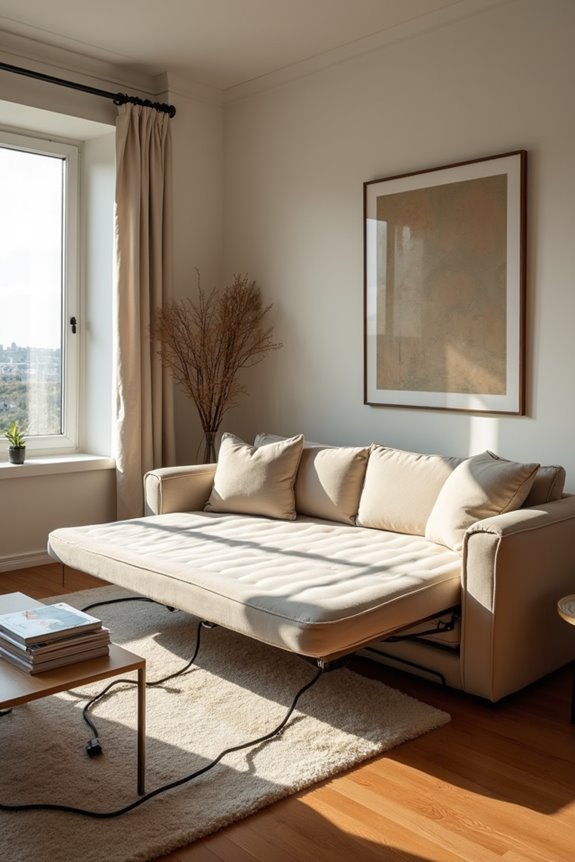
Instead of keeping a whole room empty just for the occasional visitor, most of us now pull out an air mattress or crack open a sofa bed when guests arrive—and honestly, it makes sense. I’ve watched this shift happen in real time. Air mattresses cost thirty to fifty dollars, take up minimal closet space, and deflate flat when you’re done. Sofa beds do double duty, functioning as seating during the day and converting into sleeping space at night. They’re practical solutions for those of us living in smaller spaces where dedicating an entire room to guests feels wasteful. These flexible furnishings let me host friends without sacrificing my living area, combining hospitality with smart space management. We’re not abandoning guests—we’re just adapting how we welcome them.
How Millennials Use Spare Rooms Instead
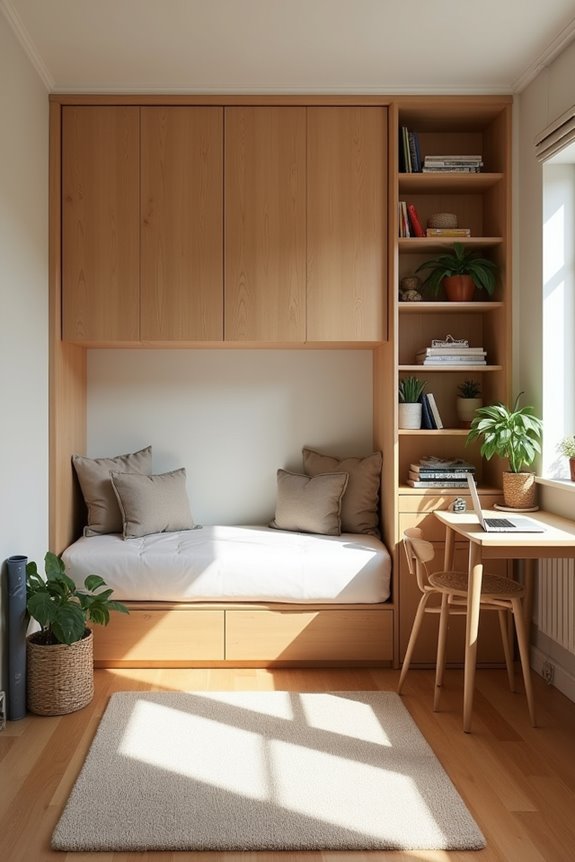
While air mattresses and sofa beds solve the guest-hosting problem, they’re really just part of a bigger picture about how we’re actually using our spare rooms. Here’s what’s happening in our homes:
Air mattresses and sofa beds are just the beginning of how we’re reimagining the purpose of our spare rooms.
- Art studios and creative spaces where we explore hobbies
- Home offices that double as workout areas
- Retreat zones for relaxation and personal time
- Storage solutions for seasonal items and collections
We’re using these multi-use spaces as reflections of who we actually are. Instead of keeping a room frozen for occasional visitors, we’re claiming that square footage for ourselves. Our spare rooms have become extensions of our lifestyles—practical, flexible, and useful. This shift isn’t about rejecting hospitality; it’s about making our homes work harder for our daily lives.
Small-Space Hosting Solutions
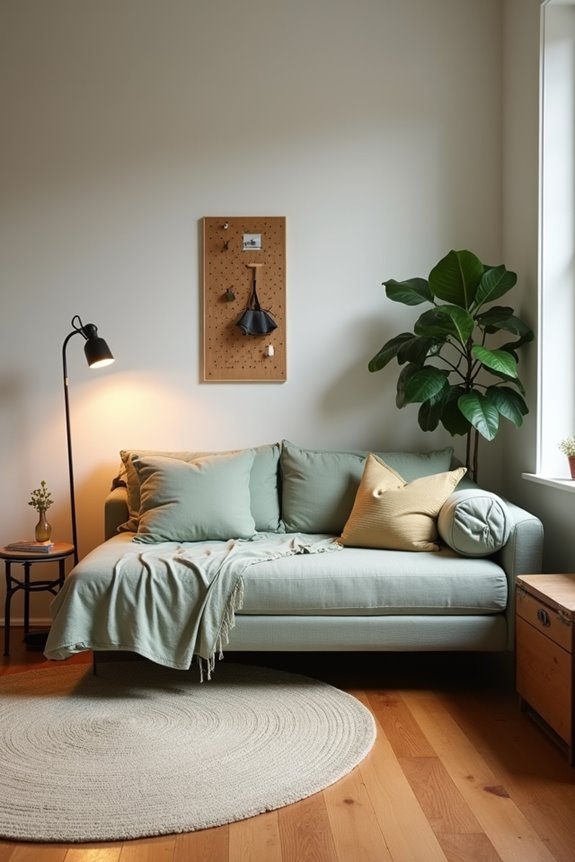
How do you actually welcome guests when you’re living in 400 square feet? You get creative. I’ve learned that multi-use furniture helps my tiny space function as a hosting area without sacrificing my own comfort. A Murphy bed folds up during the day, giving me studio space or a yoga retreat, then drops down when friends visit. My living room does triple duty—it’s where I eat, work, and sleep guests on a quality air mattress. I prioritize coziness over formality. Soft blankets, good pillows, and a dedicated corner make visitors feel welcome. The key is accepting that hosting looks different now. My space adapts to who I am and who I’m welcoming, rather than sitting empty waiting for guests who rarely come.
Hosting Overnight Guests Without a Dedicated Room
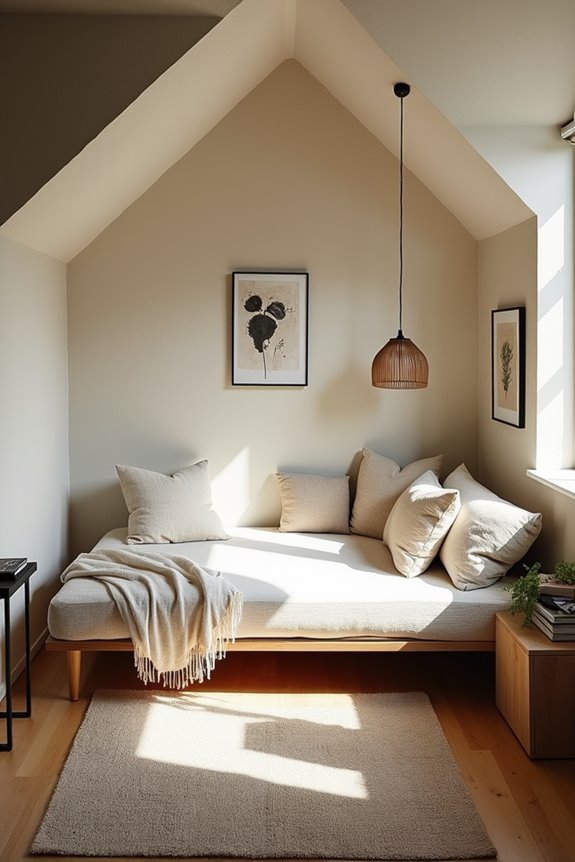
When I host friends overnight without a spare bedroom, I’ve learned that comfort doesn’t require four walls and a door—it requires thoughtfulness, which is why I’ve invested in a queen-size sofa bed for my living room and keep a quality air mattress rolled in my closet for backup. I’ve discovered that guests care far less about sleeping in a formal guest room than they do about having clean sheets, a lamp within arm’s reach, and a space where they can actually rest without feeling like they’re imposing on my daily life. What started as a space constraint has become my favorite hosting strategy: I create a comfortable setup in my multipurpose room by adding a room divider, dimming the overhead lights, and arranging the space with clear purpose rather than as an afterthought.
Multipurpose Room Solutions
The guest room—that formal, rarely-used space we used to preserve for company—doesn’t fit how we actually live anymore, and honestly, I get why you might’ve ditched yours. Instead of keeping an empty bedroom, you’re joining the shift toward multipurpose rooms that work harder for your life.
What works:
- Air mattresses and sofa beds that disappear when guests leave
- Murphy beds that fold into walls, freeing your art studio or workout space
- Flexible layouts that convert living rooms into sleeping areas quickly
- Convertible furniture serving dual purposes year-round
This approach lets you reclaim that 3,000-square-foot potential. Your space becomes a retreat, studio, or hobby room—then adapts for overnight visitors. You’re not sacrificing comfort; you’re prioritizing adaptability. That’s the real advantage here.
Guest Comfort Alternatives
What if your guests actually prefer sleeping on your living room sofa to navigating a formal guest room they’ll use once a year? I’ve discovered that multifunctional spaces work better for real life. Instead of maintaining an unused bedroom, I’ve created flexible zones that shift based on who’s visiting. My living room features a quality sofa bed, strategic lighting, and a designated closet shelf for guest belongings. When friends arrive, they get comfort without guilt—no stuffy, impersonal space. I’ve added throws, quality pillows, and blackout curtains to create a welcoming sleeping area instantly. This approach prioritizes guest comfort while honoring my actual lifestyle. My visitors feel welcomed into my real home, not a museum piece. That’s what belonging looks like: spaces that adapt to embrace the people you love.
Design Hacks for Guest-Friendly Apartments
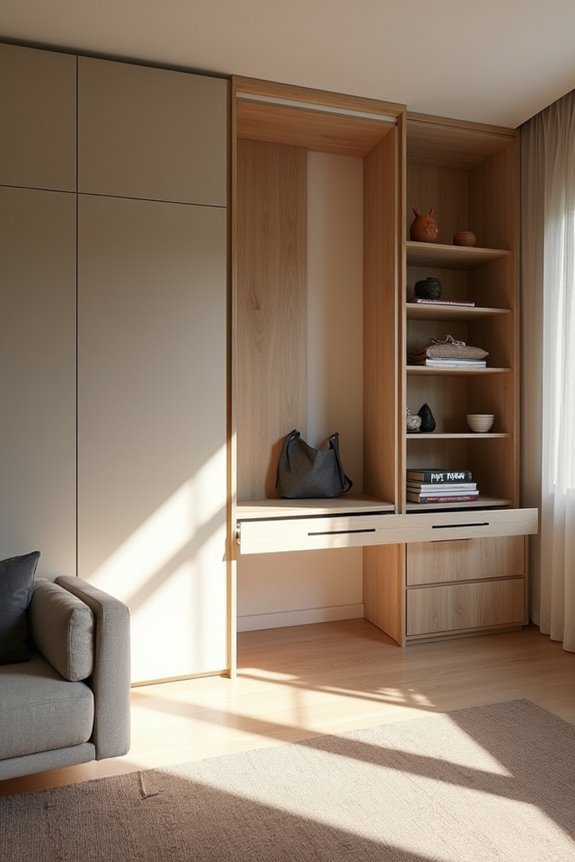
How’re you supposed to host friends when your apartment barely fits your own stuff? I’ve learned that multifunction spaces aren’t just trendy—they’re practical necessities for small living. Here’s what actually works:
- Install a Murphy bed that folds into your wall, freeing up daytime space for socializing
- Choose a sofa bed or quality air mattress for your living room to create guest-ready layouts instantly
- Use room dividers or curtains to create separate sleeping and living zones
- Add storage ottomans that hide bedding while serving as seating
The key? Stop thinking “guest room” and start thinking “flexible.” When I designed my apartment around adaptability rather than dedicated spaces, hosting became easier. Your friends don’t need permanence—they need comfort and belonging, which you can absolutely create in any size apartment.
Why Guest Rooms Are Here to Stay (Regionally)
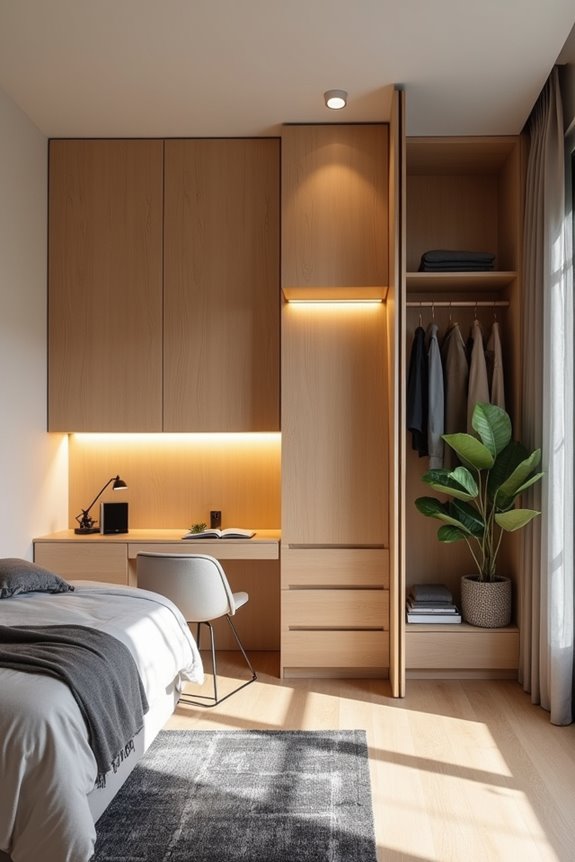
While my Murphy bed hack works great in my cramped city apartment, I’ve realized that guest rooms aren’t actually dying—they’re just sorting themselves by geography. You see, space-rich regions like the Mountain West and South are holding onto guest bedrooms at impressive rates, while dense urban centers like Miami lag behind at just 5.9% spare bedrooms.
| Region | Guest Room % | Why It Matters |
|---|---|---|
| Ogden, UT | 12.2% | Space-abundant culture |
| Miami | 5.9% | Urban density limits options |
| Mountain West | High | Sprawling home tradition |
| Dense Cities | Low | Compact living necessity |
The fundamental divide comes down to this: larger homes persist in less-dense areas even as households shrink. That means your rural cousins actually have space for guests, while we urbanites are creatively problem-solving. The trend shows guest rooms aren’t disappearing—we’re just living in different worlds.