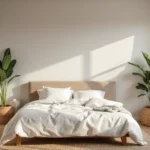
Decorating a guest room is about making visitors feel comfortable and genuinely welcome. We want the space to be easygoing, not stiff or rushed.
A well-decorated guest room brings together cozy bedding, smart storage, and thoughtful little touches that help anyone settle in.
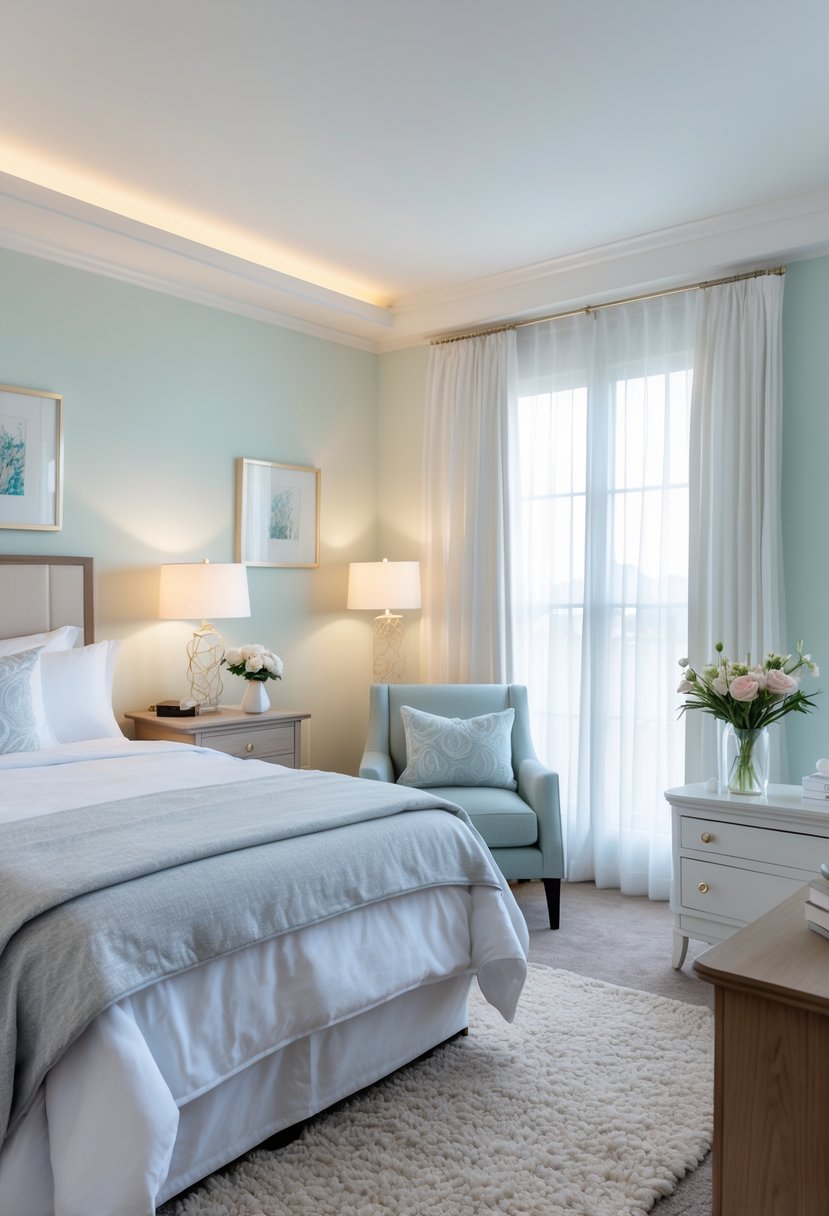
We like our guest rooms to show off our home’s style but still meet the practical needs of whoever’s staying. That means picking the right lighting, calming colors, and adding things like a mirror, extra seat, or even a small workspace if there’s room.
Little details—fresh towels, blackout shades, a soft rug—can turn a basic room into a place guests actually want to hang out. It’s the small stuff that makes a big difference.
Guest Room Planning Essentials
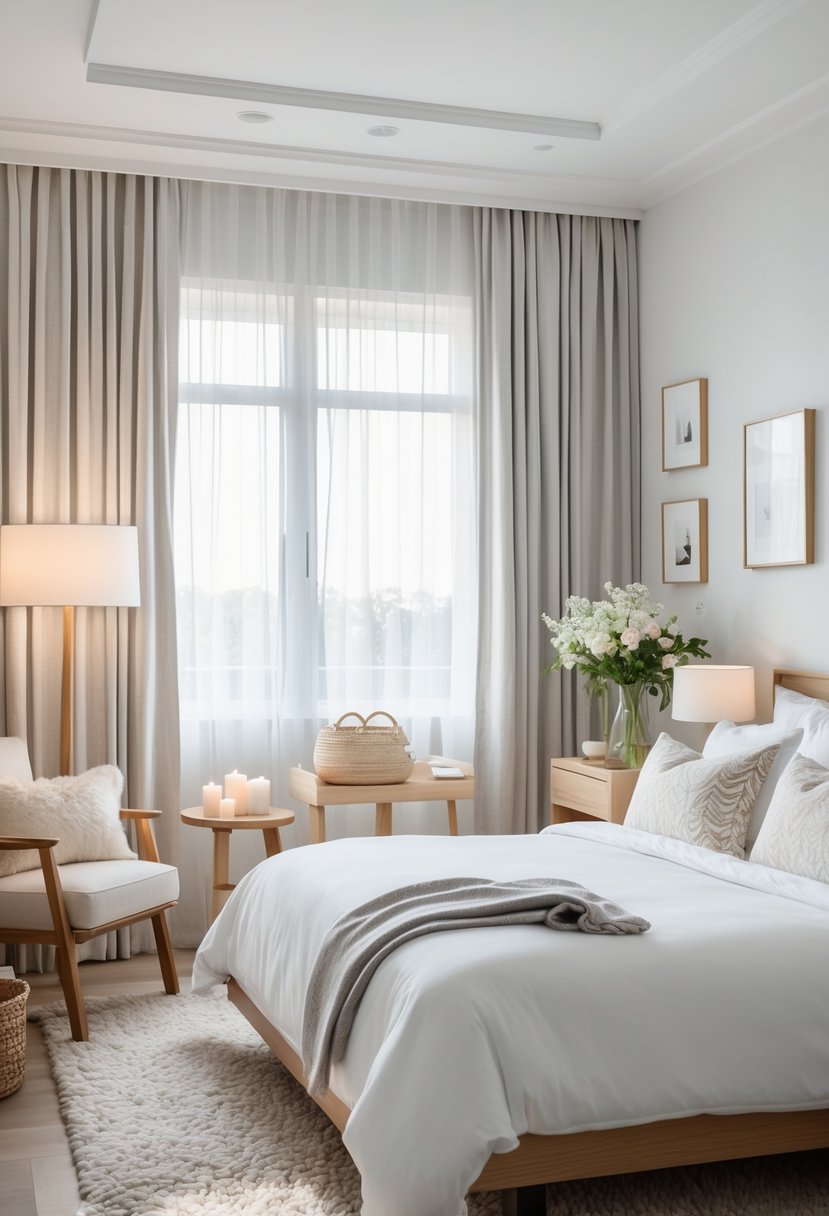
To put together a comfortable guest room, we’ve got to consider the room’s location, the needs of our visitors, and how much we’re willing to spend. Each of these shapes our choices about layout, furniture, and style.
Choosing the Right Location
Picking the best spot for a guest bedroom matters more than you’d think. Privacy and quiet are key—so we avoid putting it right next to the kitchen or living room.
Ideally, the guest room sits near a bathroom, so guests don’t feel awkward coming and going. If space is tight, we can get creative and use a home office or even a large closet.
Natural light helps a lot. A window makes the room feel warm and open. We also check for easy access to outlets—no one likes crawling under beds to charge their phone.
Assessing Guest Needs and Comfort
Let’s think about who’s actually going to use the guest room. Couples might want a queen bed, while solo guests could be happy with twins and extra pillows.
Adjustable lighting and layered bedding let guests tweak things for their own comfort. Amenities like a small desk, a reading chair, or a luggage rack are always appreciated.
We stock up on toiletries, spare blankets, and leave the Wi-Fi info handy. The goal? A room that feels thoughtful, not just thrown together.
Establishing a Budget
Setting a budget upfront keeps us from overspending or getting stuck halfway through. We mix new buys with thrifted finds or stuff we already have to stretch dollars without losing style.
We focus on a good mattress, comfy bedding, and adjustable lights first. Rugs, curtains, and art can wait if needed.
Keeping costs realistic means we actually finish the room, and guests get a cozy spot to stay.
Choosing a Style and Color Palette
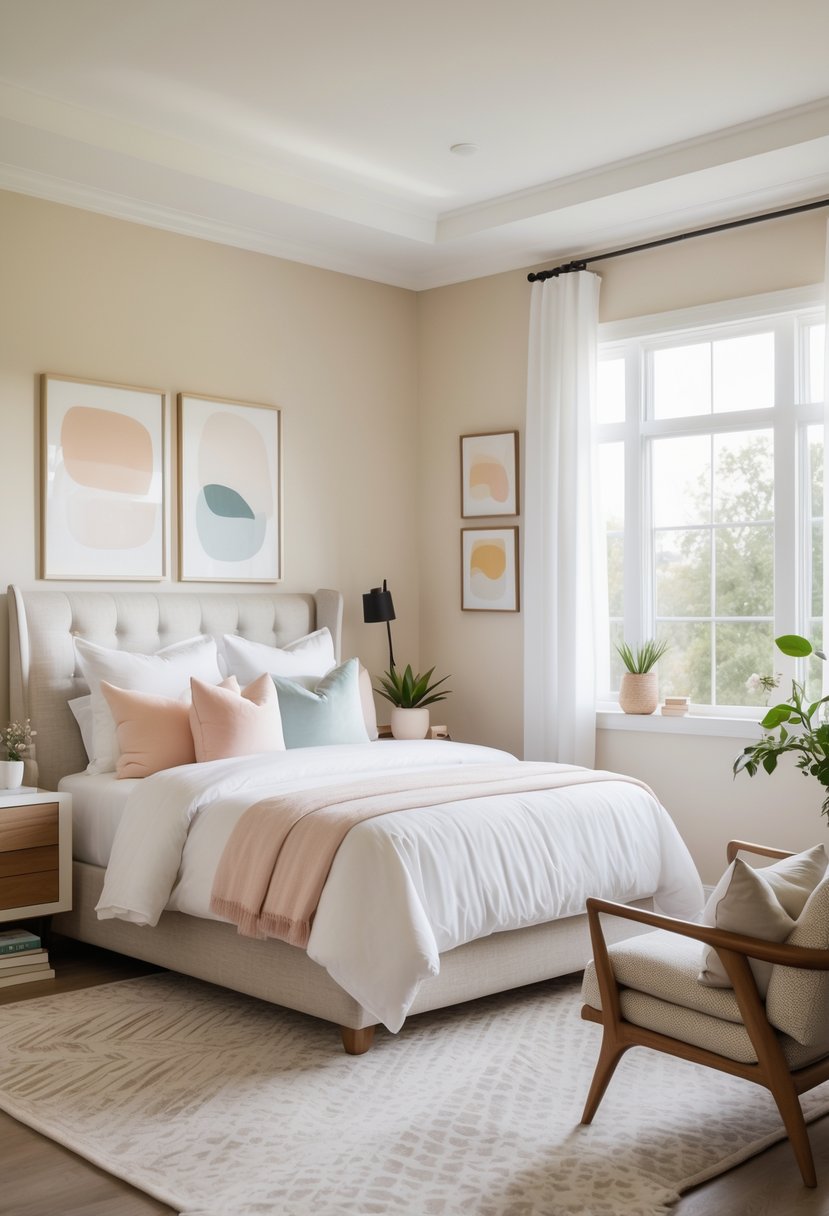
We want the guest room to feel inviting and comfortable, but it should also have a point of view. Color and design choices really shape the mood.
Whether we keep it simple, go bold, or match the rest of the house, it’s the details that count.
Minimalist Guest Room Designs
Minimalist guest rooms keep things clean and calm. We stick with white paint or soft neutrals—light gray, cream, that kind of thing.
These colors bounce around natural light and make smaller rooms feel bigger. We pare down decorations, picking just a few favorites instead of filling every corner.
Functional furniture with hidden storage helps keep the space tidy. We want comfort and practicality, not a showroom.
Maximalist and Bold Themes
If you love color, why not go for it? We try deep blues, rich greens, or an accent wall for a little drama.
We avoid wild, bright colors on every wall—they can make it hard to relax. Patterns on rugs, pillows, and art add personality, but we balance it out with neutral furniture and soft lighting.
This style is fun for hosts who want their guest rooms to stand out, but we’re careful not to overwhelm.
Coordinating With Home Aesthetics
Matching the guest room’s vibe to the rest of the house just feels right. If our place has warm tones and rustic touches, we pull those colors in.
For modern homes, we lean into neutral paint—think greige or oatmeal. We echo accents from other rooms with bedding or small decor.
It’s about making the guest room feel like it belongs, without losing its own comfort.
Selecting Furniture for Function and Style
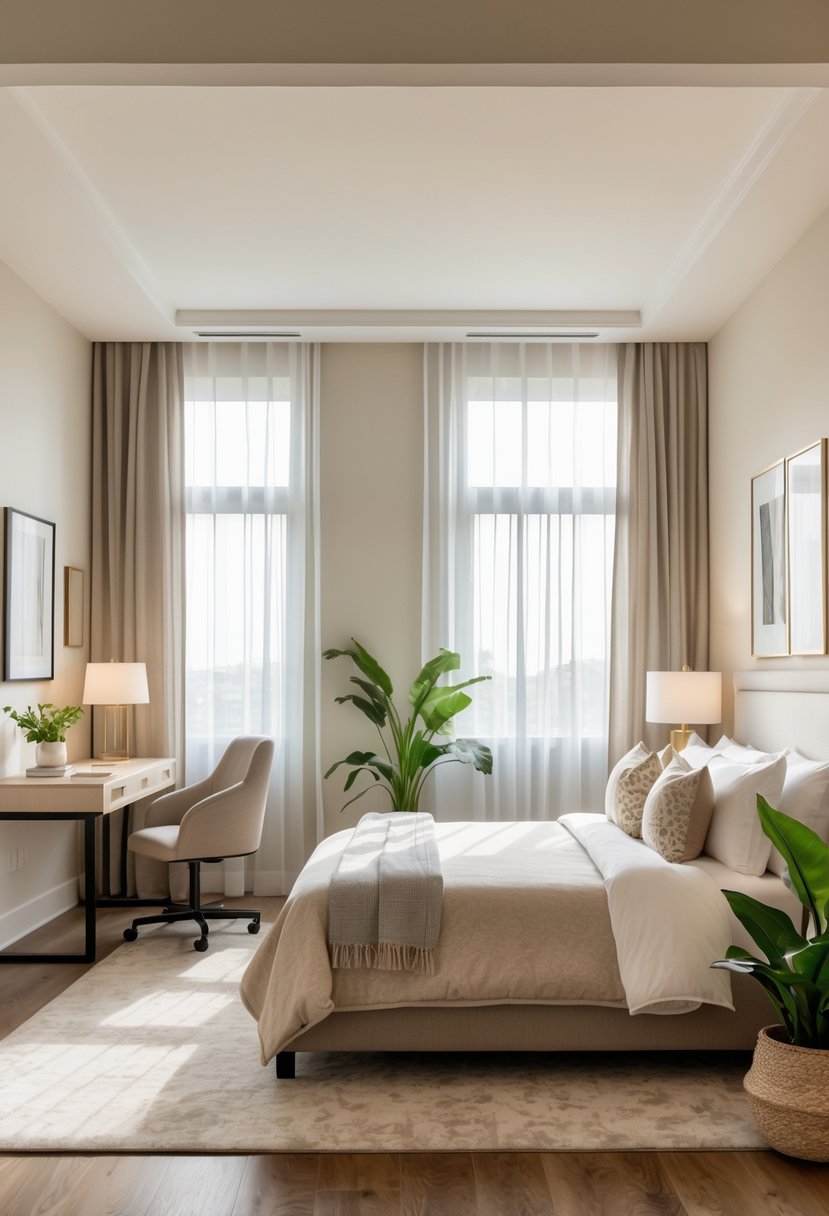
Picking furniture is all about balancing comfort, usefulness, and looks. We want pieces that fit the space and actually get used—not just stuff that fills the room.
Functional furniture can look good without being bulky or out of place.
Beds: Murphy Bed, Daybed, and Sofa Bed Options
When space is tight, we look for beds that do double duty. A Murphy bed folds into the wall when we don’t need it, opening up the floor.
Daybeds work as couches by day, beds at night—perfect if the room doubles as an office or hangout. Sofa beds give us a comfy place to sit and a bed for guests, all in one.
We stick with clean, modern lines so the room doesn’t feel cramped.
Essential Guest Room Furniture
Other than the bed, a nightstand or bedside table is a must for lamps, books, or a glass of water. We like ones with drawers or shelves for extra storage.
A dresser or chest of drawers gives guests somewhere to unpack. If the room’s small, wall shelves or compact chests work just as well.
A chair or small bench offers a spot to sit or toss luggage. We go for comfort but keep the style simple so the room stays chill.
Space-Saving Solutions
Space is always at a premium, so we love furniture with built-in storage—beds with drawers underneath, ottomans that open up, that kind of thing.
Wall-mounted nightstands or shelves free up the floor and make the room feel bigger. Multi-use pieces, like a storage bench or a folding desk, add flexibility.
Lighter, modern furniture with clean lines helps the room feel open, not crowded. It’s all about making the most of what we’ve got.
Enhancing Comfort and Convenience
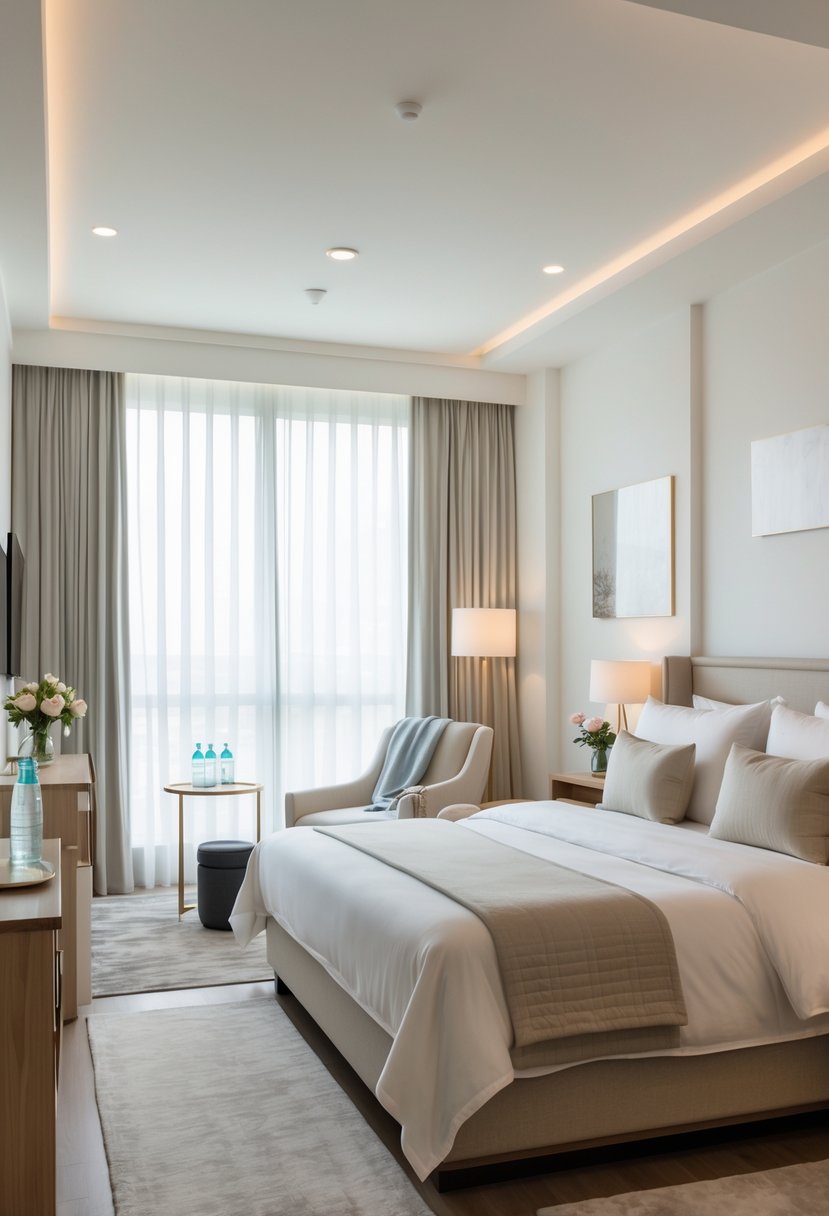
Making a guest room comfy means sweating the details. Lighting, furniture layout, and easy access to power all matter more than we might think.
Soft Lighting for a Cozy Atmosphere
We want the room to feel warm, not like a hospital. Lamps with warm bulbs beat harsh overhead lights every time.
Table lamps or sconces by the bed let guests read or unwind without squinting. Dimmers are a nice touch, letting us set the mood.
We steer clear of bright white or blue lights—they’re just too cold. Layering a few light sources gives us options and keeps things soft.
Luggage Rack Placement
A luggage rack sounds fancy, but it’s actually super practical. We stick it somewhere handy—near the door or at the foot of the bed.
Guests can open their bags without piling stuff on the floor. We pick a rack that’s sturdy and folds up when not in use.
Simple designs work with any style and keep the space tidy.
Charging Station Setup
A charging station is a small thing that makes a big difference. We set up a spot with outlets and USB ports close to the bed.
A compact charging hub fits right on the nightstand. If we label the cables or offer a universal charger, guests don’t have to dig for adapters.
It’s a tiny convenience that shows we actually thought about their stay.
Decorative Touches and Finishing Details
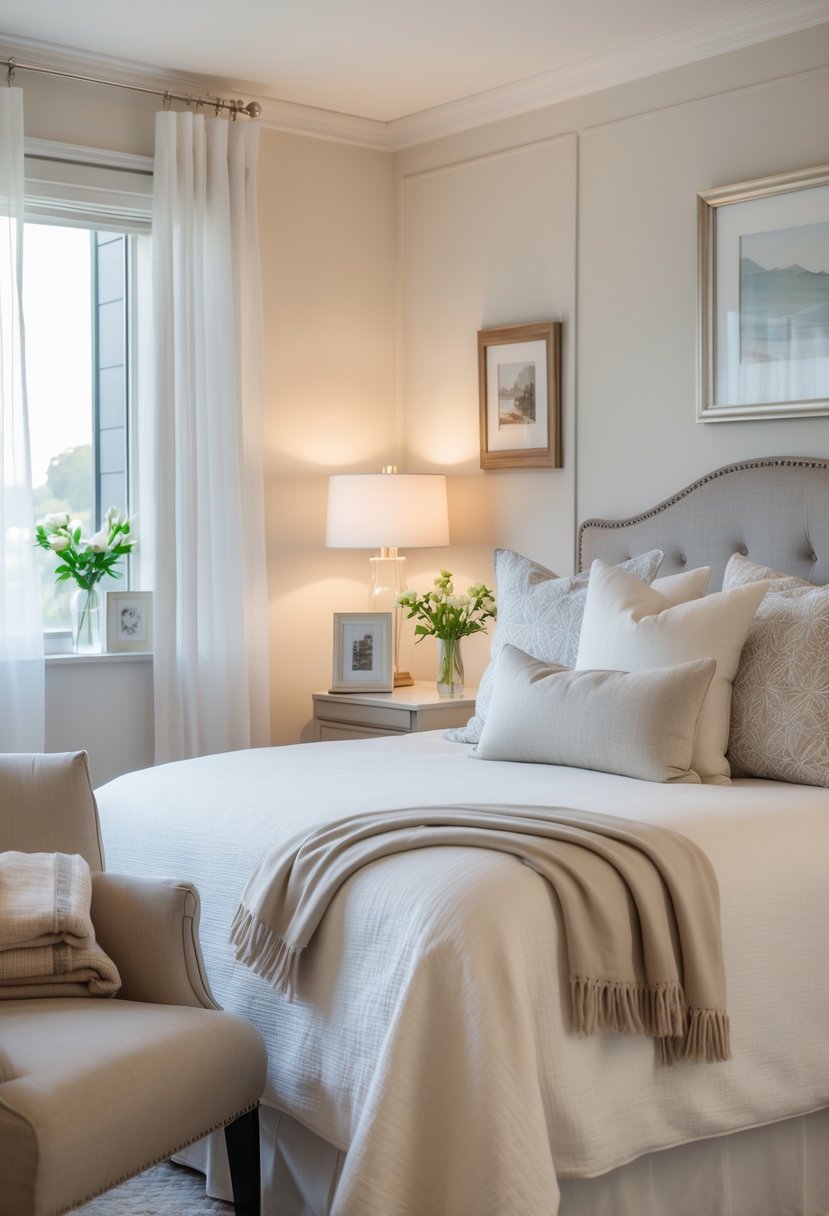
Making a guest room feel special comes down to the details. Color, decor, and a few personal or seasonal touches all help the space feel lived-in and loved.
Creating an Accent Wall
An accent wall draws the eye without taking over. We usually pick the wall behind the bed or across from the door.
Bold paint, wallpaper, or textured finishes all work. Some options:
- Paint: Soft blues or greens, or deeper shades like navy or charcoal.
- Wallpaper: Subtle patterns or nature-inspired designs add a little charm.
- Texture: Reclaimed wood or vinyl panels bring in some interest.
We avoid wild patterns—no one wants to sleep in a circus. The accent wall should play nice with the bedding and other decor.
Incorporating Guest Room Decor
Decor sets the tone and helps guests feel at home. We mix practical stuff with things that look good.
Some go-tos:
- Layered lighting: Overhead lights, bedside lamps, and sconces for options.
- Rugs: Soft ones cut down noise and make the room cozier. We pick sizes that fit the bed and walkways.
- Wall art: Simple framed prints or canvases that vibe with the room’s colors.
- Mirrors: They make the space feel bigger and bounce light around.
We aim for a coordinated look, not clutter.
Adding Personal and Seasonal Touches
Personal touches show we care. We add things that are both useful and a little fun.
Ideas:
- Books or magazines: We pick titles our guests might actually read.
- Welcome basket: Snacks, toiletries, or a water bottle—just a little something to say hi.
- Throw blankets and pillows: Soft, neutral ones for comfort. We swap in different patterns or colors with the seasons.
- Fresh flowers or plants: They brighten things up and help the air.
Changing these up keeps the room fresh and shows we’re paying attention.
Maximizing Storage and Organization
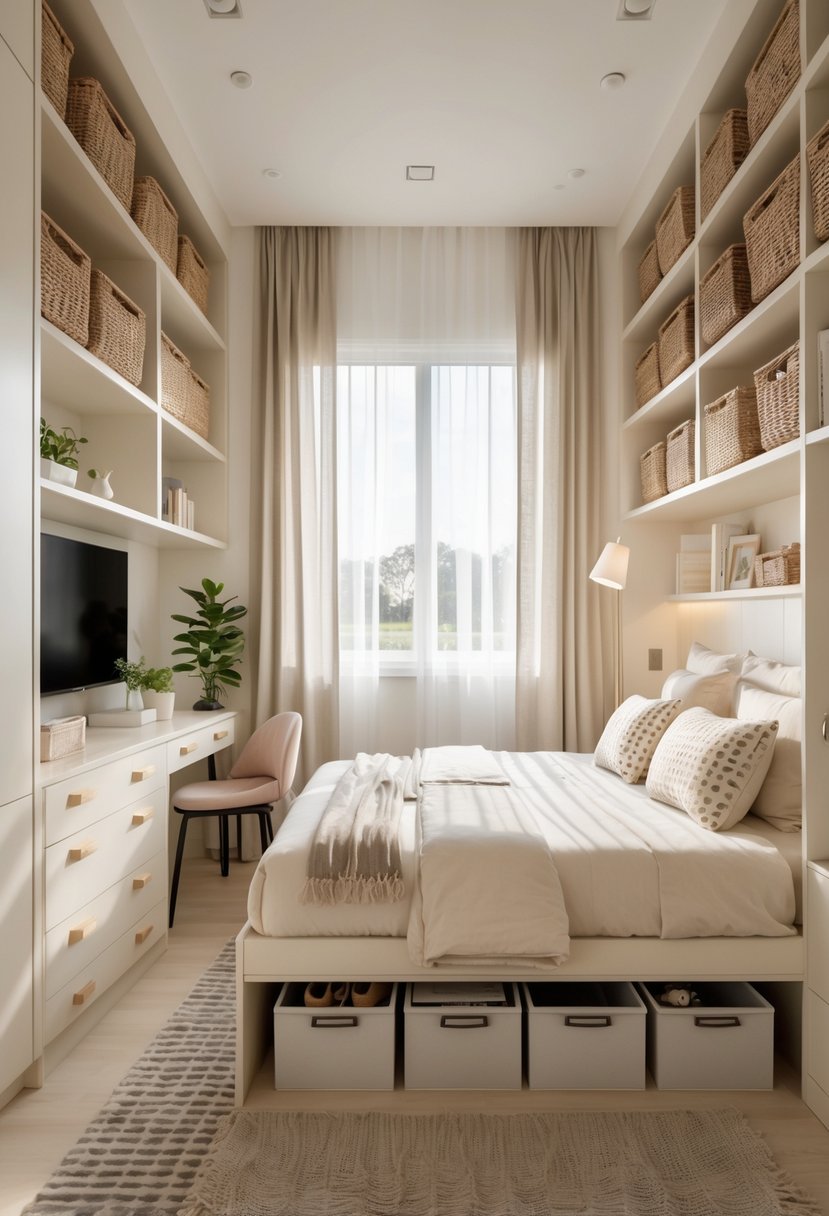
We’ve got to get clever with storage to keep the guest room neat and usable. Every bit of space counts.
Under-Bed and Built-In Storage
Under the bed is prime real estate for storage. We use bins or bags that slide in and out easily.
Clear containers make it simple to see what’s inside. Bed risers can give us even more space if needed.
Built-in shelves or drawers tucked into furniture or walls also help. Floating shelves keep the floor open but still give us spots for books or decor.
These tricks keep clutter down without crowding the room.
Closet and Drawer Solutions
Guest room closets are usually small, so we make the most of vertical space with hanging shelves or extra rods.
Shoe racks and organizers help keep little things in check. Drawer dividers stop chargers, socks, and other bits from getting mixed up.
Customizing the closet layout gives guests a clear spot for their stuff and makes the room feel more organized.
Ensuring Additional Storage Options
You can get extra storage from furniture that does more than one job, like ottomans or beds with drawers underneath. Decorative baskets and trunks pull double duty—they look good and hold blankets, magazines, or board games.
Hooks on the wall or behind the door give you a spot to hang bags or robes, and they don’t eat up floor space. Wall-mounted baskets or slim shelves help you use vertical space, so you keep essentials close without crowding the room.
Frequently Asked Questions
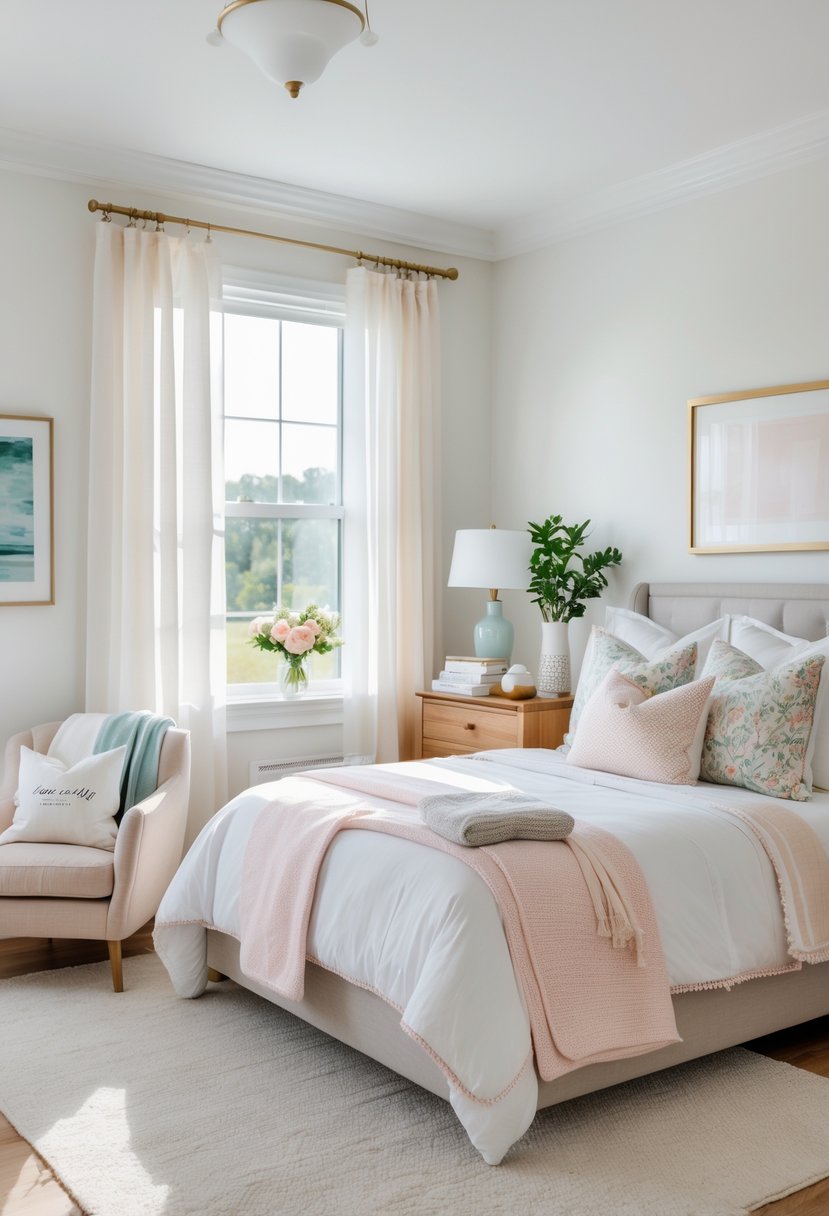
When we set up a guest room, we pay attention to furniture, color, lighting, and how everything fits together. Comfort and practical choices matter most—after all, you want guests to actually feel at home.
What essential furniture should be included in a guest room?
A comfy bed with decent bedding is non-negotiable. We like to add a nightstand, a dresser or some kind of storage, and at least one chair or a cozy spot to sit.
A small desk is handy if your guests might want to work, but it’s not a must for everyone.
How can I create a welcoming atmosphere in my guest room?
We keep things tidy and avoid clutter. Soft colors and a mix of textures bring in some warmth.
Personal touches—maybe a framed photo or a couple of books—make the space feel lived-in, not just staged.
What are the best color schemes for a guest room to promote relaxation?
We lean toward neutrals—think soft beige, pale blue, or gentle gray. Muted pastels also work if you want something a bit different.
Bright or super bold colors? Those can feel a bit much in a space meant for relaxing.
What are some space-saving design tips for small guest rooms?
Multipurpose furniture is a lifesaver. We put up wall-mounted lights so nightstands stay clear.
Under-bed drawers or a petite dresser keep things organized but easy to grab.
How can I ensure my guest room is comfortable for all types of guests?
Extra pillows and blankets go a long way. Blackout shades or curtains help people sleep better.
We always toss in towels, a mirror, and make sure there are easy-to-find outlets for charging stuff.
What lighting options are recommended for a cozy and functional guest room?
Layered lighting really makes a difference. I always add bedside lamps for reading.
Overhead lights handle general use. Ambient light from sconces adds a warm touch.
It’s smart to offer adjustable brightness, too. Guests can pick whatever light level feels right for them.