

Mice hide in five bedroom spots you’re probably missing. They nest inside couches, box springs, and upholstered furniture through tiny seams and gaps. You’ll find them under beds and dressers where darkness and clutter offer protection.
They squeeze through baseboard gaps and wall voids as highways into your space. Closets packed with clothing and storage materials become perfect hideouts.
Finally, they enter through window frames, outlets, and door thresholds. Knowing these spots helps you spot the signs—droppings, shredded fabric, scratching sounds—and take action before they settle in deeper.
Mice Hide Inside Couches, Box Springs, and Upholstered Furniture

When you’ve got mice in your bedroom, one of their favorite hideouts is right under your nose—literally inside your furniture. Couches, box springs, and upholstered furniture provide perfect nesting spots because mice exploit tiny gaps in seams and frame joints to access hidden compartments. They’ll squeeze through baseboards too, traveling into cushions where they’re warm and protected. You’ll notice signs like chewed fabric, droppings, and faint scratching sounds at night. These pests shred fibers and stuffing to build nests, creating visible damage inside your upholstered pieces. What makes furniture so attractive is that it’s close to food sources while offering shelter for rapid movement throughout your room. Regularly moving and vacuuming around these pieces helps disrupt potential nests before they establish themselves.
Mice Nest Under Beds, Dressers, and Bedroom Furniture
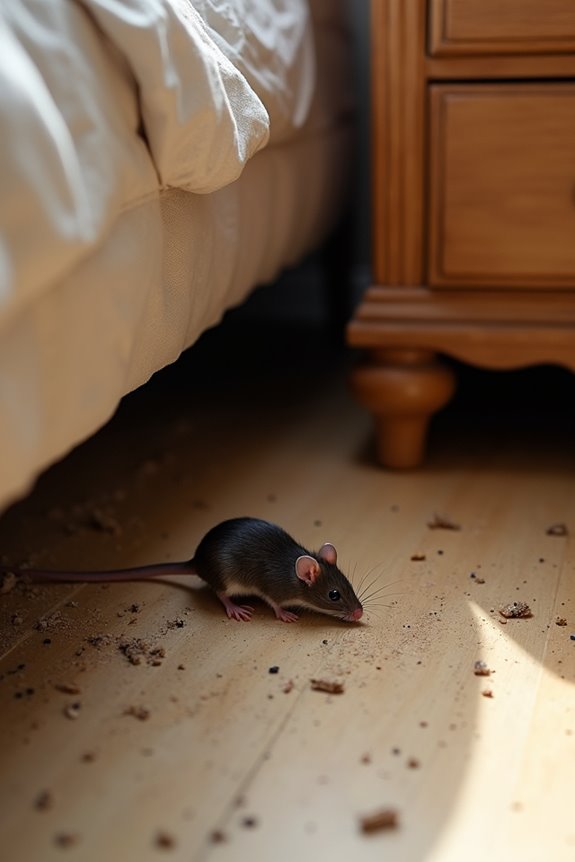
Mice nest under beds because darkness, warmth, and clutter create ideal hideouts. They’ll shred fabric for insulation while you sleep, staying active during nighttime hours. Dressers offer similar advantages: stored clothing provides nesting material, and enclosed spaces feel secure to rodents.
These pests travel through wall voids and baseboards, remaining within 10–30 feet of their nest. This means bedroom furniture often becomes their headquarters. They’re particularly problematic in bedrooms since they nest so close to where you sleep.
Signs of infestation include shredded fabric, droppings on drawers, and faint scratching noises at night. These indicators demand immediate action before mice establish a permanent presence in your bedroom. Early detection and intervention are key to preventing a full infestation in your personal sleeping areas.
Mice Enter Through Gaps in Baseboards and Walls
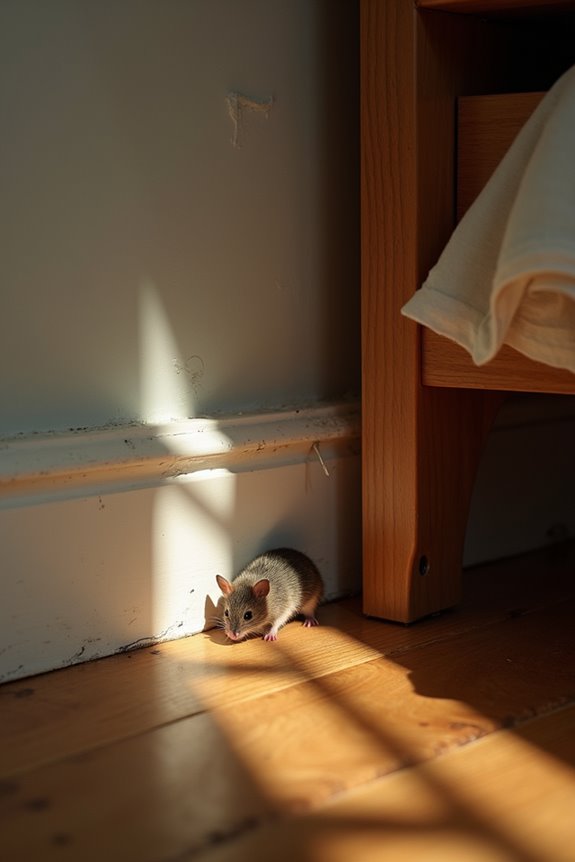
Baseboard gaps are like open highways for mice, and I’ve found they’re one of the most overlooked entry points homeowners miss. These small spaces—sometimes just a quarter-inch wide—connect directly into wall voids, creating hidden pathways from hallways or basements straight into your bedroom. Once inside, mice establish nesting behind dressers, under beds, and within closet hiding spots where warmth and clutter offer protection.
Listen for scratching sounds along wall edges at night; that’s your signal mice are actively using these routes. You’ll likely spot droppings and gnaw marks near baseboards and behind furniture, confirming nocturnal activity. These bedroom entry points aren’t accidents—mice deliberately use baseboard gaps to access resources safely. Sealing these gaps will help stop invasion before mice settle into your bedroom.
Mice Hide in Closets Among Clothing and Storage Materials
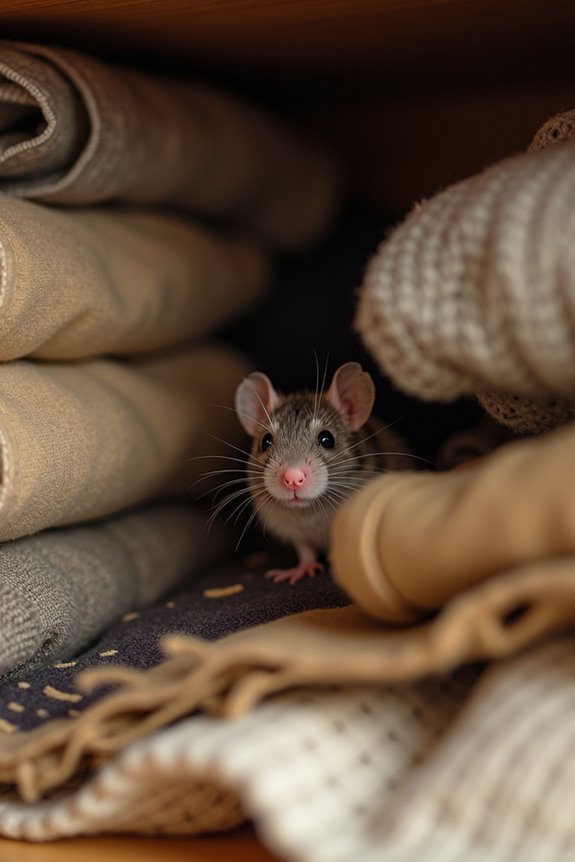
Once mice slip past those baseboard gaps into your bedroom, they’re hunting for the perfect hiding spot—and your closet is basically a five-star resort for them. Your clothing and textiles become both shelter and nesting material, which makes closets irresistible. I’ve noticed mice thread through fabric folds and between hangers, creating hidden travel routes that let them move safely throughout your space. They’re especially drawn to closets near walls or heat sources like water heaters, since warmth equals comfort. To spot their presence, you’ll want to check for droppings, gnaw marks on fabric or cardboard storage boxes, and shredded material. Here’s what works: keep your closet clean, reduce clutter significantly, and seal gaps around access points. These steps directly eliminate the insulation and concealment mice need to thrive in your bedroom.
Seal Window Frames, Outlets, and Other Bedroom Entry Points
How are mice getting into your bedroom in the first place? Entry points are everywhere—around window frames, electrical outlets, door thresholds, and gaps where walls meet flooring. Mice slip through these openings, accessing wall voids that become their highways into our bedrooms.
Here’s what works: Seal window frames with caulk, block outlets with foam sealant, and inspect door thresholds carefully. Check behind baseboards and around plumbing openings in closets. Weatherstripping on doors reduces entry significantly.
Small gaps matter. Mice squeeze through quarter-inch openings. Securing loose siding and brickwork outside prevents them from establishing travel paths toward your bedroom. When you seal these entry points methodically, you create a barrier between your space and unwanted visitors.