

Place your bedroom smoke detector on the ceiling near the room’s center, staying at least 3 feet away from your ceiling fan’s blade tips—this keeps airflow from pushing smoke away. If your fan blocks the ceiling, mount it on the wall 4–12 inches below the ceiling line instead.
Either way, keep it 4 inches from walls and corners, away from vents and doorways. Measure twice before drilling to catch smoke fast without false alarms, and refer to specific guidance ahead for tricky layouts.
Where to Place a Smoke Detector With a Ceiling Fan
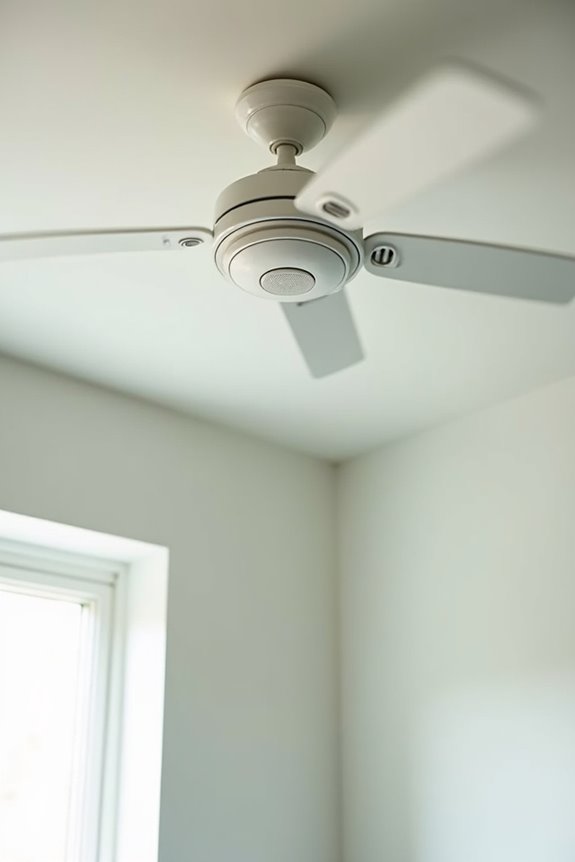
Where exactly should you mount that smoke detector when a ceiling fan’s right there in the way? I’d recommend placing it on your ceiling, but you’ll need at least 3 feet of clearance from those spinning blade tips. Following NFPA 72 rules, I position my detector near the room’s center to catch smoke effectively while minimizing false alarms from drafts. If the fan blocks ceiling mounting, I move to the wall instead, positioning it 4 to 12 inches below the ceiling line. This smoke detector placement strategy gives me roughly 21 feet of detection reach edge to edge, which covers my bedroom adequately. The key’s finding that sweet spot where the ceiling fan won’t interfere with your detector’s ability to sense danger.
The 3-Foot Rule Explained

Why does that 3-foot distance matter so much when you’re mounting a smoke detector near a ceiling fan? I’ll tell you—it’s about keeping your detector actually useful. When your ceiling fan runs, it creates airflow that can push smoke away from the detector’s sensor, delaying critical detection time. The 3-foot rule establishes a minimum clearance from blade tips to your smoke detectors, so the fan’s circulation doesn’t interfere with proper function.
Think of it this way: you’re creating a safety zone. This distance reduces airflow interference considerably, preventing nuisance alarms while maintaining detection accuracy. NFPA guidelines back this approach because it works. By following the 3-foot rule, you’re not just checking a box—you’re properly protecting your bedroom. Your family deserves detectors positioned where they’ll actually catch smoke when it matters most.
Wall vs. Ceiling: Which Works Better for Bedrooms
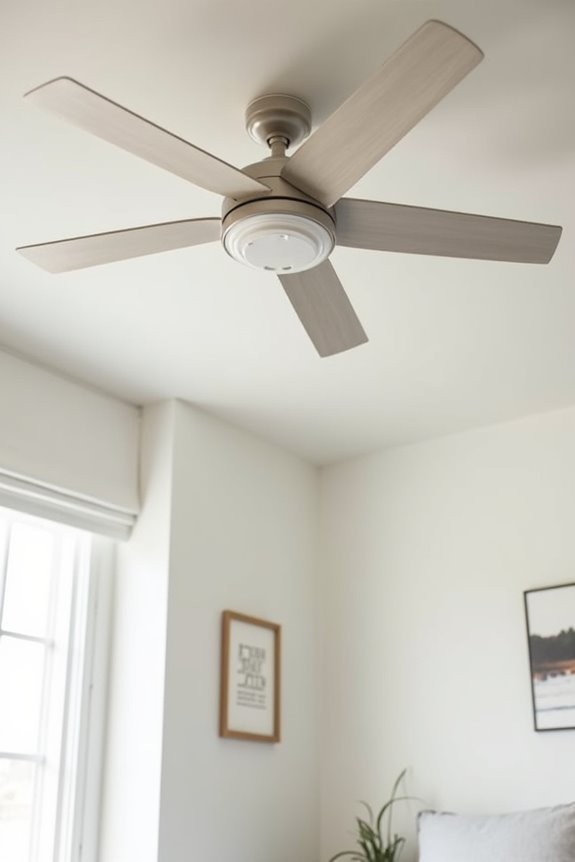
When it comes to mounting your bedroom smoke detector, you’ve got two solid options, and the choice depends on what your room actually looks like. Ceiling mounting is your best option when space permits—it catches smoke faster since heat and smoke rise naturally. Wall mounting works too, especially if ceiling fans or ductwork block overhead space.
| Mounting Type | Height | Distance from Fan | Best For |
|---|---|---|---|
| Ceiling | Center of room | 3+ feet away | Open ceilings |
| Wall | 4–12 inches below ceiling | 3+ feet away | Obstructed ceilings |
Proper placement matters more than which surface you choose. Position smoke detectors near your room’s center, away from doorways and vents. This prevents false alarms from ceiling fans or drafts while maintaining effective detection.
Ideal Locations: Corners, Walls, and Safe Distances

So how do you actually figure out the best spot in your bedroom? I’d place your smoke detector at the room’s center if you’re mounting on the ceiling, keeping it at least 4 inches from walls and ceiling junctions. Here’s what matters most: maintain a 3-foot clearance from your ceiling fan’s blade path—this prevents false alarms while maintaining reliable detection. If wall mounting works better for your space, position it within 3 feet of the ceiling, away from doorways and direct fan airflow. Avoid placing it directly above ceiling vents or intake points where smoke might get drawn away before triggering. These safe distances and strategic locations provide the protection you need, giving you and your loved ones peace of mind.
3 Placement Mistakes That Defeat Early Detection

I’ve made plenty of mistakes when installing smoke detectors, and I’m betting you will too if you’re not careful—especially when that ceiling fan’s spinning above your head and you’re tempted to just slap the detector anywhere convenient. The three-foot rule isn’t some suggestion; it’s the distance you absolutely need between your detector and any vent, fan blade, or air return, because airflow will steal smoke away from the sensor faster than you can say “nuisance alarm” at 3 a.m. If you ignore this spacing or block the smoke’s natural path by mounting too close to doors or vents, you’re basically installing a detector that’ll fail you when it matters most.
Ignoring The Three-Foot Rule
Why does placement matter so much when you’ve got a ceiling fan spinning overhead? I’ll tell you straight: ignoring the three-foot rule puts your family at serious risk.
That moving air disrupts smoke accumulation around your detector. Here’s what happens:
| Scenario | Result | Risk Level |
|---|---|---|
| Detector within 3 feet of blade | Delayed activation | High |
| Detector 3+ feet away | Proper smoke detection | Low |
| Near vents or returns | Altered smoke distribution | High |
When I place detectors too close to ceiling fans, smoke gets mixed and dispersed too quickly. Your detector won’t sound when it should during a developing fire. That delay—even minutes—costs lives. NFPA guidance exists for this reason: keep detectors at least 3 feet from blade tips. This simple measurement protects everyone sleeping in that bedroom.
Blocking Smoke Entry Points
Think you can tuck a smoke detector behind your bedroom door or shove it in a corner? You’re actually creating a dead zone that defeats the whole purpose. When you block smoke entry points with doors, furniture, or walls, you’re preventing smoke from reaching your detector quickly—or at all. I learned this the hard way: placement clearance matters tremendously. Position your detector where smoke can flow freely, away from obstructions. Keep it at least 21 feet from room corners and furniture barriers. This positioning works perfectly with ceiling fan considerations, since you’re already maintaining that essential 3-foot distance from the fan blade. By keeping smoke entry unobstructed, you’re giving yourself genuine early warning when it counts most.
Verify Your Placement: Quick Coverage Check
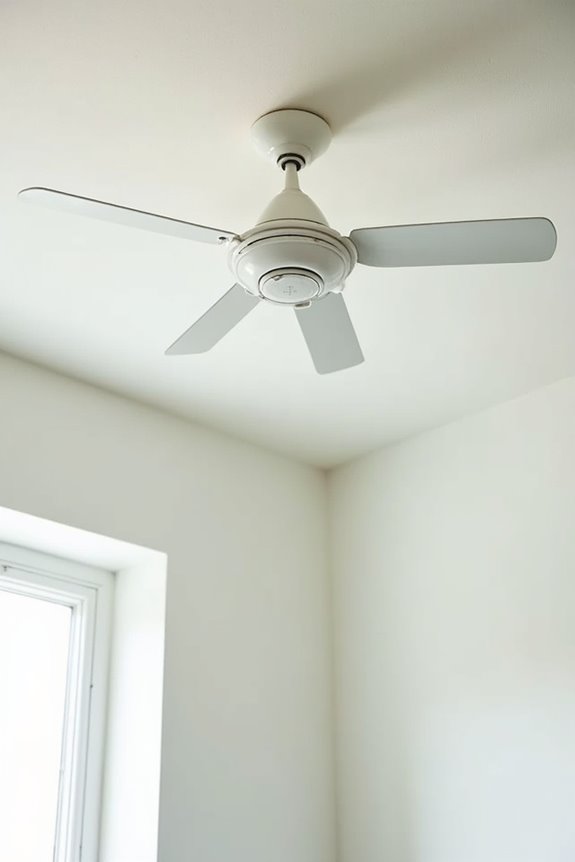
Once you’ve picked your spot, here’s how you’ll know if it’s actually going to work: stand in your doorway and trace an imaginary line from where you’ve marked the detector location to the entrance of your room—that path needs to stay clear so smoke can reach the sensor without getting tangled up in weird airflow patterns. Next, measure the ceiling fan distance to confirm you’re hitting that 3-foot minimum, then check airflow vents are 36 inches away. If wall mounting is your option, verify it’s positioned 4–12 inches below the ceiling. Walk around your room and imagine smoke drifting upward naturally. Does it hit your detector first, or does it get pushed sideways by the fan? You want that direct route to your sensor.