
Your bedroom’s probably hot because of five main culprits: direct sunlight through windows creating a greenhouse effect, poor insulation letting heat seep in, leaky or kinked ducts losing cooled air before it reaches you, a thermostat in the wrong spot giving false readings, or an undersized AC system that can’t handle your cooling needs.
Start by closing blinds during peak afternoon hours, checking for blocked vents, and repositioning your thermostat away from windows.
If those quick fixes don’t work, you have solid options like sealing air leaks, upgrading to a zoned system, or installing a mini-split that’ll improve your comfort.
Common Causes of an Overheated Bedroom

Why does your bedroom feel like an oven while the rest of your house stays comfortable? You’re not alone in this frustration, and there’s usually a straightforward explanation.
Direct sun exposure through large windows creates a greenhouse effect that your AC struggles to combat. Meanwhile, poor insulation and gaps around windows let hot outdoor air seep inside continuously. Your HVAC system itself might be the culprit—duct leaks waste cooled air before it reaches you, while kinked ducts block airflow entirely. A blocked return/damper prevents cool air from circulating properly, leaving your bedroom hot and stuffy. Additionally, uneven airflow means some rooms get priority while yours gets neglected.
Understanding these causes helps you identify your specific problem and take action. Let’s explore practical fixes that’ll solve your bedroom cooling issue.
Why Your Bedroom Isn’t Getting Cool Air (And How to Fix It)

If your bedroom’s still hot even when your AC’s running, I’ve got three culprits you should check: blocked vents and furniture pushing against supply or return grilles, leaky or kinked ducts that lose cold air before it reaches you, and a thermostat stuck in a sunny spot that’s throwing off your whole system’s balance. Each one stops cool air from actually getting to your room, which means you’re stuck sweating while the rest of your house feels fine. Let me walk you through how to spot and fix each problem.
Blocked Vents and Obstructions
One of the most common causes of a hot bedroom? Blocked vents and obstructions that quietly sabotage your cooling efforts. When furniture, rugs, or debris pile up against vent openings, you’re effectively choking off your airflow. This ventilation obstruction forces cool air to bypass your bedroom entirely, leaving you sweating while the system runs full blast.
| Problem | Effect | Solution |
|---|---|---|
| Furniture blocking vents | Reduced airflow to bedroom | Move items 12 inches away |
| Closed dampers | Air pressure diverted elsewhere | Open dampers toward bedroom |
| Debris accumulation | Airflow obstruction worsens | Clear vents weekly |
Inspect all vent openings monthly. Check that dampers aren’t accidentally closed, and verify nothing’s restricting airflow. This regular maintenance keeps your cooling system working efficiently and brings the comfort you need.
Ductwork Leaks and Damage
Ever wonder where all that cool air actually goes after your AC unit pumps it out? Here’s the truth: duct leaks and damage are likely culprits behind your bedroom’s heat problem. When cracks, holes, or loose connections develop in your ductwork, that conditioned air escapes before reaching you. Worse, pressure imbalances push cooled air away while pulling warm air from unconditioned spaces like attics and crawl spaces into your system.
Uninsulated ducts running through hot areas lose their cooling power entirely. Even dirty ducts create airflow resistance, reducing volume and creating temperature inconsistencies. The fix? Professional duct sealing and insulation around vulnerable runs improves airflow consistency. This targeted approach stabilizes your bedroom temperature and restores cooling efficiency where you need it most.
Thermostat Location Issues
Where’s your thermostat actually sitting right now? If it’s basking in direct sunlight, perched near a heat source, or tucked away on a different floor, it’s probably giving your AC system inaccurate readings about your bedroom temperature. Your thermostat reads artificially high temperatures when positioned poorly, telling your cooling system everything’s fine when your bedroom’s actually hot.
Here’s what happens: skewed temperature readings delay cooling cycles or shut them down too early. Moving your thermostat to a central location away from windows and heat-emitting devices fixes this problem. You’ll get accurate temperature readings that match your bedroom’s actual conditions.
Consider upgrading to a zoned HVAC system if repositioning doesn’t work. Zoned systems let you control cooling separately for different areas, so your bedroom gets proper temperature management. Thermostat location directly impacts how well your cooling system performs.
Seal Air Leaks and Check Insulation in Your Bedroom

Since hot air finds its way inside through even the tiniest openings, sealing air leaks is one of the most effective ways to keep your bedroom cooler without cranking up the AC. Check weatherstripping around windows and doors first, replacing worn materials that no longer grip tightly. Then inspect your exterior walls and attic insulation for gaps or deterioration, because heat transfers straight through damaged areas. Use caulk and spray foam to seal cracks around window frames and wall penetrations, being careful not to block vents. The airtightness improvement maintains steadier indoor temperatures throughout the day. If you’re serious about fixing your bedroom’s heat problem, consider a professional energy assessment. They’ll identify insulation deficiencies and quantify air leakage, giving you a clear roadmap for tackling this issue.
Is Your Air Conditioner Big Enough to Cool Your Bedroom?
You’ve sealed up those air leaks and patched your insulation, but your bedroom’s still hot—so what’s going on? Your air conditioner might be the culprit. An oversized vs undersized A/C unit creates real problems. Oversized systems short-cycle, failing to remove humidity and heat effectively. Undersized ones can’t meet your bedroom cooling capacity demands, leaving that space hot while other areas reach your setpoint.
Distance matters too. Rooms farther from the outdoor unit struggle with duct airflow and pressure issues. A manual J calculation—a proper sizing assessment—reveals whether your system matches your bedroom’s actual cooling needs. If it doesn’t, consider upgrading to a zoned system or installing a mini-split unit directly in that room. Either option delivers targeted comfort where you need it most.
Block Sunlight With Strategic Window Treatments

How much heat is actually pouring through your bedroom windows right now? You’d be shocked. Large windows and sun-facing walls create serious solar heat gain, making your bedroom a greenhouse even when your AC’s running hard. I’ve found that blocking sunlight with strategic window treatments works well.
| Treatment Type | Heat Reduction | Cost | Installation | Durability |
|---|---|---|---|---|
| Blackout curtains | 20-25% | Low | Easy | 5-7 years |
| Reflective window film | 30-40% | Medium | Moderate | 10+ years |
| Heat-blocking shades | 25-35% | Medium | Simple | 7-10 years |
| Outdoor awnings | 50-60% | High | Complex | 15+ years |
| Reflective coatings | 35-45% | High | Professional | 10-15 years |
Close blinds during peak afternoon hours. Consider outdoor shading like trees or awnings—they deliver results. These solutions work together to reduce your cooling costs while making your bedroom more comfortable.
Add a Zoned System or Ductless Mini-Split
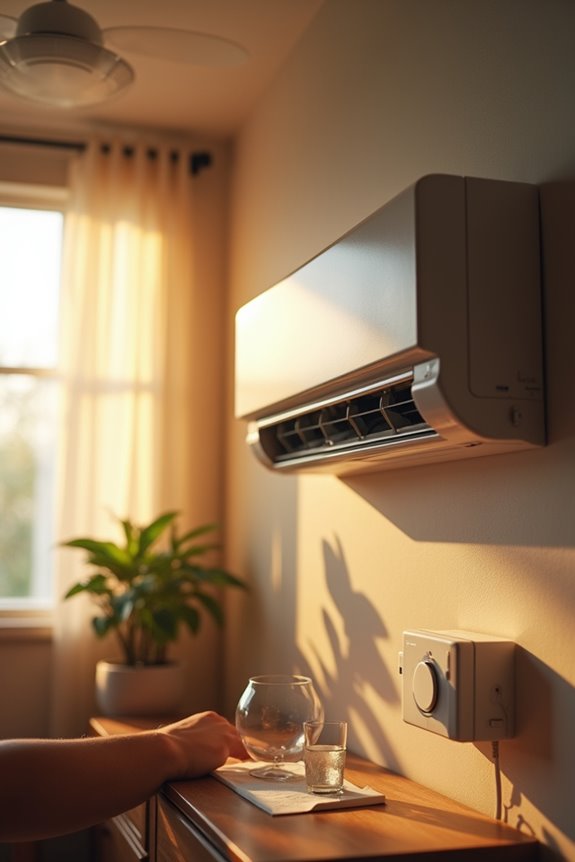
When your bedroom stays hot despite running the AC constantly, your whole-home cooling system’s probably treating every room the same—and that’s the real problem. A zoned HVAC system solves this by dividing your home into separate cooling zones, letting your master bedroom get its own controlled airflow independent of other rooms. You’ll add dampers in your supply ducts, install a zone controller, and set up a dedicated thermostat for that hot space. If you’re hesitant about retrofitting, a ductless mini-split offers targeted cooling with high efficiency and zero ductwork hassle. Both options let you direct more cooled air where you need it most, reducing strain on your entire system while improving comfort in your bedroom.
Professional Fixes: Zoning, Ductwork Repair, and System Upgrades
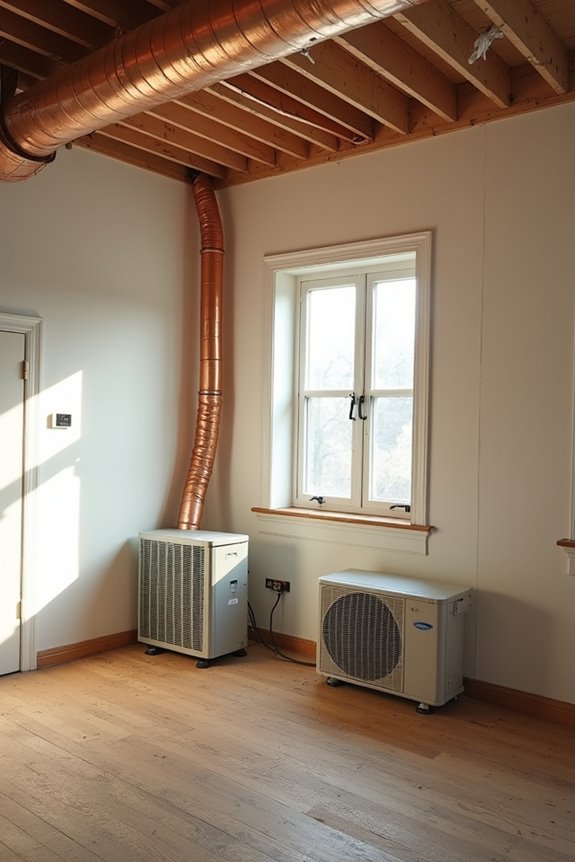
When I realized my bedroom stayed hot despite a working AC unit, I discovered that three professional-level fixes—installing a zoned HVAC system with separate dampers and thermostats, assessing and repairing leaky or undersized ductwork, and evaluating whether my AC unit was actually sized correctly for my home’s cooling needs—could improve my comfort situation. A zoned system lets me direct more cold air to my hot bedroom while reducing waste in cooler areas, but getting it right requires a professional to map out duct routes, install dampers at the right junctions, and set up controls that prevent one zone from pulling too much airflow at the expense of another. I’d also need someone to check whether my existing ductwork was losing cooled air through gaps or poorly sealed connections, or if my AC unit itself was undersized for the square footage it’s supposed to cool.
Zoned HVAC System Installation
Why does your master bedroom stay hot while the rest of your house feels comfortable? A zoned HVAC system solves this by splitting your cooling into separate areas, each with its own thermostat zoning and dampers. Here’s how it works: motorized dampers in your ductwork direct airflow to specific zones based on temperature differences you set. Instead of one thermostat controlling everything, a smart controller manages multiple zones independently. Your hot bedroom gets full cooling while cooler rooms receive less, preventing waste. Installation requires a professional to assess your ductwork, seal leaks, and calibrate dampers for proper airflow balance. You’ll reduce energy use by 20–40% while achieving comfort in every room. It’s an investment that pays dividends through efficiency and personalized comfort throughout your home.
Ductwork Assessment And Repair
Your ductwork is basically the circulatory system of your cooling system, and if it’s damaged or leaky, it’s working against you every single time your AC runs. Duct leaks in your attic can waste tons of conditioned air before it reaches your bedroom, which explains those frustrating hot spots.
Here’s what I’d recommend: listen for hissing or whistling sounds during operation, then visually inspect accessible ducts for cracks or loose connections. You can handle minor duct sealing yourself using foil-backed tape and insulation, but a professional inspection catches hidden problems like kinks and blockages that degrade your airflow.
Once they’ve identified issues, professionals can seal everything properly, so your cooling actually reaches where you need it most.
AC Unit Sizing Evaluation
Have you considered that your AC unit itself might be responsible for your bedroom’s heat problem? Your system’s capacity directly impacts room cooling performance. If your unit is too small, distant rooms stay hot and humidity lingers. If it’s oversized, short-cycling creates temperature swings between spaces.
| Sizing Issue | Effect | Solution |
|---|---|---|
| Undersized unit | Hot bedrooms, high humidity | Upgrade capacity |
| Oversized unit | Short-cycling, temperature swings | Right-size system |
| Poor airflow | Uneven cooling | Seal ducts, check ductwork |
| Improper Manual J calculation | Incorrect capacity selection | Professional assessment |
| Duct leaks | Reduced room cooling | Duct sealing |
A professional performs load calculations using Manual J standards, examining window size, insulation, room volume, and sun exposure. They’ll identify whether your HVAC sizing matches your home’s needs. Sometimes duct sealing alone fixes the problem before upgrading becomes necessary.