

Your bedroom’s the one place you control everything—the walls, furniture, noise level, who enters. That command is what opens real relaxation. When you close that door, you’re creating a border between the outside world’s chaos and your personal retreat. Your mind knows this is your space to be yourself, no pretenses. Clear borders, thoughtful design, and digital discipline build it from just a room into a genuine sanctuary. There’s more to discover about building this refuge.
Your Bedroom as a Personal Sanctuary: Why Relaxation Starts Here
Have you ever noticed how stepping into your bedroom feels different from walking into any other room in your home? That’s because your bedroom is truly your personal space—a sanctuary designed just for you. When you close that door, you’re creating a boundary between the outside world and your own retreat. The furniture you choose, the colors on your walls, the textures of your fabrics—they all work together to say something about who you are. This personalization matters more than you might think. It creates an environment that feels warm and welcoming rather than clinical. By surrounding yourself with choices that matter to you and your lifestyle, you’re building a space where relaxation happens naturally. Your bedroom becomes the one place where you can truly be yourself.
How Strong Boundaries Protect Your Relaxation Space
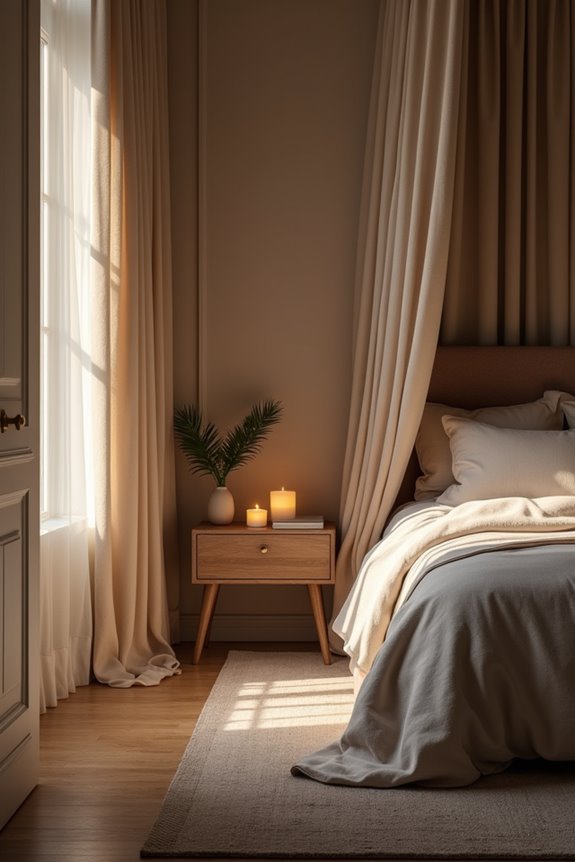
I’ve learned that without clear boundaries in my bedroom, I can’t truly relax—whether that’s about how close someone sleeps next to me, when people can enter, or how I use my space for quiet time. Starting these conversations early, before resentment builds up, keeps me from feeling trapped or suffocated later on. When I’m intentional about what I need and communicate it upfront, my bedroom becomes the restorative refuge it’s supposed to be, and my relationships actually strengthen because everyone knows what to expect.
Setting Clear Personal Boundaries
When you’re sharing your bedroom with a partner or living in a house where limits blur, your sanctuary can start feeling less like a retreat and more like a thoroughfare. I’ve learned that setting clear personal space boundaries early matters.
Here’s what I focus on:
- Establish entry rules—knock before entering, respect closed doors, agree on when the bedroom’s off-limits
- Define quiet hours—decide when phones stay silent and conversations pause so rest happens uninterrupted
- Claim your zones—designate your side of the bed, your closet corner, your reading nook without negotiation
- Communicate expectations—discuss what “privacy” means to you specifically, preventing resentment later
When I’m clear about these boundaries upfront, I notice less stress creeps in. My bedroom finally feels like mine again—a place where I can genuinely unwind instead of constantly managing intrusions. That protection is important.
Communicating Space Needs Early
Why do so many of us wait until resentment builds before talking about what we actually need in our bedrooms?
I’ve learned that early conversations about space needs protect our relaxation zones. When I communicate my space requirements upfront, I’m setting boundaries that prevent future frustration. Here’s what matters:
| Need | Timeline | Benefit |
|---|---|---|
| Bed size preference | Before moving in | Prevents sleep disruption |
| Personal relaxation zones | First week | Keeps designated calm areas safe |
| Furniture placement | During setup | Reduces encroachment issues |
These discussions aren’t uncomfortable—they’re actually freeing. When I talk openly about needing my corner for unwinding, my partner understands it’s not rejection; it’s self-care. Changes happen quickly, sometimes within days. This proactive approach turns potential conflict into shared understanding, creating bedrooms where both of us genuinely relax. Personal space becomes something we protect together, not something we fight over later.
Clear Space, Clear Mind: Why Decluttering Your Bedroom Comes First
How often do you walk into your bedroom and feel your shoulders tense up? I’ve learned that clutter doesn’t just mess with your space—it messes with your mind. When I finally decided to declutter my personal space, things improved noticeably.
Here’s what I discovered works:
- Remove items that don’t spark joy or serve a purpose—this instantly lightens the mental load
- Organize what remains into designated zones—your brain appreciates the predictability
- Invest in storage solutions that actually fit your lifestyle—not generic boxes that create more chaos
- Keep only essentials visible—hidden clutter still stresses you out, even if you can’t see it
Minimalism isn’t about having nothing. It’s about creating breathing room where your mind can finally relax. When I simplified my surroundings, my stress dropped noticeably. That’s what a clear, intentional space can do for you.
Designing Your Bedroom for Deep Relaxation: Color, Light, and Furniture
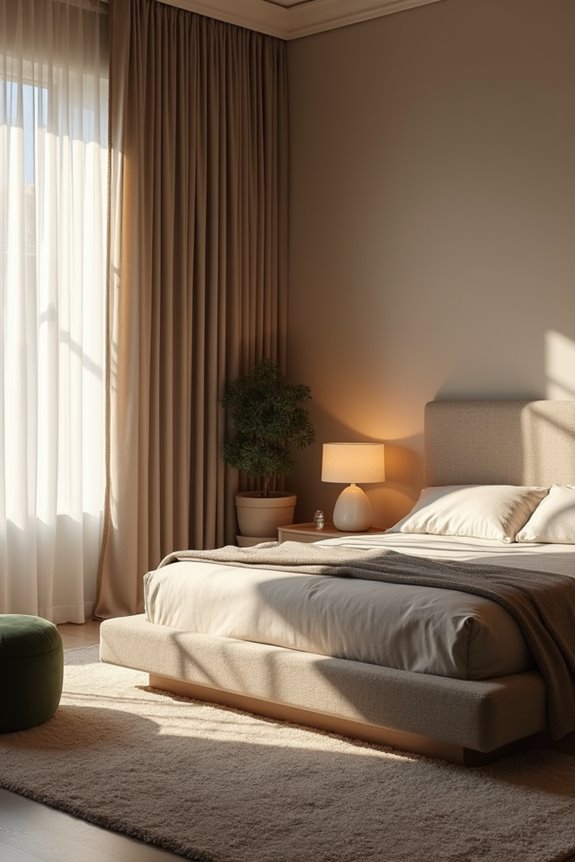
After you’ve cleared away the clutter, you can design a space that feels like a sanctuary. Color shapes how I feel in my personal bedroom more than anything else. Soft, calming wall hues—think warm grays or gentle blues—ground me without that sterile hospital vibe. Then I positioned a low-back chair by my window, letting natural light flood in without blocking my sightlines. This simple move improved my mornings. I layered in natural materials: cotton bedding, wood furniture, and stone accents that connect me to something real. Bespoke furniture mounted to walls maximizes my awkward space while supporting safety. These deliberate choices create warmth that sustains my comfort, making my bedroom distinctly mine.
Evening Routines That Signal Rest to Your Brain: And Your Bedroom

Your brain doesn’t just flip a switch at bedtime—it needs consistent cues that signal wind-down, and that’s where your evening routine becomes the bridge between your busy day and restful sleep. I’ll show you how to establish a bedtime ritual that actually sticks, create environmental sleep cues throughout your bedroom, and disconnect from digital distractions so your mind can settle into the calm your body craves. When you get these three elements working together, your bedroom becomes a place that tells your nervous system it’s time to let go.
Establishing Your Bedtime Ritual
Why do some nights feel easier to drift off than others? I’ve discovered that establishing a bedtime ritual improves my sleep and mental health. When I follow the same sequence each evening, my brain recognizes these cues and prepares for rest.
Here’s what I do:
- Dim the overhead lights thirty minutes before bed
- Change into comfortable sleepwear and brush my teeth
- Set my phone in another room to eliminate screen stimulation
- Spend ten minutes stretching or reading something calming
This predictable routine strengthens sleep boundaries. My body learns what’s coming next. The consistency signals my brain that wakefulness is ending, and relaxation is beginning. I fall asleep faster and sleep deeper when I stick with it. Building this ritual requires commitment, but the benefit—genuine rest and improved mental health—makes it worthwhile every night.
Creating Environmental Sleep Cues
Building a bedtime ritual sets you up for success, but here’s what I’ve learned: the space around you matters just as much as what you do in it. Your personal space becomes a sleep sanctuary when you intentionally design it. I’ve found that dimming lights an hour before bed triggers melatonin production—your body’s natural sleep signal. Keeping your room around 65-68 degrees Fahrenheit makes falling asleep easier. I added soft neutral textures and minimal tech, creating a bedroom that signals rest the moment I enter. These environmental cues—cooler temperatures, subdued lighting, quiet surroundings—train your brain to recognize the room itself as a signal for sleep. When your personal space consistently reinforces rest, you’re not fighting biology anymore; you’re working with it.
Disconnecting From Digital Distractions
How many times have you reached for your phone right before bed, telling yourself you’d just check one message?
I’ve been there. That digital distraction hijacks your brain when you’re trying to wind down. Here’s what works:
- Remove phones and laptops from your bedroom – they’re notification factories that keep your mind firing
- Silence alerts at least 30 minutes before sleep – your brain needs quiet to shift gears
- Replace screen time with tactile activities – reading or stretching grounds you in the present moment
- Create a charging station outside your bedroom – out of sight means out of mind
When you disconnect from digital distractions, you’re actually reconnecting with yourself. Your racing thoughts settle. Your nervous system downshifts. That’s when genuine relaxation happens. It feels odd at first, but your sleep quality improves noticeably within a week.
Negotiating Personal Space in a Shared Bedroom
When you move in with someone, everything changes—especially your bedroom. You’ve got to talk about personal space right away, or you’ll feel trapped. I learned this the hard way.
Start by discussing bed-sharing and where you’ll each relax. Create designated corners—I claimed a reading nook with a chair, while my partner took the window seat. This simple division prevented daily friction. Next, tackle storage. Fitted shelving and under-bed containers keep your stuff separate and organized, preserving that essential breathing room.
These conversations feel awkward initially, but they work fast. Within days of negotiating limits openly, you’ll notice the tension lifting. Your bedroom becomes a genuine refuge again, a place where you both feel respected and comfortable. That’s when relaxation actually happens.