
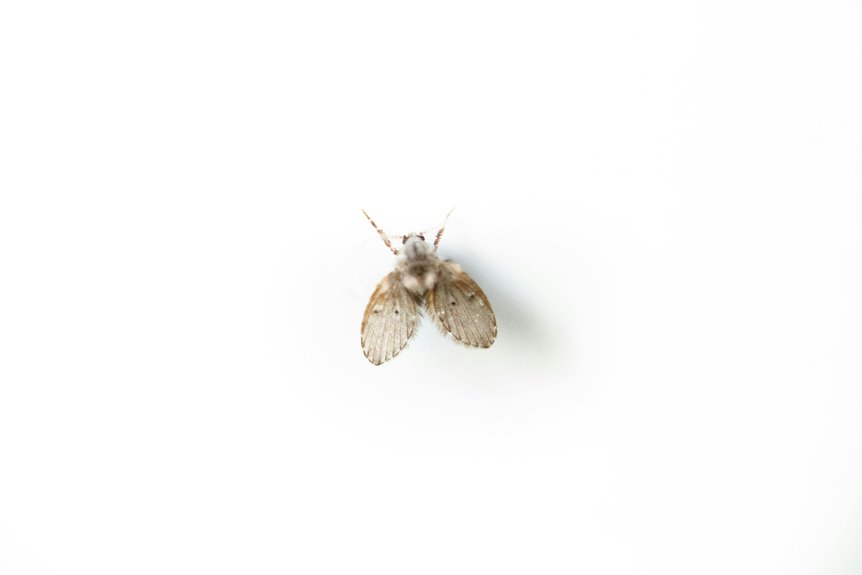
You’re probably looking at drain flies or springtails—tiny black bugs that love your bathroom’s moisture. Drain flies are fuzzy, moth-like insects about 1/8 inch long that hang around drains where biofilm builds up. Springtails are smaller jumpers that signal excess humidity. Both thrive in damp conditions, so they’re telling you something: your bathroom has moisture problems. The good news? Identifying which pest you have is your first step toward addressing it.
The Five Most Common Tiny Black Bathroom Bugs
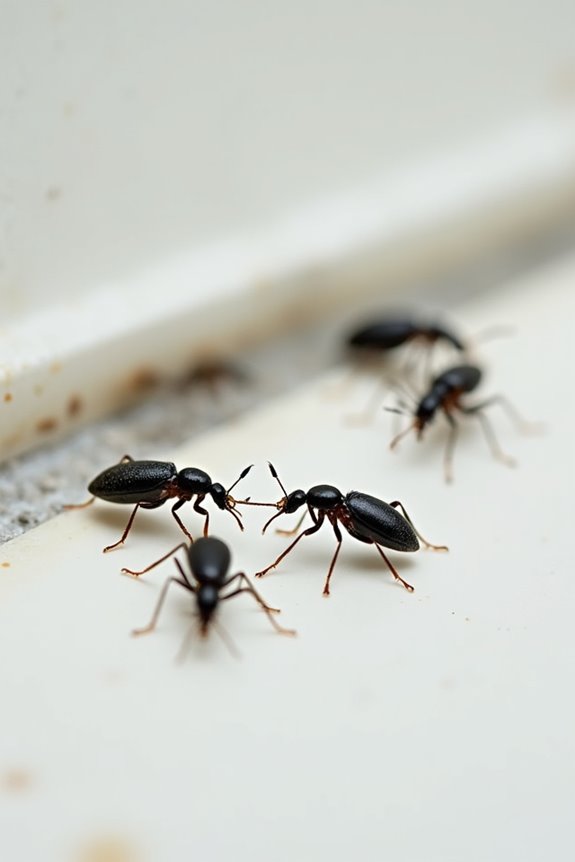
When you spot those mysterious dark specks crawling around your bathroom, you’re probably wondering what they are—and more importantly, how to get rid of them. I’ve identified five common bathroom pests you’re likely encountering. Drain flies, about 1/8 inch long with fuzzy, moth-like bodies, rest near drains where biofilm builds up. Fungus gnats resemble tiny mosquitoes and hover around damp soil or windows. Small beetles wander toward light sources, typically 1/12 to 3/16 inch long. Springtails, measuring 1/16 to 1/8 inch, jump using a tail-like furcula and signal moisture problems rather than direct threats. Finally, booklice—pale, quick-moving creatures under 3/16 inch—thrive in humidity. Each pest indicates specific moisture problems in your bathroom, revealing where you need to focus your attention.
Drain Flies: Fuzzy Moths in Your Sink
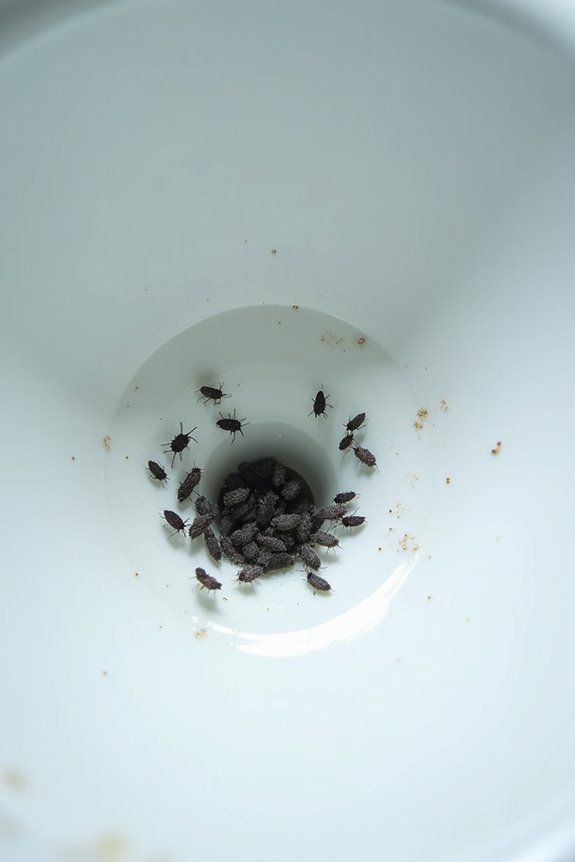
Why do those tiny fuzzy moths keep appearing near your sink, no matter how much you clean? Those are drain flies, also called moth flies, and they’re about 1/8 inch long with hairy-looking wings. They’re frustrating, but understanding them helps you win this battle.
These insects lay eggs directly into the biofilm—that slimy, gelatinous buildup inside your pipes. Their larvae develop there, thriving in the accumulated sludge. You’ll spot adults hovering weakly near drains before settling on walls.
Your action plan: remove that biofilm by cleaning drains with enzymatic cleaners or boiling water. Try a 24-hour tape test over suspected drains to catch emerging adults and confirm breeding sites. Finally, fix moisture problems to prevent reinfestation.
Springtails: Tiny Jumpers That Signal Moisture
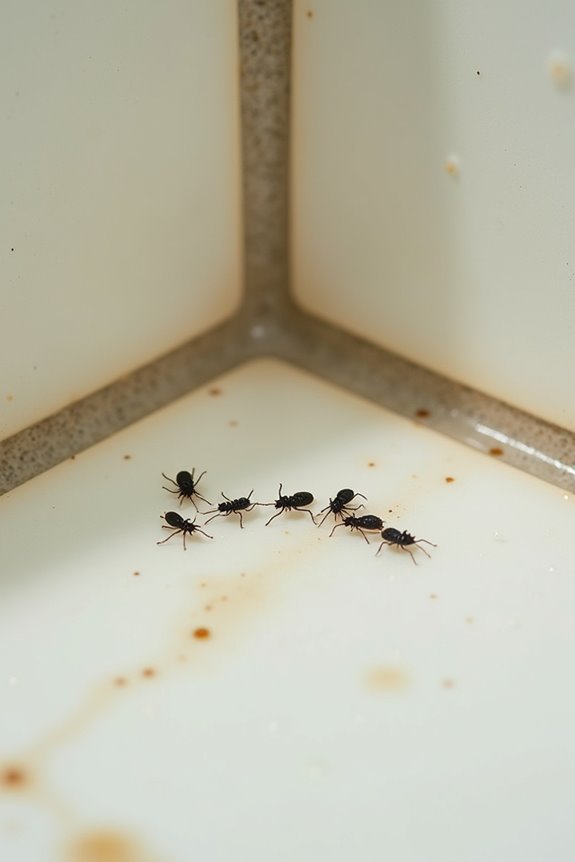
If you’ve tackled your drain flies but still see tiny bugs bouncing around your bathroom, you’re probably dealing with springtails—and they’re telling you something important about your space. These insects, measuring just 1/16 to 1/8 inch long, thrive in moisture-heavy environments like ours. They’re soft-bodied jumpers with short antennae that use a special mechanism underneath their bodies to spring away when disturbed. While they’re completely harmless to us and won’t damage our homes, their presence signals excess humidity. Springtails feed on mold and mildew, so they gravitate toward bathrooms where moisture accumulates. The solution involves reducing humidity through exhaust fans, fixing leaks quickly, and cleaning moldy areas thoroughly. These steps address the root problem your bathrooms face.
Fungus Gnats or Something Else? How to Tell Them Apart
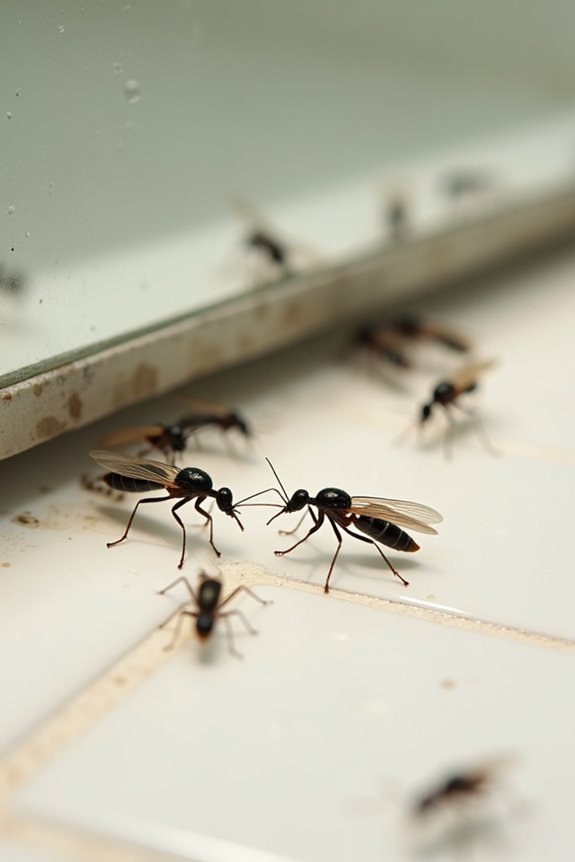
If you’ve spotted tiny black bugs hovering around your houseplants or bathroom windows, you’re probably dealing with fungus gnats—those 1/12 to 1/8 inch pests that look like miniature mosquitoes with long legs and antennae—but I’ll show you exactly how to tell them apart from drain flies and springtails by examining where they actually live and how they move. The key difference comes down to habitat: fungus gnats breed in moist potting soil where they lay 100–200 eggs and damage plant roots, while drain flies hang out in biofilm inside your drain pipes with their fuzzy, moth-like wings, and springtails prefer high-humidity areas around sinks where they jump instead of fly. To identify what you’re dealing with, check your plant soil for larvae, inspect your drains for biofilm buildup, or watch whether the bugs jump around—these simple observations will tell you exactly which pest is invading your space.
Visual Identification Features
The real frustration kicks in when you’re staring at these tiny black bugs and can’t figure out exactly what you’re dealing with—because honestly, they all look quite similar at first glance. Here’s what separates fungus gnats from drain flies through appearance alone. Fungus gnats measure 1/12 to 1/8 inch with distinctly long legs and antennae, hovering near your plants with clear wings. Drain flies, conversely, are about 1/8 inch, fuzzy, and moth-like with hairy wings—they rest motionless near drains rather than fly around. The identification process becomes easier once you notice where they congregate. Fungus gnats cluster around moist soil in potted plants, while drain flies congregate on drain surfaces. Pay attention to their behavior and location, and you’ll identify this distinction quickly.
Habitat And Behavior Differences
Where you’re finding these bugs tells you almost everything you need to know about what’s actually bugging you. Location reveals identity, and understanding these differences is helpful.
| Bug Type | Location | Food Source |
|---|---|---|
| Fungus Gnats | Near houseplants, soil | Plant roots, moisture |
| Drain Flies | Around drains, damp areas | Biofilm, organic buildup |
Fungus gnats hover around your potted plants and bathroom windows where moisture lingers in soil. They’re attracted to that consistently damp environment where they lay eggs. Drain flies, though? They’re different creatures entirely. These fuzzy pests rest near your drains and damp areas, feeding on biofilm that accumulates in pipes. If you’re seeing them near plants, you’ve got fungus gnats. Near drains and standing water, that’s drain flies. Understanding their habitats helps you target the right solution and address the problem.
Pinpoint Your Pest With Quick Tests
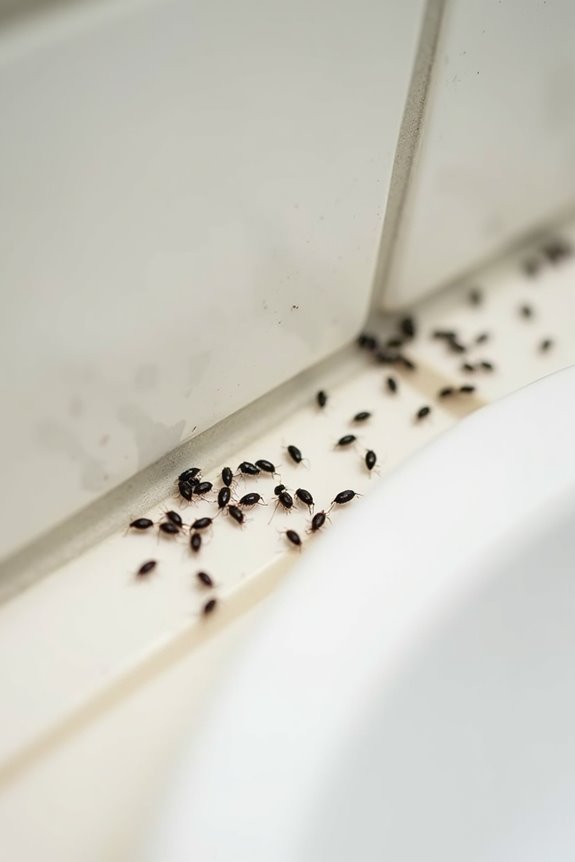
How can you tell what’s actually crawling around your bathroom? Quick tests reveal your specific bathroom pests faster than guessing. First, check moisture levels near sinks and showers—drain flies thrive where you find standing water and organic buildup. Next, observe their size and movement. Use a ruler to measure: if they’re fuzzy and weak fliers around 1/8 inch, you’re likely dealing with drain flies. If they jump using a tail-like furcula, springtails indicate serious moisture problems. Watch where they congregate—near light sources suggests beetles, while hovering near damp soil points to fungus gnats. These quick tests narrow down your bathroom pests significantly, helping you target treatments that actually work for your situation.
Booklice and Beetles: Hidden Clues They’re in Your Bathroom
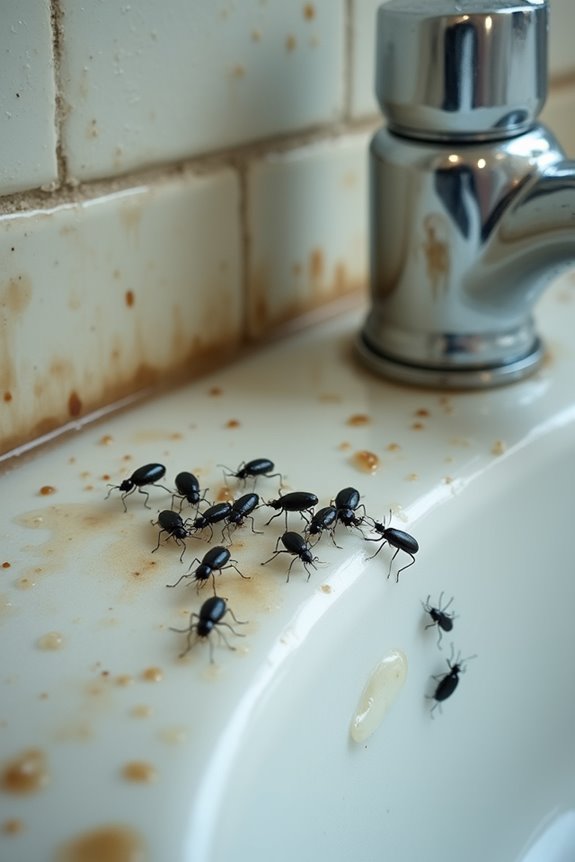
You’ve probably never heard of booklice, but if you’re spotting tiny, pale bugs crawling frantically across your damp bathroom walls and fixtures, they’re likely your culprit. These see-through insects—smaller than 3/16 inch—thrive when humidity stays above 58%, which most bathrooms provide effortlessly. I’ve found them clustered near sinks, showers, and damp wallpaper because moisture creates their ideal habitat.
The real clue? They indicate ongoing moisture problems in your bathroom. When humidity drops below 45%, they die quickly, which tells me something important: you’ve got a ventilation or leak issue worth investigating. They’re harmless to you and your family, but their presence signals that your bathroom’s moisture levels need attention. Controlling them means addressing the root cause—reducing humidity and improving airflow.
Why Moisture Is Behind Every Bathroom Bug Problem
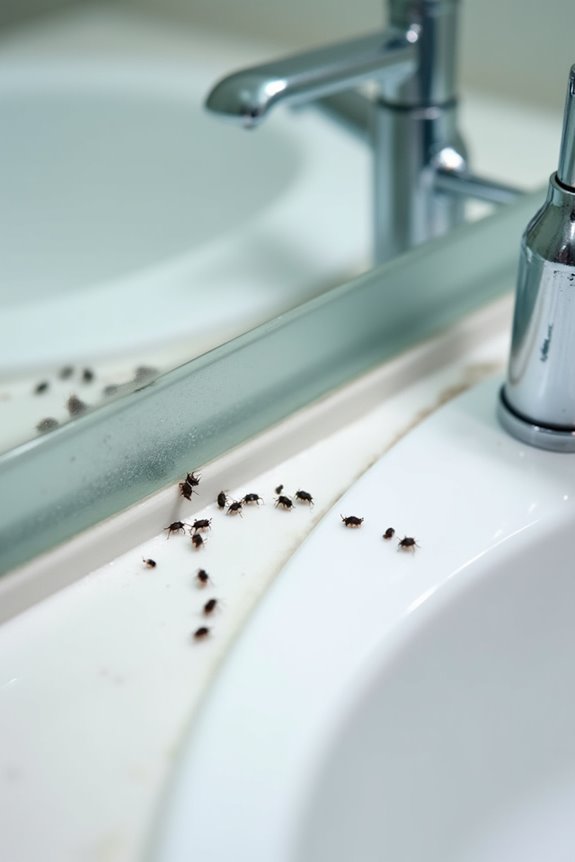
Because moisture creates the perfect breeding ground, nearly every tiny bathroom bug you’ll encounter traces back to water—whether it’s from leaks, condensation, or poor ventilation. These pests thrive in damp environments, settling into drains, under sinks, and around showers where they multiply rapidly.
The culprits? Hidden leaks, water seeping behind tiles, and air pressure pulling humid air from crawl spaces sustain these breeding sites indefinitely. You’ll notice persistent damp spots, mold growth, and constant condensation as warning signs.
What works: maintaining humidity between 30-50% and running your exhaust fan during and after showers dramatically reduces pest problems. Address water leaks first, improve ventilation second, then remove standing water. This foundation stops infestations before they start.
What Your Pest Sighting Means: Humidity, Leaks, and Mold Risk
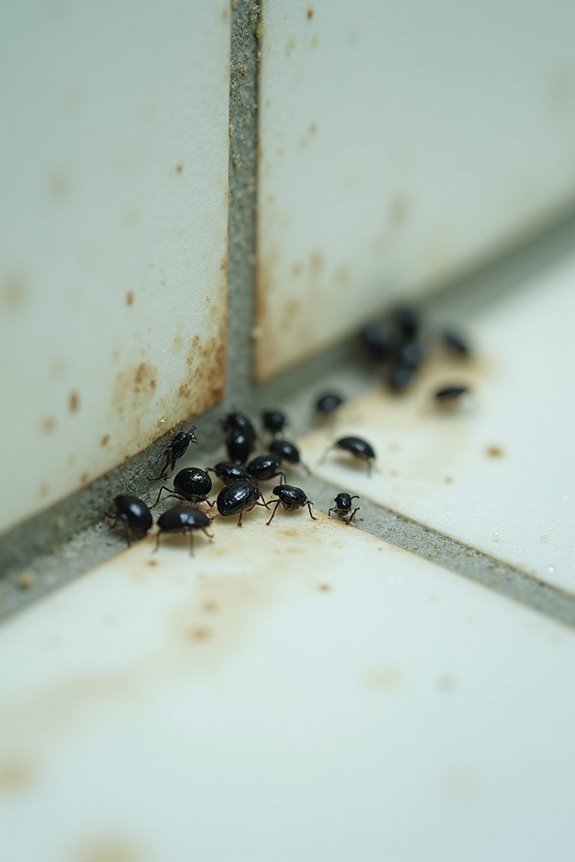
When I spot tiny black bugs crawling across my bathroom tiles, I’m looking at a warning sign that moisture levels—ideally kept between 30–50%—have crept dangerously higher, often above 58%, creating the perfect breeding ground for drain flies, springtails, and booklice. These pests aren’t just annoying; they’re messengers telling me I’ve got hidden water damage, slow leaks behind walls, or standing moisture I haven’t noticed yet, and ignoring them means mold’s likely already growing in places I can’t see. Before I can eliminate the bugs themselves, I need to hunt down what’s feeding them—whether that’s biofilm coating my drain pipes or dampness lurking behind my shower walls.
Moisture Creates Ideal Conditions
Why do tiny black bugs seem to love bathrooms so much? The answer lies in moisture. Your bathroom creates the perfect breeding ground for drain flies, springtails, and fungus gnats because humidity and dampness attract them like a magnet. Leaks behind tile, water pooling around fixtures, and poorly ventilated showers provide ideal conditions for pests. These bugs don’t just visit—they thrive on the biofilm and mold that flourish in wet environments. When condensation coats your mirror and you detect that mildewy odor, your bathroom humidity has reached levels that support infestation. The moisture was actively feeding the problem. Recognizing this connection improved how I approached bathroom pest prevention.
Hidden Water Damage Signs
How’d you know if water’s already sneaking behind your bathroom walls? Look for damp ceilings, bubbling paint, and peeling wallpaper—these signal hidden moisture trapped inside. Stained or warped drywall tells you leaks from toilets, sinks, or supply lines have been working quietly, eating away at your home’s structure.
The real trouble? You can’t always see what’s happening. Slow drainage and roof failures let moisture seep into cavities where mold thrives. That musty odor you’re noticing? That’s your warning sign. Black, green, or white fuzzy patches hidden behind cabinets confirm it.
This matters because hidden water damage doesn’t just sit there—it breeds the bugs you’re finding. Wood rot accelerates, attracting springtails and drain flies that feed on developing mold colonies. Addressing leaks now prevents expensive structural deterioration and pest invasions later.
Control Moisture: Stop Bugs at the Source
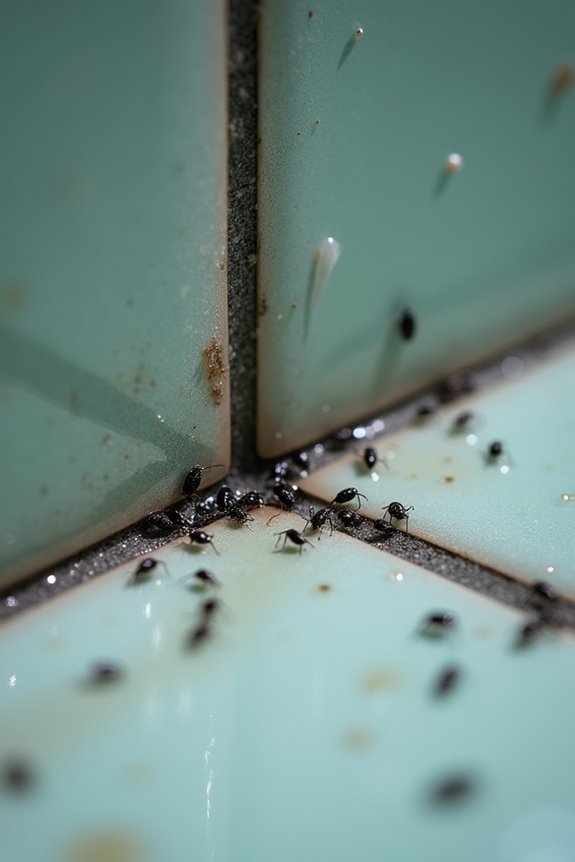
If you’ve got tiny black bugs crawling around your bathroom, moisture is almost certainly the culprit. Controlling humidity is your first line of defense against these pests. Keep humidity between 30-50% because bugs can’t thrive in drier environments. Start by fixing leaks—check under sinks, around toilets, and behind tile where water hides. Run your exhaust fan during and after showers; don’t skip this step. Clean your drains regularly with enzyme cleaners to remove drain biofilm, which feeds these insects. If humidity stays stubborn, grab a dehumidifier. These actions create hostile conditions for bugs. You’re cutting off their water supply and breeding grounds simultaneously.
When You Need a Professional
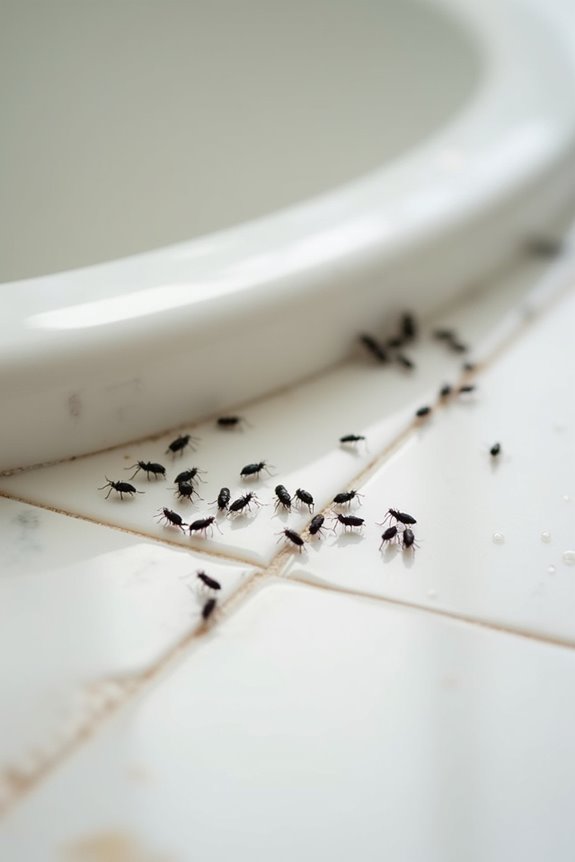
If you’re seeing drain flies constantly despite your weekly water runs and enzymatic cleaners, you’ve probably hit a point where calling in a professional makes sense—they can identify whether you’re actually dealing with drain flies or something else entirely, and they’ve got the tools to assess hidden moisture problems in your walls or under fixtures that you can’t spot yourself. A serious infestation means the biofilm’s built up deep in your pipes where boiling water can’t reach, so a pro can run camera inspections and use commercial-grade drain treatments to break it all down. Once they’ve cleared the infestation, they’ll help you figure out which areas in your bathroom are staying too wet and how to fix the moisture at its source so these bugs don’t come back.
Signs Of Serious Infestations
When do you know it’s time to call in the experts? You’re looking at a serious infestation when these signs appear:
- More than 50 bugs crawling on walls or surfaces, even after you’ve fixed moisture problems
- Persistent activity near multiple drains, vents, or under sinks despite your corrective efforts
- Fabric damage in closets or storage areas indicating drain flies have spread beyond bathrooms
If DIY moisture control and cleaning haven’t reduced populations, professional pest control becomes necessary. A specialist locates hidden breeding sites—biofilm in drains, moisture pockets behind tile or drywall—that remain invisible to homeowners. They identify the exact pest and create a targeted, long-term plan that prevents recurrence. Scheduling a free inspection confirms species identification and provides peace of mind. Address infestation before it spreads.
Professional Identification And Testing
Once you’ve exhausted your own efforts to eliminate bathroom bugs, getting a professional involved becomes your smartest move—and honestly, it’s the only way you’ll know for certain what you’re dealing with. A pest control expert can identify whether you’re battling drain flies, fungus gnats, or something else entirely through proper professional identification and testing. They’ll assess your moisture levels, inspect your pipes, and pinpoint breeding sites you’ve missed. This matters because drain flies require different treatment than moisture-loving springtails, for instance. Professionals have tools and training that reveal hidden problems—like excessive humidity or biofilm buildup—that fuel infestations. They’ll test your bathroom environment systematically, then recommend targeted solutions. You’ll finally get answers and a real action plan instead of guessing.
Moisture Assessment And Remediation
Why does your bathroom keep attracting these pests even after you’ve scrubbed and ventilated? The answer often lies in hidden moisture that you can’t see. A professional moisture assessment identifies what’s really driving drain flies and other bugs to your space. Here’s what happens during one:
- A technician measures your indoor relative humidity and pinpoints ongoing moisture sources like leaking pipes, faulty wax rings, or insufficient ventilation
- They inspect P-traps, drains, and plumbing gaps where moisture-loving pests breed
- They recommend fixes—exhaust fan upgrades, leak repairs, improved drainage—to maintain humidity between 30–50%
When DIY efforts fail, professional remediation tackles root causes directly. You’re not just treating symptoms; you’re eliminating the environment these pests need to survive.