
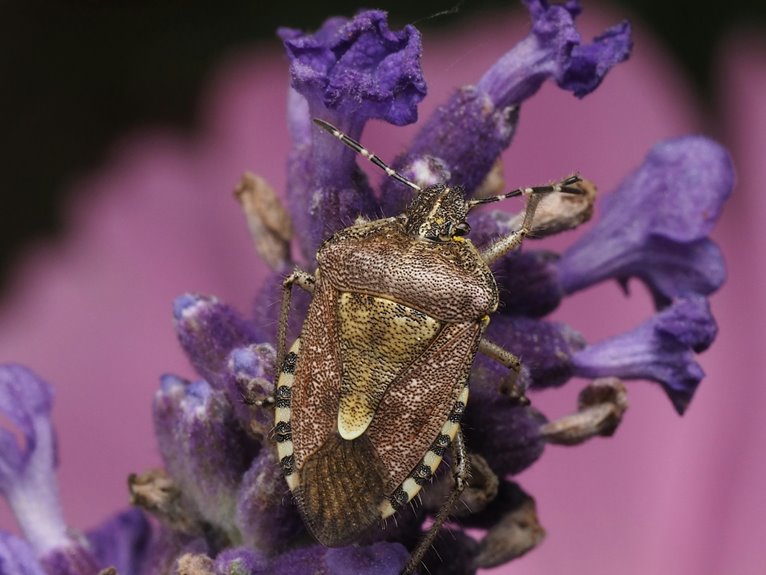
Yeah, bed bugs can definitely show up in your bathroom, though they won’t stay long-term. They hitchhike in on clothing, towels, and luggage from infested bedrooms, then hide behind baseboards, under sinks, and in tile grout. Bathrooms offer moisture and heat, which keeps them alive temporarily, but they’re not ideal breeding grounds. You’ll spot them as tiny reddish-brown bugs or dark fecal spots near corners. The good news? Quick action prevents a full infestation—and there’s a straightforward plan to tackle them.
Do Bed Bugs Actually Live in Bathrooms?
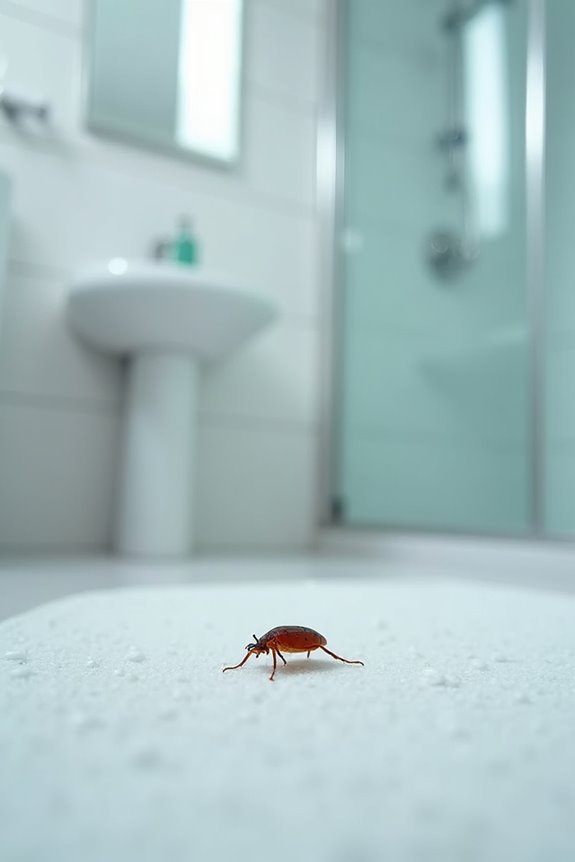
Bed bugs can definitely show up in your bathroom, but they’re not there by choice—they’re just passing through. These pests hitchhike on your clothing, towels, and personal items from infested bedrooms or other rooms, sneaking into your bathroom uninvited. Once they arrive, they’ll find plenty of hiding spots to settle temporarily. Behind baseboards, inside tile grouts, under shelves, and along tile seams become their hideouts. The humidity and heat support their survival, though bathrooms aren’t ideal long-term breeding grounds because of regular cleaning and moisture levels. If you spot one, it’s a warning sign. Taking quick action like laundering fabrics and sealing cracks prevents them from spreading throughout your home and establishing colonies in your bedroom or living spaces.
How Do Bed Bugs Get Into Your Bathroom?
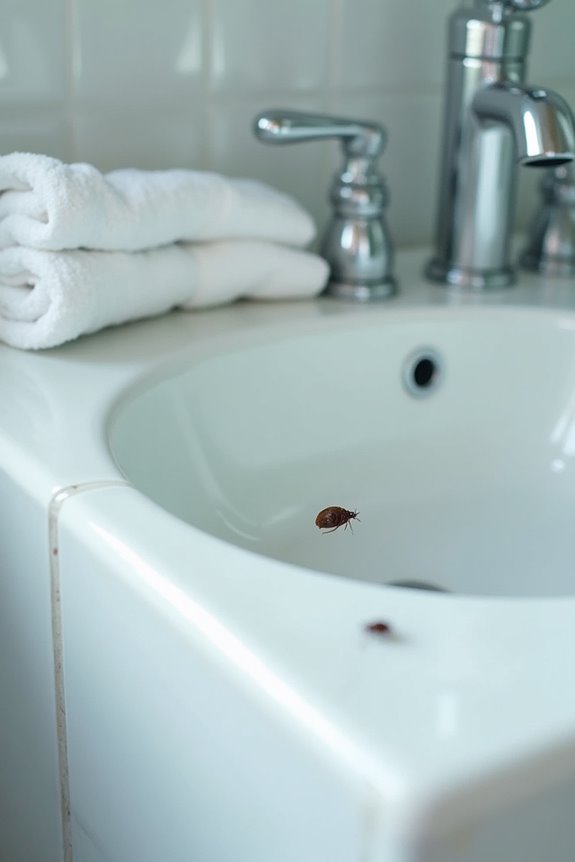
How’d they end up in your bathroom in the first place? Bed bugs hitchhike on your clothing, towels, or luggage from infested areas, sneaking into bathrooms through cracks, gaps, or shared plumbing lines. They travel along fabrics you bring in—cosmetic bags, bath towels, anything really—especially in multi-unit buildings where adjacent apartments might be infested. Once inside, they thrive because bathrooms offer everything they need: warmth, humidity, and darkness. They hide behind sinks, inside cupboards, and along baseboards where you’ll never spot them. Those gaps between tiles and broken grout? Perfect micro-habitats. Even one wandering bug you spot could signal a bigger infestation elsewhere in your home. That’s why catching the problem early matters so much for your peace of mind.
Why Bathrooms Can Attract Bed Bugs?
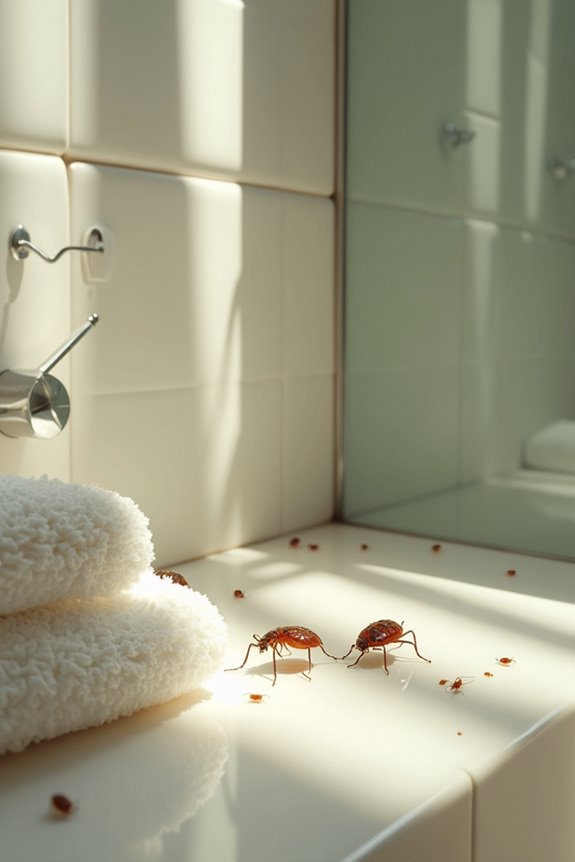
Now that you understand how these pests slip into your bathroom, here’s what makes your bathroom such an appealing target in the first place. Your bathrooms attract bed bugs because they offer exactly what these pests crave: moisture and warmth. The steam from showers, combined with humidity from running water, creates an environment where they’ll thrive. Beyond climate, your bathrooms provide abundant hiding spots. They’ll nestle behind vanities, burrow into tile grout, and squeeze into cracks between fixtures. Under sinks, inside cupboards, and along baseboards offer perfect refuge. Since bed bugs need consistent access to human hosts, bathrooms connected to bedrooms become convenient transit routes. They’re not ideal breeding grounds, but moisture-rich environments certainly support their survival and movement throughout your home.
Signs of Bed Bugs in the Bathroom
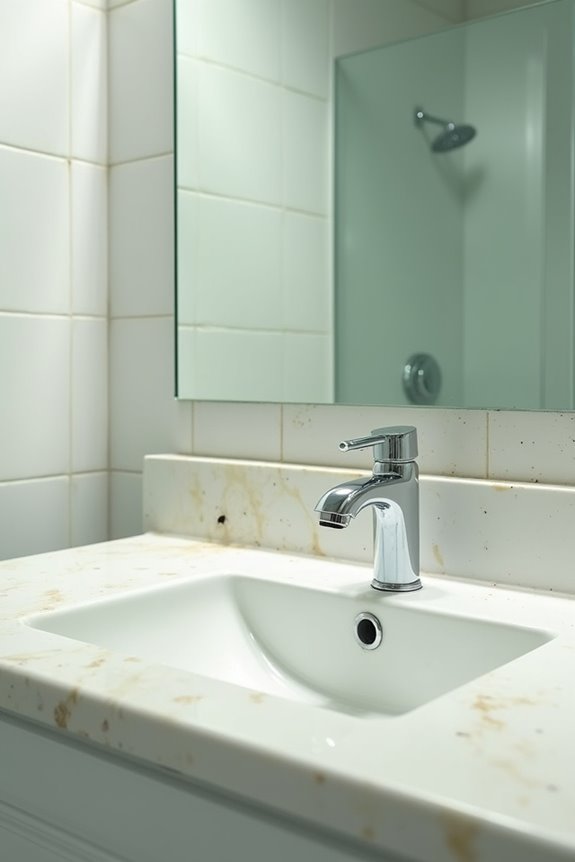
Where should you look first if you’re worried about bed bugs hiding in your bathroom? Start by inspecting baseboards, tile grout, and cabinet interiors—these are prime hiding spots. Check behind sinks and underneath fixtures where moisture collects. You’re looking for small, reddish-brown bugs about the size of an apple seed, or dark fecal spots on surfaces. Shed skin casings are another telltale sign. If you notice a single wandering bug, that’s concerning because it suggests broader movement from other rooms. Inspect your towels and shower curtains for blood stains or dark specks. Pay special attention to corners where walls meet floors. Finding even one bug requires immediate action, so address what you find.
Bathroom Habits and Design That Stop Bed Bugs
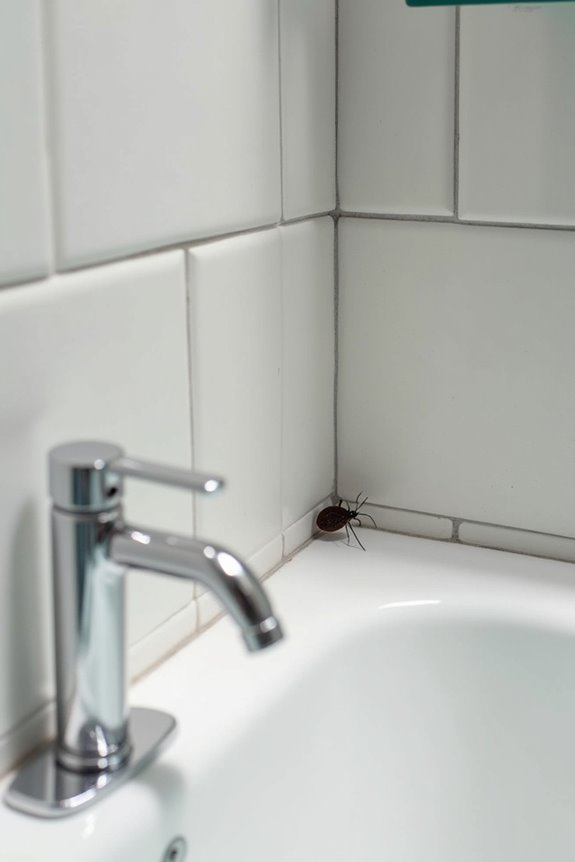
I’ve found that three practical changes make a real difference in keeping bed bugs out of my bathroom: I open windows regularly to ventilate moisture and reduce the warm, humid conditions they love, I swap out fabric towels and bath mats for hard surfaces and quick-dry options, and I inspect behind my sink, toilet, and along baseboards weekly to catch any hitchhikers before they settle in. By combining these habits with sealed cracks around tiles and plumbing—using caulk to close gaps that are even a quarter-inch wide—I’m cutting off their travel routes and hiding spots simultaneously. The payoff is worth the effort because preventing them from establishing a bathroom foothold keeps the infestation from spreading to my bedroom and other areas of my home.
Ventilation Reduces Heat Buildup
How much does air movement actually matter in your bathroom? More than you’d think. When you’re not circulating air, heat buildup accumulates behind your shower fixtures and mirrors—exactly where bed bugs hide. I’ve learned that opening windows or running exhaust fans creates airflow that bed bugs actively avoid. They’re drawn to warm, stagnant spaces, so proper ventilation disrupts their comfort zone.
Lowering humidity through ventilation matters equally. Moist environments support their entire life cycle, but moving air reduces condensation on tiles and grout where they nest. When I installed a vented cabinet and started using my exhaust fan regularly, I noticed fewer hiding spots developing. Simple design choices—exhaust fans, open windows, vented cabinetry—make your bathroom less appealing to these pests while making the space genuinely more pleasant for you.
Hard Surfaces Minimize Hiding
Your bathroom’s material choices matter more than you’d expect when it comes to stopping bed bugs. Hard surfaces—tile, sealed grout, and glass—create an unwelcoming environment for these pests. Unlike porous materials that trap bugs in tiny crevices, hard surfaces leave nowhere to hide.
Strengthen your bathroom defenses by replacing fabric items with washable alternatives. Swap curtains for vinyl shades, rugs for tile, and loose towels for wall-mounted racks. Built-in cabinetry with minimal seams reduces clutter that bed bugs exploit. Seal any cracks around baseboards and behind fixtures—these gaps disappear when properly filled.
Regular cleaning of grout lines and baseboards removes debris where bugs shelter. Combined with EPA-approved sprays on hard surfaces, this approach significantly improves bed bug control. You’re creating an environment where infestations simply can’t establish themselves.
Regular Inspection Prevents Spread
When’s the last time you actually inspected behind your toilet or checked the grout lines running along your bathroom floor? I’ll be honest—most of us skip this step, and that’s exactly how bed bugs spread unchecked. Regular inspection catches infestations early, before they multiply into a nightmare.
Here’s what I focus on during my monthly checks:
- Examining cracks between tiles and behind baseboards where bed bugs hide
- Scanning cabinetry and under sinks for dark spots or live bugs
- Checking grout lines and plumbing gaps systematically
I’ve learned that consistency matters more than perfection. You don’t need fancy equipment—just a flashlight and patience. When you catch bed bugs early, containment becomes manageable. Those hiding places they love? Regular inspection reveals them before bed bugs establish themselves deeper in your bathroom.
How to Remove Bed Bugs From Your Bathroom
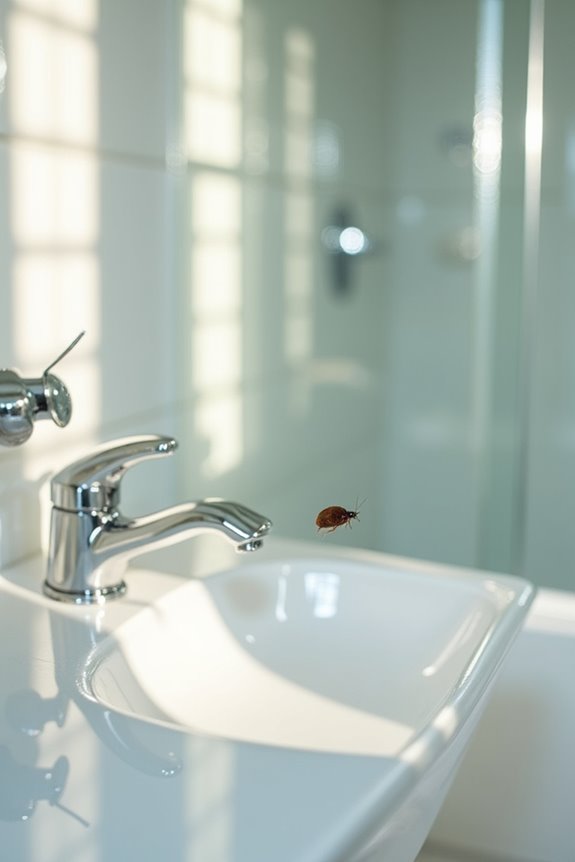
If you’ve spotted bed bugs in your bathroom, I’m going to walk you through the removal process—and it’s doable if you stay systematic about it. You’ll want to start by decluttering and cleaning thoroughly, then seal every crack and gap where these pests hide, and finally apply EPA-approved treatments that work in bathroom environments. Let’s break down each of these steps so you can reclaim your space and sleep soundly again.
Declutter And Clean Thoroughly
How thoroughly are you actually cleaning your bathroom right now?
I’ve learned that decluttering and cleaning thoroughly helps eliminate bed bugs from your bathroom. Here’s what I do:
- Remove towels, bath mats, and shower curtains, then launder them in hot water to destroy bugs and eggs hiding in fabric
- Inspect tile grout lines, seams behind baseboards, and corners around sinks and toilets where bugs nest
- Vacuum crevices carefully and wash bathroom surfaces with safe cleaning solution
Cleaning reduces remaining pests significantly. I seal gaps by caulking cracks between tiles and along baseboards, limiting hiding spots where bugs survive. This systematic approach makes your bathroom less appealing to bed bugs. If problems persist after these steps, consider EPA-approved sprays or consult a pest professional for additional treatment options.
Seal All Cracks And Gaps
After you’ve cleaned thoroughly, focus on sealing every possible hiding spot—bed bugs squeeze into the tiniest spaces where your vacuum can’t reach. Cracks and gaps are bed bug highways in your bathroom, so you must block them entirely.
| Location | Problem | Solution |
|---|---|---|
| Between tiles | Bug entry points | Caulk thoroughly |
| Around plumbing | Hidden pathways | Sealant application |
| Behind fixtures | Prime real estate | Close completely |
| Baseboards | Ground-level access | Weatherstripping |
| Door frames | Room-to-room travel | Door sweeps |
Apply quality caulk around sinks, toilets, and cabinets where bugs hide. Replace loose tiles and repair cracked grout immediately. Install weatherstripping on bathroom doors to block adjacent rooms. This creates a barrier that forces bed bugs out into the open where you can eliminate them.
Apply EPA-Approved Treatments
Once you’ve sealed up all those hiding spots, it’s time to apply EPA-approved pesticides that’ll actually kill the bed bugs you’ve forced out into the open.
Now here’s what you’ll do:
- Target hard surfaces only. Apply treatments to bathroom tile, baseboards, grout lines, and under sinks where bugs hide. Skip fabric completely.
- Follow label instructions exactly. Don’t guess dosages or spray patterns. These EPA-approved pesticides work best when you follow the rules.
- Treat accessible textiles separately. Wash bathroom towels and curtains in hot water, then heat-dry them. Use steam treatments on items you can’t wash.
After spraying, you’ll notice dead bugs appearing over several days. That’s your sign the treatments are working. If bugs persist after two weeks, call a licensed pest professional who can deploy stronger methods.
When to Call a Pest Professional
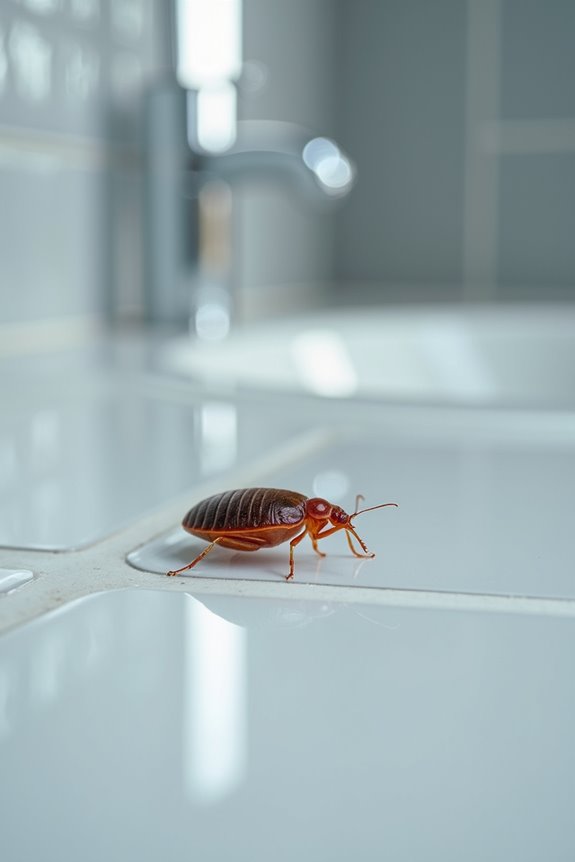
Why wait around hoping bed bugs disappear on their own? I’d recommend calling a pest professional if you’ve spotted live bugs, stains, or eggs in your bathrooms. Here’s why: bed bugs hide in tight spaces—behind baseboards, under tiles, within plumbing gaps—where DIY treatments simply can’t reach. A professional pest inspection uses specialized knowledge and equipment to find infestations you’d miss. They’ll check hidden areas thoroughly, identify entry points, and create a targeted treatment plan. You’re not admitting defeat; you’re being smart. These experts understand how bed bugs behave in moist environments and know which EPA-approved treatments work best in bathrooms specifically. When you’re dealing with potential infestation, professional guidance beats guesswork every time. It saves money, time, and stress long-term.