

Low bathroom sink pressure usually means your aerator—that little screen on your faucet tip—is clogged with mineral buildup. Unscrew it, soak it in white vinegar for thirty minutes, brush it clean, and reattach it. If that doesn’t work, check your under-sink shut-off valves and make sure they’re fully open by turning counterclockwise. Supply lines might be kinked too. Still weak? Your faucet cartridge itself could be the problem, and there are specific steps to inspect and fix that.
Diagnose Low Bathroom Sink Pressure: Single Sink or Whole House?
Where’s that water pressure going? I get it—that weak trickle’s frustrating. Before you panic about your whole house, let’s figure out if it’s just your bathroom sink or everything. Here’s the thing: if only that one faucet’s affected, you’re looking at a local-sink troubleshooting situation, not a major plumbing issue.
Start by checking other fixtures. Does your shower flow normally? Kitchen sink running strong? If yes, your problem’s isolated to that bathroom sink. That’s actually good news because fixes are usually simple.
I’d first remove the aerator—that’s the screen at the faucet tip—and clean it. Sediment clogs happen constantly. Then fully open those shut-off valves under the sink; sometimes they’re partially closed without you realizing it. Test your flow after each step. If pressure’s still weak, you might need to replace the faucet cartridge or check supply lines for kinks.
Clean Your Aerator (The #1 Fix)
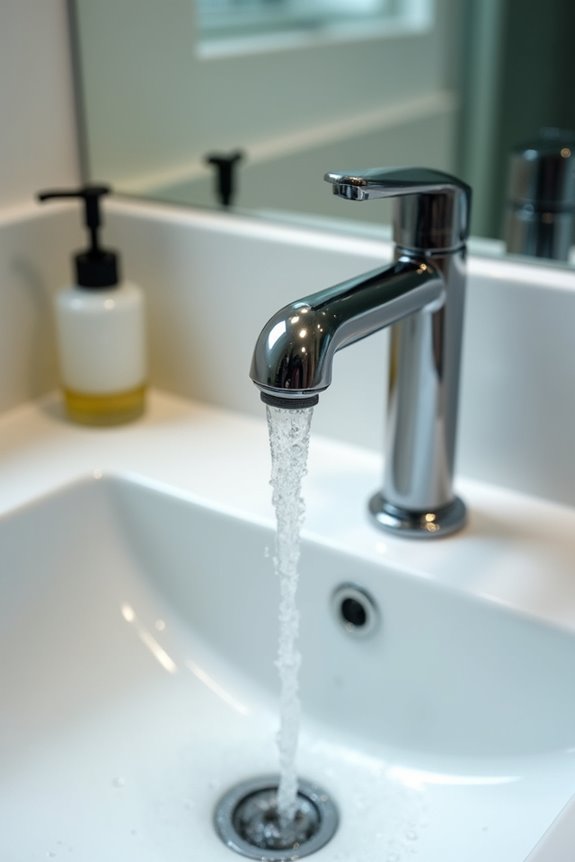
The aerator—that little screen screwed onto the tip of your faucet—is your first suspect, and it’s the culprit about ninety percent of the time. Mineral buildup and debris clog that screen, choking off your faucet flow.
Here’s what to do: unscrew the aerator, soak it in white vinegar for thirty minutes, then brush those tiny passages with a small brush. The mineral buildup dissolves, and your bathroom sink returns to working order.
Unscrew the aerator, soak it in white vinegar for thirty minutes, then brush with a small brush to restore water flow.
Screw it back on, turn on the water, and watch that pressure return. If flow’s still weak with the aerator removed, you’re looking at deeper issues—maybe your cartridge or internal valves need attention.
Keep spare aerators handy. Clean yours every few months. Prevention beats frustration.
Check Your Shut-Off Valves and Supply Lines
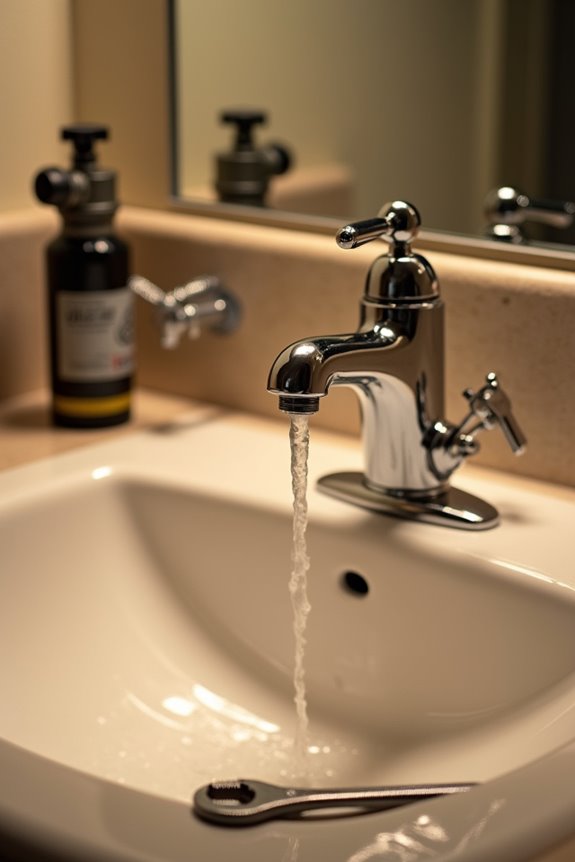
Before you blame the aerator, I need you to get down and look under your sink, because those shut-off valves controlling your water supply might be partially closed or stuck, and that alone can slash your pressure by more than half. You’ll find two valves—one for hot water, one for cold—and I want you to check if they’re fully open (they should turn counterclockwise until they stop), then cycle them off and back on to clear any minor blockages that could be restricting flow. While you’re down there, inspect both supply lines running to your faucet for kinks, bends, or visible damage that might be strangling your water pressure.
Locating Under-Sink Valves
How often do you actually peek under your sink? Most of us don’t, which is why we miss the shut-off valves controlling our water supply. These faucet valves sit right where your supply lines connect beneath the cabinet, typically positioned on both hot and cold water pipes. You’ll find them as small knobs or handles—usually oval or round—attached directly to the copper or plastic tubing. Look carefully at the wall behind the pipes; some valves mount there instead. They’re easy to spot once you know what you’re searching for. Getting familiar with your under-sink valves now means you’re prepared for pressure problems later. Take a moment to locate yours today, checking that both hot and cold valves sit fully open for optimal water pressure throughout your bathroom plumbing.
Testing Valve Openness
Start by getting under that sink with a flashlight, because your shut-off valves are likely the first culprit behind your pressure problems. You’ll find two valves controlling your hot and cold water supply. Turn each counterclockwise to fully open them, then work them back and forth a few times to clear any minor blockages restricting flow.
After adjusting those valves, turn on your faucet and check if your water pressure improves. If it doesn’t, your valve repair might require replacement due to internal failure or corrosion.
While you’re down there, inspect your supply lines for kinks or damage causing pressure loss. Look for leaks around valve stems too—even small drips indicate a valve issue affecting your bathroom sink’s faucet flow and testing valves’ effectiveness.
Inspecting Supply Line Damage
Why does water pressure sometimes drop to a trickle even after you’ve confirmed your shut-off valves are fully open? The culprit often lies in your supply lines themselves. I’ve discovered that damage to these essential tubes can seriously restrict your faucet flow and water pressure.
Here’s what I check:
- Visual inspection – I look for kinks, bends, or crushed sections along the supply line path under-sink, since these physically block water movement.
- Corrosion signs – Discolored or deteriorating pipes indicate internal buildup that restricts flow and weakens water pressure over time.
- Leakage detection – I examine for hidden moisture around connections and cabinets, as leaks signal pressure loss that requires immediate attention.
When supply lines show severe damage or corrosion, valve replacement won’t help—you’ll need new lines to restore proper flow.
Is Your Faucet Cartridge Clogged or Worn?
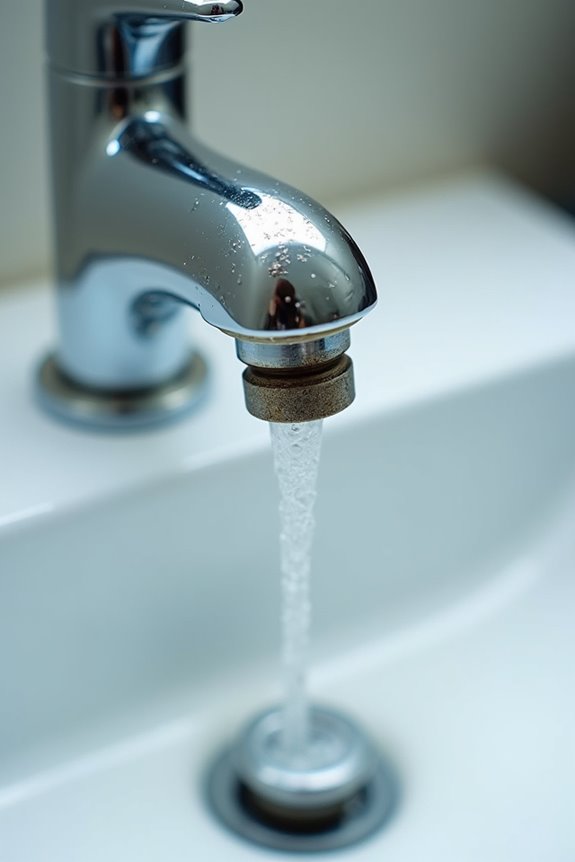
Sometimes the real culprit behind your weak water pressure isn’t hiding in the aerator or supply lines—it’s sitting inside your faucet itself. Your faucet cartridge controls water flow and temperature mixing, so when it gets clogged with mineral deposits or wears out, you’re stuck with disappointing pressure. Here’s how to tell: if water flows fine when you remove the aerator but stays weak with the cartridge in place, that’s your answer. You might also notice erratic hot and cold mixing, which indicates cartridge trouble. Shut off your valves, remove the handle and cartridge, then soak it in vinegar to dissolve buildup. If cleaning doesn’t work, replace the cartridge with one matching your bathroom sink’s brand. Test both hot and cold flow afterward, checking for leaks at the seals.
Spot Leaks and Mineral Buildup Draining Your Pressure
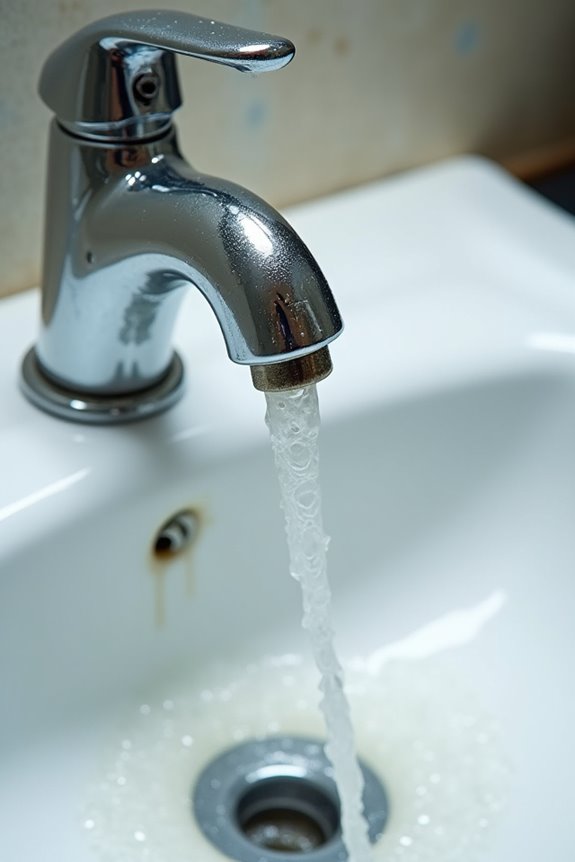
Once you’ve ruled out cartridge issues, it’s time to look for the sneaky culprits that silently rob your sink of pressure—leaks and mineral buildup.
Here’s what’s likely happening:
- Mineral deposits clogging your aerator—Hard water leaves sediment that lodges in your faucet screen, restricting flow dramatically. Soaking your removed aerator in vinegar dissolves these stubborn deposits and restores pressure.
- Hidden leaks draining pressure—Small leaks upstream weaken your entire system. Check under the sink for moisture or pooling water that signals trouble.
- Sediment accumulating in passages—Mineral buildup doesn’t just sit on surfaces; it travels through your faucet cartridge and internal passages, creating blockages that reduce water pressure considerably.
The good news? Replacing a worn aerator or screen fixes most pressure problems quickly.
Is Only Your Hot Water Weak? Check Your Water Heater
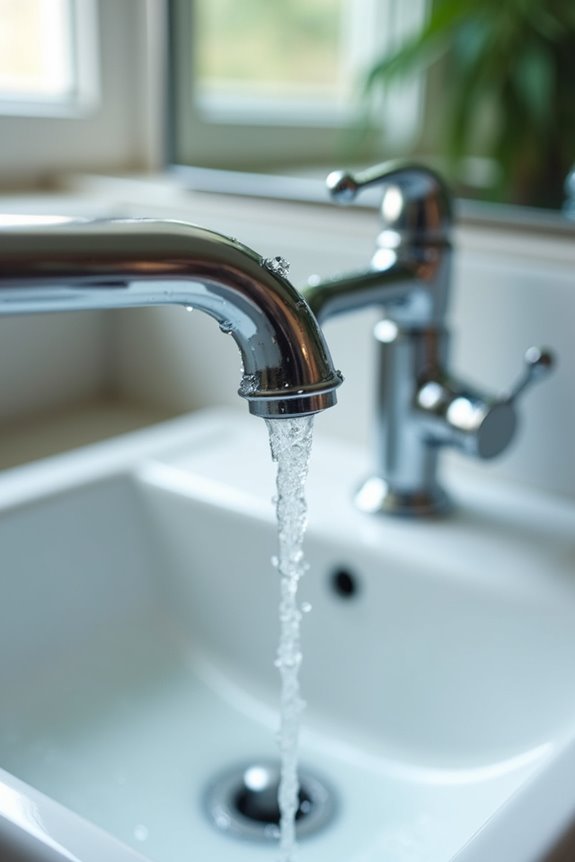
How’s your cold water pressure at that same bathroom sink—is it strong and steady? If your cold water flows fine but your hot water pressure is weak, your water heater’s likely the culprit. I’d check the inlet valve first—make sure it’s fully open. Sometimes sediment builds up inside the tank, restricting hot water flow. A water heater flush removes that buildup and often restores pressure immediately.
If flushing doesn’t help, investigate your faucet cartridge and aerator next. These local components sometimes trap debris affecting mixed water temperature and pressure at your bathroom sink. Check the shut-off valve too—it might be partially closed. Test both hot and cold separately to pinpoint whether your water heater’s truly the problem or if it’s something simpler.