I’ve tackled empty living room walls with five solid strategies.
You can anchor the space with oversized art or a tall mirror, add modular shelving around 80 inches wide, or build a gallery wall with pieces spaced roughly 4 inches apart.
Wallpaper and murals bring instant texture, while strategically leaving bare sections creates breathing room that makes your design work better.
Each approach works differently depending on your style, and the details matter—I’ll break down exactly how to pull each one off.
Anchor With Large-Scale Art or a Mirror
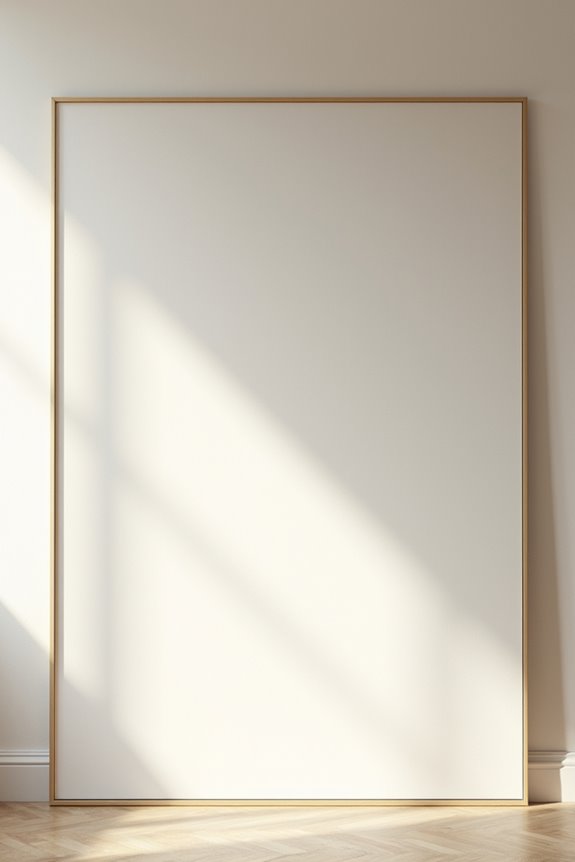
How do you make a blank wall worth noticing? I anchor mine with large-scale art or a wall-mirror, and it works remarkably well. An oversized artwork spanning two-thirds to full wall width creates an immediate focal point without overwhelming the room. I’ve found that a tall vertical mirror or wide horizontal format works nicely too, reflecting light and expanding the room visually. The key? Pairing your anchor piece with complementary elements like strategic lighting or a slim console table grounds the composition naturally. I position mine slightly off-center, preserving negative space around the main element. This approach makes my living room wall decor go from sparse to deliberate, creating that welcoming centerpiece where everything else finds its place.
Add Storage With Off-the-Shelf Shelving
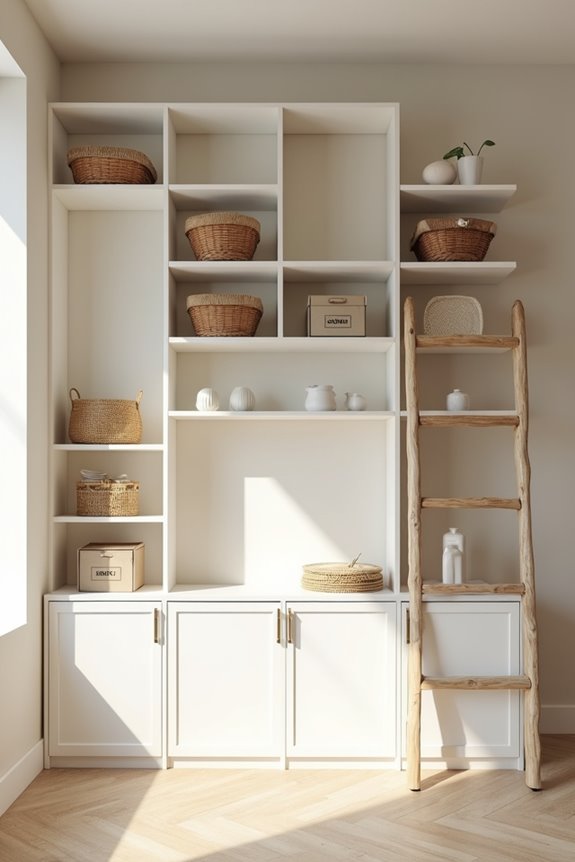
Once you’ve anchored your wall with that focal-point piece, you’ve got yourself a solid foundation—but here’s where you can actually make the space work harder for you. Off-the-shelf modular shelving systems let you create that built-in look without the contractor fees. I’m talking about scaling units to roughly 80 inches wide and 12 inches deep, positioned off-center to maintain sightlines and keep your pass-through accessible.
Here’s what turns empty walls into functional display:
- Balance storage with negative space using books, plants, and decorative items so nothing feels cramped or heavy
- Layer in lighting with plug-in sconces to highlight objects and prevent flatness
- Combine shelving with vertical art to anchor your vignette while keeping bulk minimal
This approach turns that empty wall into genuine organization without sacrificing style.
Build a Gallery Wall That Reflects Your Style and Scale
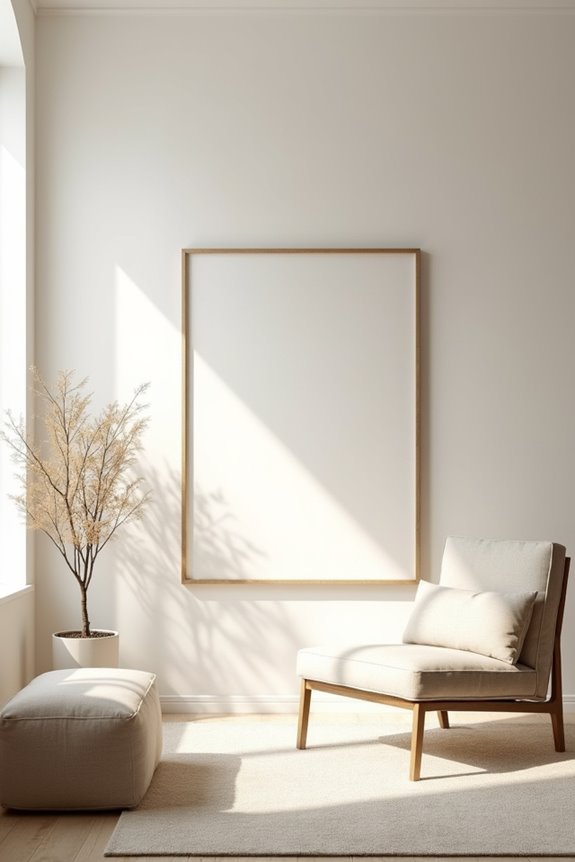
What if you stopped thinking of your empty wall as something that needs one statement piece and started seeing it as a chance to tell your whole story?
Building a gallery wall changes that blank space into something deeply personal. Start with a cohesive theme—maybe black-and-white framed photos or mixed media—then arrange pieces on a common vertical axis. Space items 4 inches apart, alternating frame sizes to build depth. This approach works well in open-concept spaces where you need visual interest without overwhelming the room.
| Theme | Frame Style | Spacing |
|---|---|---|
| Family Photos | Dark Wood | 4″ Apart |
| Mixed Media | Varied Sizes | Tight Groups |
| Minimal Art | Metallic | Breathing Room |
| Textiles | Alternating | Clustered |
| Mirrors | Eclectic | Intentional Gaps |
Use negative space deliberately—leave gaps between clusters so your wall has room to breathe. Add subtle lighting to highlight your collection. Your gallery wall becomes an extension of who you are, creating a sense of belonging in your space.
Add Wall Texture With Wallpaper, Murals, or Fabric
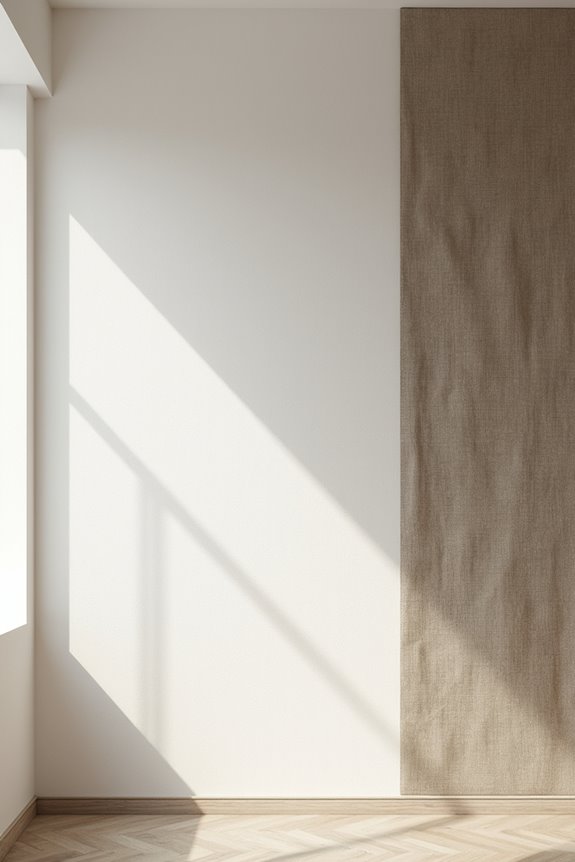
Why settle for blank drywall when you can add dimension and pattern to your walls? Wallpaper, murals, and fabric offer practical ways to bring visual interest to your living room decor at reasonable costs.
Bring dimension and pattern to your walls with wallpaper, murals, and fabric—practical ways to add visual interest at reasonable costs.
Consider these approaches:
- Removable wallpaper gives you bold prints or subtle neutrals with minimal installation stress and zero permanent commitment
- Statement murals cover your entire large wall in one impactful stroke, delivering mood and scale instantly
- Fabric wall coverings add tactile warmth through tapestries mounted with rods or adhesive backings
For budget-conscious texture, I’d recommend DIY painted patterns using stencils, or large-scale textiles that create genuine depth. These solutions turn empty walls into key design elements while remaining flexible. Whether you’re renting or own, wall texture through these methods makes your space feel deliberate and welcoming—exactly where you belong.
Leave Parts of Your Wall Intentionally Bare
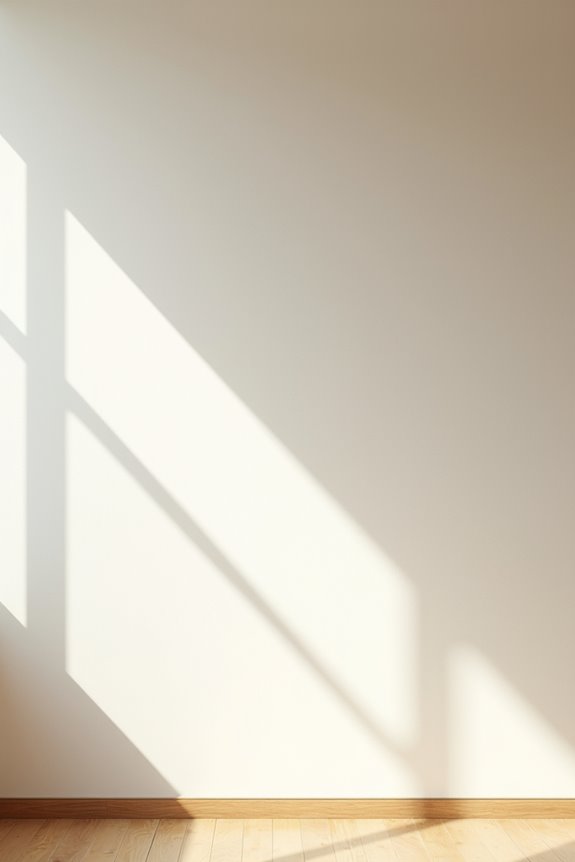
Sometimes the smartest design move isn’t adding more—it’s knowing when to stop. Leaving parts of your wall intentionally bare creates negative space that actually makes your living room feel bigger and less cluttered. Here’s why this matters: strategic bare wall sections let anchored pieces—like a single large artwork or mirror—become focal points through contrast. Your empty wall becomes part of your interior design strategy, not a failure. By varying the width and height of these unfilled sections, you’ll balance your wall decor with furniture scale while avoiding rigid, predictable layouts. This flexible approach means you can update with new art or shelves later without overhauling everything. Sometimes restraint is the bravest design choice you can make.