
I’ve learned that measuring your sofa first saves you from expensive mistakes. Start there, then extend your rug 20–30 centimeters beyond each side for balance. Next, anchor your furniture—front legs on the rug creates that unified conversation area you want. Finally, leave 18–36 inches of walkable space between the rug’s edge and your walls; this prevents that cramped feeling while keeping traffic flowing intuitively through your room. The specifics of each step reveal how they work together.
Measure Your Sofa: The Foundation for Living Room Rug Size
How do you know where to even start when you’re staring at a bare living room floor? I’ll tell you: measure your sofa first. This single step becomes the foundation for your entire room layout.
Measure your sofa first. This single step becomes the foundation for your entire room layout.
Grab a tape measure and note your sofa’s width. Here’s what I’ve learned: your rug should extend 20–30 centimeters beyond each side, creating that balanced look. This overhang helps anchor seating while making your space feel organized.
Next, consider how furniture sits on your rug. If you’re placing front legs on the rug, that’s your anchor. Leave 40 centimeters of space between your rug edge and walls—it sounds specific, but this spacing prevents your room from feeling cramped.
Your sofa measurement literally determines everything else. Get this right, and your room flows beautifully.
Anchor Your Furniture to the Living Room Rug
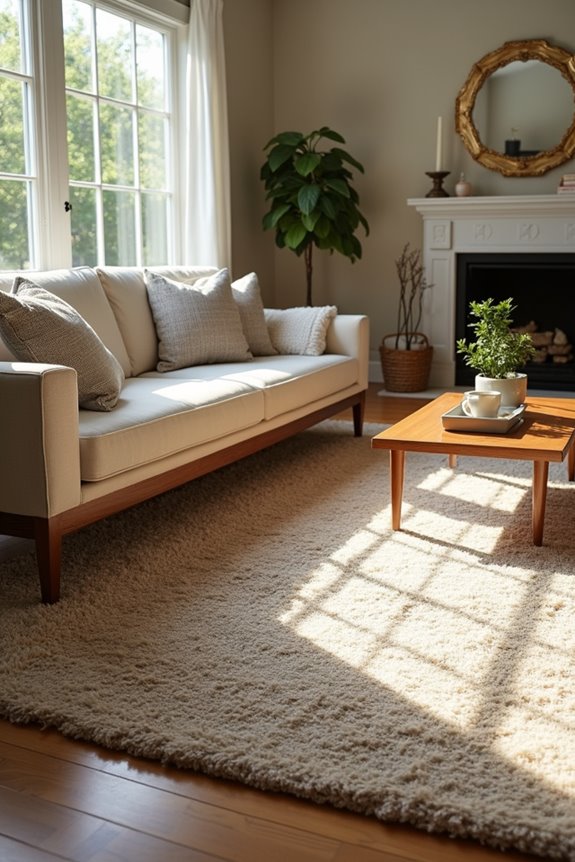
Why does furniture placement matter so much? When I anchor my seating to the rug, I’m creating visual harmony that makes my living room a cohesive gathering space. I position the front legs of my sofa and chairs directly on the rug—this grounds everything effectively.
| Placement Strategy | Result |
|---|---|
| Front legs on rug | Unified conversation area |
| All furniture on rug | Maximum visual connection |
| Back legs on floor | Space-saving option |
I extend the rug 8–12 inches beyond my sofa width on each side for balanced proportions. In larger rooms, I go oversized so all furniture sits together. I maintain 15–45 centimeters of bare floor between the rug edge and walls, preventing that cramped feeling. This anchoring technique creates a space where everyone naturally gathers.
Leave 18–36 Inches of Walkable Space Around the Rug
Once you’ve anchored your furniture to the rug, people need to walk around it without feeling boxed in. Leave 18–24 inches of walkable space between your rug boundaries and walls, with 30–36 inches preferred when you have room to spare. This clearance gap keeps your seating area from feeling cramped while maintaining a defined walkway.
In tighter spaces, stick with the minimum 18–24 inch gap—it prevents crowding without sacrificing room balance. When anchoring a sofa, position the front legs on the rug to create natural traffic flow around your furniture. For open-concept layouts, maintain consistent clearance gaps throughout to guide foot traffic smoothly. If space is seriously limited, consider layering a larger base rug beneath everything to preserve both walkability and your rug size goals.