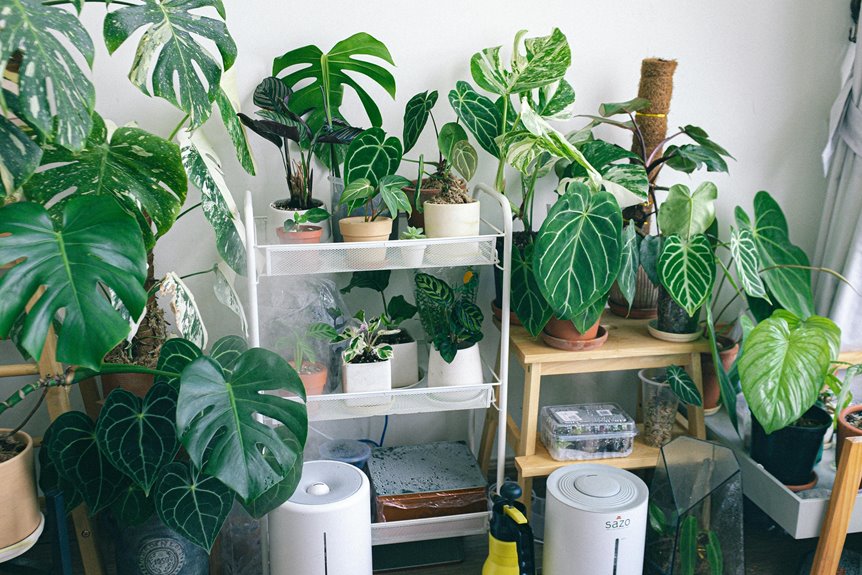
I’ll place my air purifier where it actually works—near pollution sources like pets or the kitchen, with at least 15 inches of clearance from walls so it pulls air from all directions. I keep it on a shelf rather than flat on the floor, angle the intake toward problem spots, and position the exhaust toward open space. I maintain a 6-foot buffer from electronics and adjust speed based on what my air quality monitor shows, not just guessing. The specifics shift depending on whether I’m working with an open floor plan or smaller room.
Identify Pollution Sources to Guide Your Placement
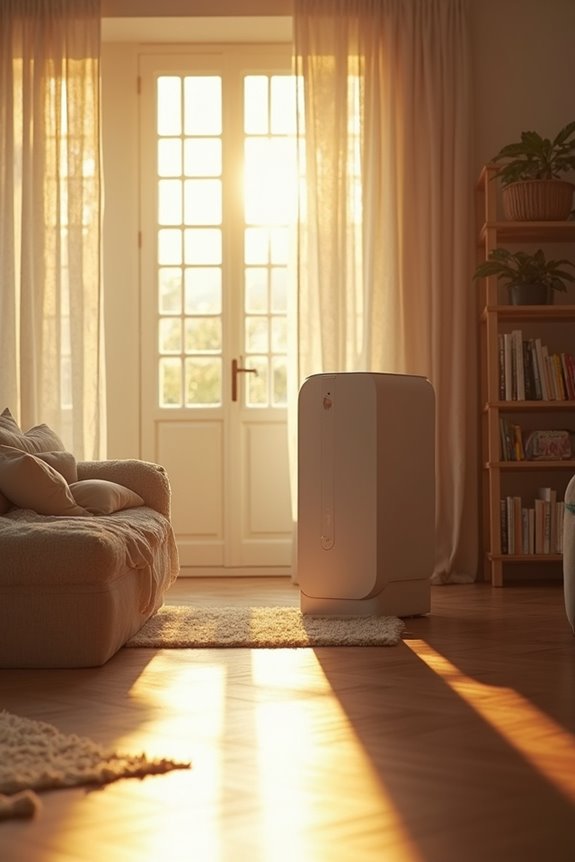
Where’s the air quality worst in your living room—and why? Identifying pollution sources helps you place your purifier effectively. Think about where you and your family actually spend time. Got pets? Position your purifier near their lounging spots to capture pet hair and dander as they shed. Do you cook frequently? Placement near your kitchen doorway tackles cooking odors before they spread. During pollen season, position yours near windows where allergens enter. High-traffic areas near your front door collect significant dust. Notice a fireplace? That’s another hotspot for pollutant capture. By pinpointing these specific pollution sources in your living room, you’re not just buying equipment—you’re creating an air-quality solution that addresses what actually bothers you and your family most.
Give It 15 Inches of Clearance From Walls and Furniture
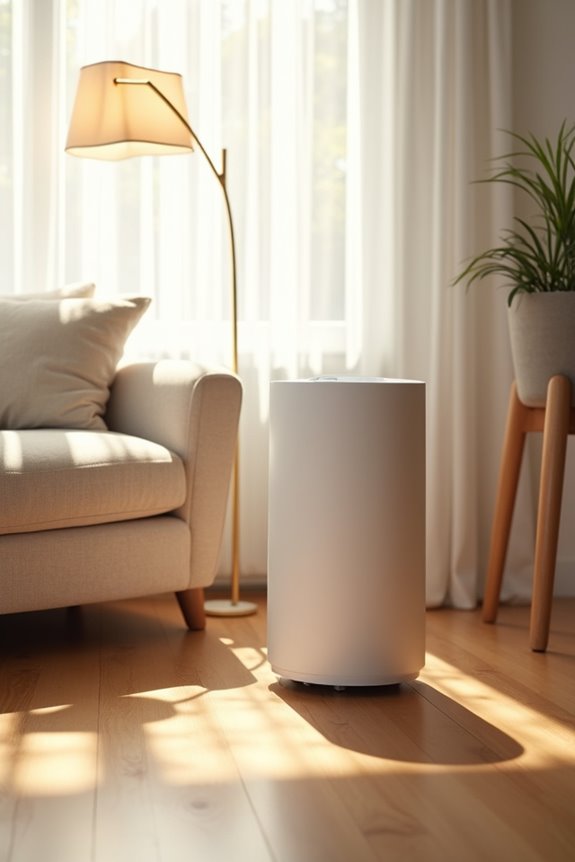
I’ve learned that giving your air purifier at least 15 inches of clearance from walls and furniture isn’t just a suggestion—it’s what determines whether a unit actually works or ends up fighting itself. When you position it with that breathing room, you’re letting it pull in contaminated air from all directions instead of sucking in the same dirty air it just pushed out, which happens way too often when purifiers get shoved into corners or against furniture. That 15-inch gap lets you achieve genuine 360-degree air circulation, meaning the unit can target contaminants from across your whole living room rather than staying trapped in one stubborn spot.
Optimal Airflow Intake
Because your air purifier pulls in air from all around it, you’ve got to give that intake some breathing room—literally. I’ve learned that positioning matters more than most folks realize. Don’t tuck your unit behind furniture or wedge it into corners—that’s basically suffocating its ability to work. Instead, aim for central placement with at least 3–5 feet of side clearance around your unit. This setup creates unobstructed intake and lets cleaned air circulate evenly throughout your living room layout.
I recommend placing your purifier on a table or shelf when possible. This simple move improves intake access and prevents furniture from blocking bottom vents. When you establish this optimal airflow intake, you’re not just following guidelines—you’re actually improving how effectively your purifier works to clean your room’s air quality.
Preventing Obstruction Risks
Just how much space does your air purifier actually need to function properly? I’ve learned that maintaining a 15-inch buffer from walls and furniture is essential for preventing obstruction risks that’ll compromise your investment. When you position your unit too close to obstacles, you’re basically forcing it to recirculate stale air rather than drawing fresh pollutants from your living room. That blocked airflow defeats the entire purpose of air purifier placement.
I recommend measuring out that clearance from walls, couches, and shelving before settling on a spot. This unobstructed intake guarantees optimal circulation throughout your space. As your furniture placement changes seasonally, I check that 15-inch buffer remains intact. It’s that simple—respecting this clearance keeps your purifier functioning as effective equipment against indoor air quality issues.
Angle the Intake Toward Pollutants; Point Exhaust Toward Open Space
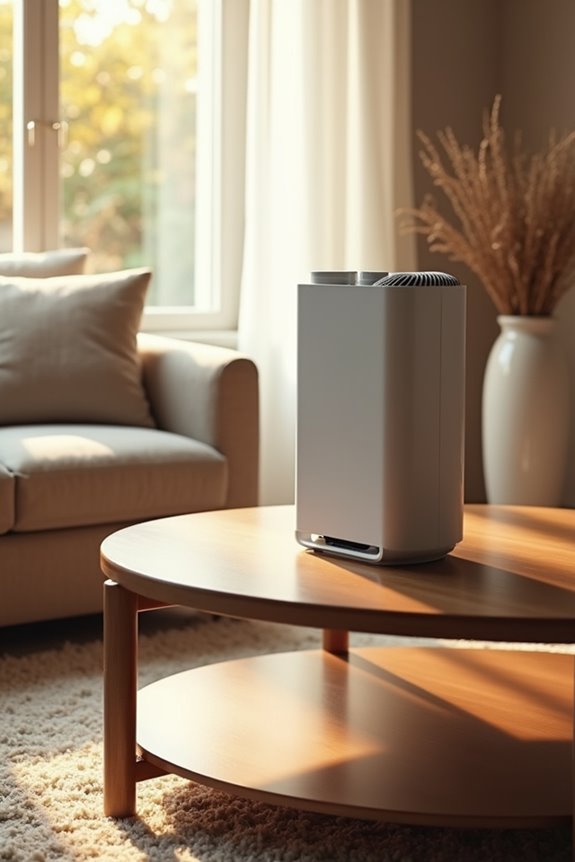
Ever wonder why your air purifier works better in some spots than others? The answer lies in proper placement. Position the intake toward pollutant sources—like where you sit or cook—to capture dust and odors faster. Point the exhaust toward open space away from walls so cleaner air spreads throughout your room instead of bouncing back.
To optimize your living room airflow:
- Position intake near seating areas for quicker pollutant capture
- Direct exhaust away from furniture to prevent recirculation
- Maintain 3–5 feet of clearance around the unit
- Avoid corners that shield intake from direct pollutants
This intake orientation and exhaust direction combination creates efficient room clearance. You’re strategically managing airflow distribution for better air quality.
Stay 6 Feet Away From Your TV and Electronics
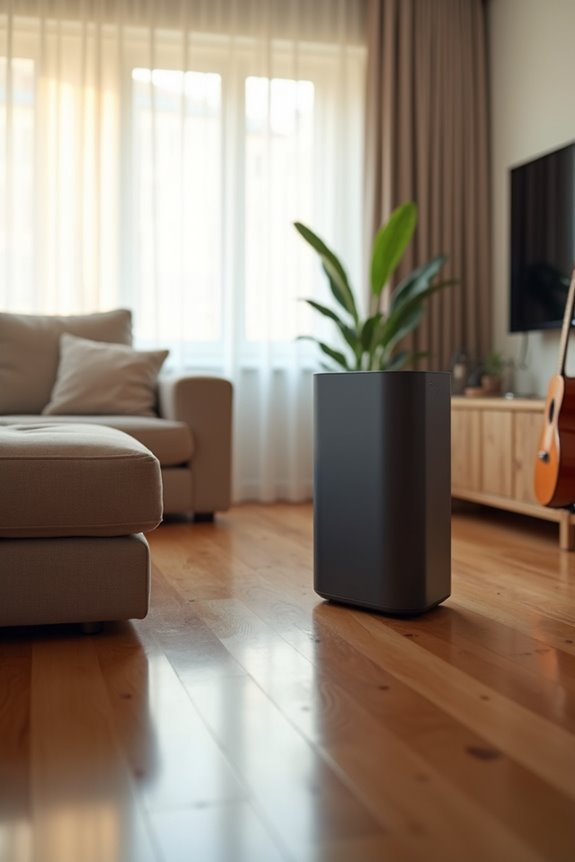
I’ve found that keeping your air purifier roughly 6 feet away from your TV and other electronics helps prevent interference and signal disturbance that can affect your viewing experience. You’ll want to position the unit so it’s not sitting right next to your TV stand, because the vibrations and heat it generates can impact how your electronics perform over time. By maintaining that 3–5 feet of open clearance around the purifier itself, you’re protecting your equipment while allowing clean air to circulate through your living room without problems.
Interference and Signal Disruption
While you might not think about it, placing your air purifier too close to your TV or other electronics can actually mess with how well both devices work. I’ve learned that maintaining proper air purifier placement protects your living room setup from interference and signal disruption.
Here’s what happens when you don’t follow these guidelines:
- Signal interference: Electronics emit magnetic fields that disrupt your purifier’s sensors and performance
- Airflow problems: Proximity creates turbulence that blocks proper intake and output circulation
- Device malfunction: Heat from TVs damages sensitive purifier components over time
- Reduced efficiency: Obstructed airflow means your purifier works harder for worse results
Keep your purifier at least 6 feet away in a central, unobstructed location. This distance allows clean air circulation throughout your space without compromising either device’s functionality. Your living room deserves both entertainment and healthy air working together smoothly.
Optimal Distance Guidelines
Now that you’ve got your purifier away from the interference zone, it’s time to nail down the exact spacing that’ll actually work in your living room. I recommend placing your purifier about 6 feet from your TV and electronics—this distance prevents signal disruption while allowing proper airflow throughout your space. You’ll want at least 3–5 feet of clearance on all sides, including from furniture and screens, so nothing blocks the circulation. Position it centrally, away from corners where obstacles would choke airflow. This placement strategy means purified air reaches you and your family effectively without being trapped behind couches or cabinets. When you get the distance right, your purifier works at peak performance, your electronics stay protected, and you’ve created an open airflow pattern that improves your living room’s air quality.
Electronics Safety Considerations
Because your air purifier pulls in air from all directions, it needs plenty of space between your TV and other electronics—I’m talking at least 6 feet of clear distance. This spacing prevents interference while keeping your intake and outlet unobstructed. Placement matters more than many people realize when setting up electronics safely.
Here’s what to do to protect your setup:
- Position the unit away from TVs, gaming consoles, and streaming boxes to maintain their performance
- Never stack the purifier on top of electronics, which causes dangerous heat buildup around sensitive components
- Avoid enclosed media cabinets entirely; they restrict ventilation and trap heat dangerously close to your devices
- Place the purifier slightly higher so monitors and entertainment furniture don’t block airflow around vents
Check your manufacturer’s guidance for device-specific cautions. This approach keeps everything running safely.
Elevate Small Purifiers to Capture Airborne Pollutants More Effectively
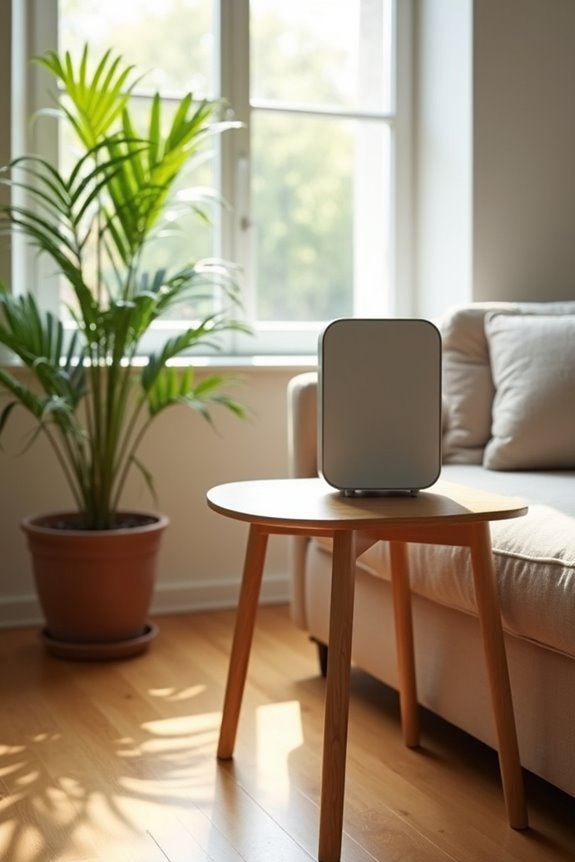
Ever notice how your compact air purifier seems to work better when it’s not sitting flat on the floor?
That’s because elevation matters. When I place small purifiers on a desk or low shelf, I’m immediately improving airflow and filtration efficiency. Floor placement restricts intake and output—especially for compact units—which wastes your investment.
Here’s what works: position your purifier at breathing zone height when you’re seated. This captures pollutants as they travel toward you, not after they’ve settled everywhere. I maintain at least 3–6 feet of open space around mine, keeping the top vent completely unobstructed.
Align your placement near central living areas or frequent pollutant sources like pet zones. Following manufacturer placement guidelines for your specific model maximizes every feature it offers.
Lower the Speed to Reduce Noise Without Losing Coverage
What if I told you that running your purifier at full blast isn’t always the smartest move? I’ve learned that lowering your purifier’s speed creates meaningful noise reduction while maintaining room coverage through proper purifier placement. Your CADR rating maintains airflow reaches every corner, even at low speed, so you’re not sacrificing effectiveness for quiet nights.
Here’s what I recommend:
- Monitor particle levels after adjusting speed; gradual increases beat maxing out immediately
- Balance slower speeds with extended runtimes to sustain consistent air exchange in your living room
- Verify true HEPA and activated carbon filters match your space at reduced airflow rates
- Start low, then adjust based on actual pollution readings rather than assumptions
This approach makes your living room a more comfortable space where you’ll actually enjoy breathing better air.
Adjust for Open-Concept Layouts and Large Spaces
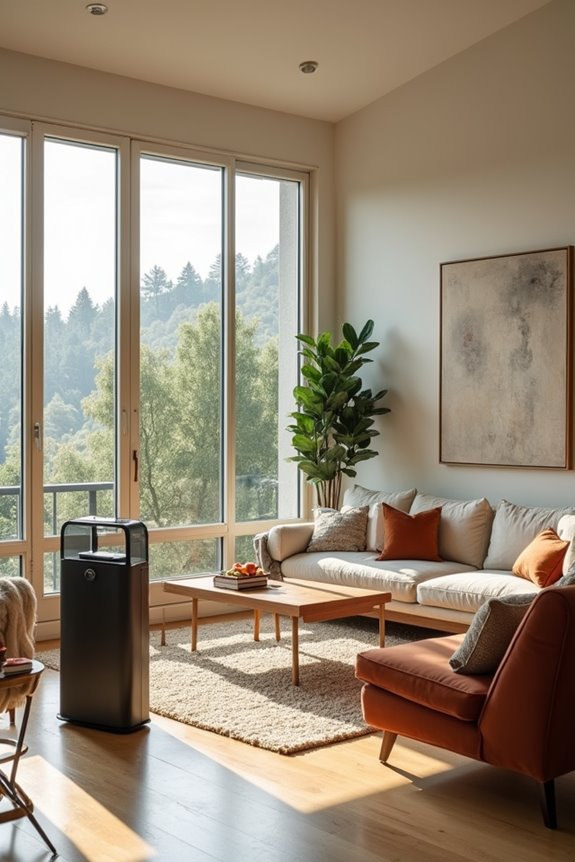
How do you tackle air purification when your living room opens straight into your kitchen and dining area? I’d place a powerful central unit in your open-concept space rather than stuffing multiple purifiers everywhere. Position it at a central location where it creates natural circulation without obstacles blocking intake or output airflow. You’ll want at least 3–5 feet of clearance around the unit so air moves freely. For large spaces with high ceilings, I’d put the main purifier on the floor to mix pollutants effectively, then add a secondary unit upstairs if needed. This strategy targets common pollutant sources near cooking areas while keeping your walkways clear. The result? Better coverage, smarter placement, and genuine peace of mind.