
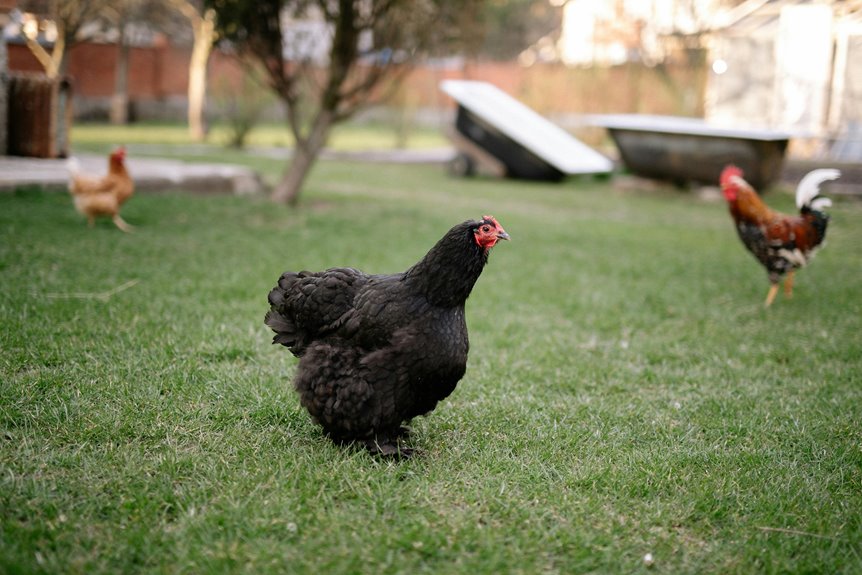
Texas doesn’t ban backyard chickens statewide, but your city code and HOA rules actually decide what’s legal on your property. Major cities like Austin, Dallas, Houston, and San Antonio permit flocks—usually four to six hens, no roosters—with specific setback distances and coop requirements.
Your HOA can override city permission entirely, so check those covenants first. The real hurdle isn’t state law; it’s understanding which local rules apply to you, because what’s allowed in one neighborhood might trigger fines in another.
Texas HB 1686: What the Law Actually Allows
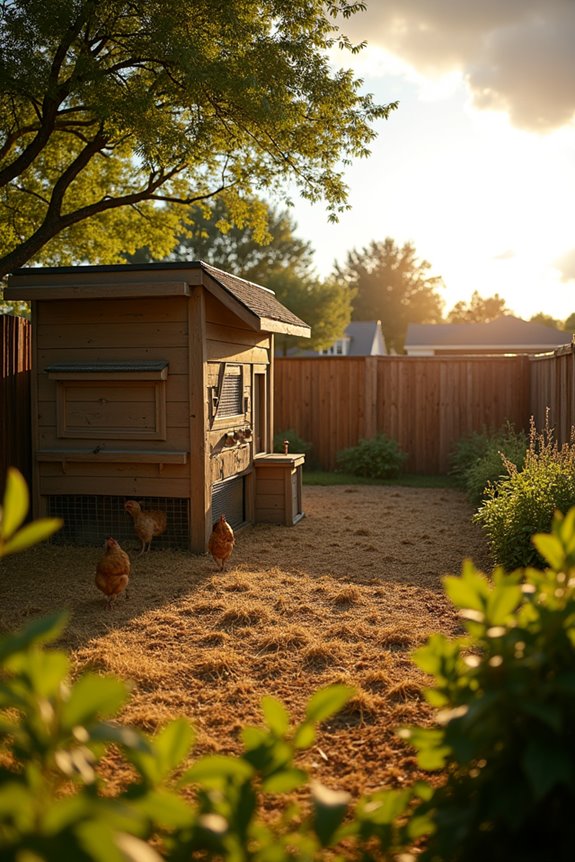
So what’s actually changing with HB 1686? You’ll finally be able to keep up to six laying hens on your property without your municipality or HOA shutting you down. No roosters allowed, though—that’s the trade-off for keeping noise manageable in your neighborhood. The bill sets a total animal limit of eight, including rabbits, so you’ve got flexibility in how you stock your backyard. Here’s what really matters: HB 1686 strips away those restrictive rules preventing you from growing food at home. You can plant front-yard gardens and run cottage food operations without your HOA blocking you. The law includes reasonable regulations controlling noise and odor, so your neighbors won’t have legitimate complaints. This legislation opens doors for folks like us who want self-sufficiency without bureaucratic barriers.
How Many Chickens Can You Keep?
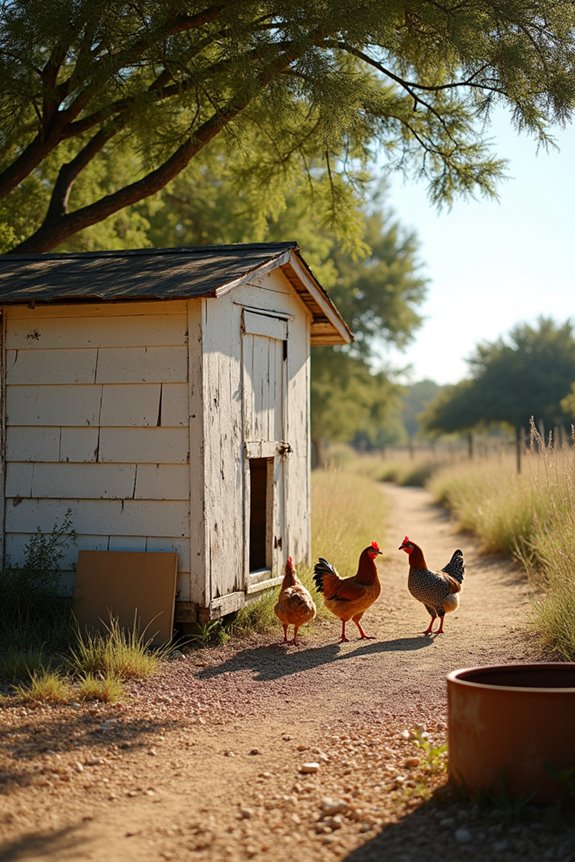
Texas doesn’t set a statewide chicken limit, which means your city and HOA call the shots on your flock size. Most urban areas that allow backyard chickens cap you at around 4–6 hens, with roosters banned entirely. However, your HOA might have stricter rules that override city permission—they can prohibit poultry completely, regardless of what your municipality allows.
| Location Type | Typical Limit | Roosters | Notes |
|---|---|---|---|
| Urban areas | 4–6 hens | Not allowed | Most common restriction |
| Rural zones | Varies widely | Sometimes permitted | Check local code |
| HOA communities | 0–varies | Usually banned | Private covenants override |
| Unincorporated areas | Often unrestricted | Depends on county | Fewer limitations |
Before you bring home backyard chickens, check your city’s municipal code and HOA bylaws. That’s your only way to know your exact limit.
Chicken Noise and Odor: What’s Legally Allowed?

How much noise can your chickens actually make before you’re breaking the law? In Texas, your city ordinances set specific noise standards for persistent crowing, runtime, and neighborhood disturbances. Most codes prohibit excessive noise during early morning or late evening hours. Odor rules focus on preventing strong, noticeable scents from coops and waste management.
You’ll want to implement practical management strategies. Maintain proper coop ventilation to reduce odor buildup. Store feed securely in sealed containers, clean coops regularly, and dispose of waste promptly. Distance your coop from neighboring dwellings—typically 10 to 25 feet depending on local requirements.
Why Your City Ordinances Matter More Than State Law
Why Your City Code Matters More Than State Law
Why does your city code matter more than what Texas state law says you can do? Your city ordinances are the actual rules that govern your backyard. Even though Texas state law doesn’t uniformly ban chickens, your specific city—Houston, Dallas, Austin, wherever you live—sets the real restrictions. These city ordinances determine which fowl you’re allowed to keep, how many, and what your coop must look like. Your local code supersedes broader state considerations because municipalities enforce what happens on your property. You could find a state-friendly bill, but if your city prohibits chickens, that bill doesn’t protect you. Before you build anything or buy chicks, you need to check your actual city code first. That’s where the legal authority lives, not in state guidelines.
Can HOAs Really Stop You From Keeping Chickens?
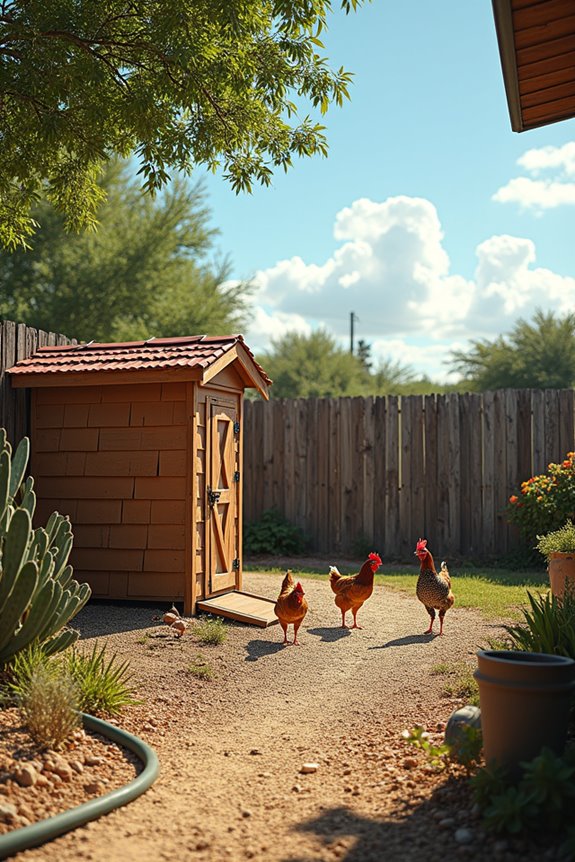
Yes, your HOA can actually enforce restrictions on backyard chickens even when your city allows them, because those covenants you signed—or inherited when you bought your property—typically override local ordinances within the neighborhood’s jurisdiction. You’re facing a real clash between what your city code permits and what your private contract with the HOA demands, which means you could get hit with fines, legal fees, or orders to remove your flock despite being technically legal under city rules. The frustrating part is that Texas bills aimed at limiting these HOA bans haven’t passed yet, so your best move right now is understanding your specific bylaws, showing up to HOA meetings with documentation of city allowances, and possibly getting legal advice to explore whether you have any wiggle room in how those restrictions are actually written.
HOA Authority And Limits
fines, legal fees, and mandatory chicken removal. The stakes escalate during construction phases. Before you invest in coops and birds, contact your HOA board directly. Get their rules in writing. This step prevents costly surprises later and protects your backyard plans.
Covenants Versus State Law
Even if your city says you can keep chickens, your HOA might have the legal power to stop you cold. Your HOA covenants are private contracts that override permissive city regulations within your community. Even though Texas bills like HB 2013 attempted limiting these restrictions, they didn’t pass, leaving covenants firmly in place.
Most HOAs enforce “no livestock” or “no poultry” clauses through their governing documents. Breaking these rules triggers real consequences—fines, legal fees, enforcement actions. The proposed HB 1686, which would’ve allowed six laying hens despite HOA bans, never became law.
Legal Challenges And Options
Because HOA covenants function as binding private contracts between you and your homeowners association, they can legally override what your city allows—even if your municipality says chickens are perfectly fine. This means your HOA can ban poultry regardless of local ordinances. To challenge this, review your specific covenants carefully, attend HOA meetings, and consider seeking legal counsel about potential overrides or accommodations. Recent Texas bills like HB 2013 and SB 141 attempted limiting HOA authority but didn’t pass, leaving enforcement unclear. Still, understanding how state law interacts with your HOA covenants matters. You’ll face real consequences—fines and legal fees—if you keep chickens against restrictions. Know your actual rights before acting, because the answer depends entirely on your community’s specific governing documents.
Checking If Your HOA Allows Backyard Chickens

Before you bring home your first flock, you’ll want to dig into your HOA’s by-laws—and I mean really dig in, because what’s written there can make or break your backyard chicken dreams.
Start by reviewing your HOA rules for explicit language about poultry. Look for terms like “livestock,” “animal restrictions,” or “fowl.” Then contact your HOA board directly and ask about their stance on chickens. Request meeting schedules where you can discuss this personally.
Check whether your HOA has updated rules recently to align with Texas city codes:
- Search for amendment dates and version numbers in your documentation
- Ask if your board treats chickens as private-use or nuisance issues
- Compare local ordinances with HOA restrictions
- Request written clarification on enforcement and potential fines
This groundwork protects you before investing in coops.
Backyard Chicken Permits by Texas City
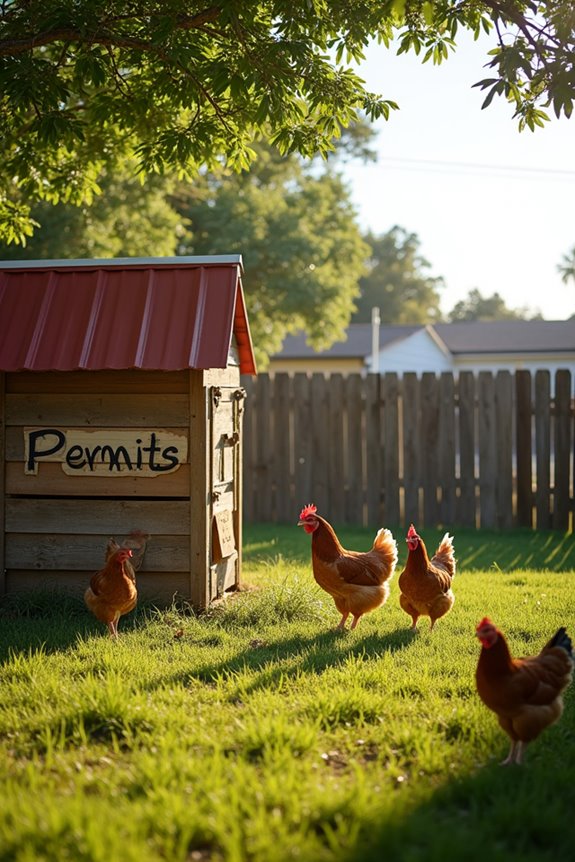
Where exactly can you legally keep chickens in Texas? That depends entirely on where you live. Major cities like Austin, Dallas, Houston, and San Antonio each have their own rules governing backyard flocks. Austin generally permits hens with restrictions—no roosters allowed, specific coop distances from property lines, and registration requirements. Dallas, Houston, and San Antonio follow similar patterns, though setback distances and permit processes vary substantially.
Here’s the thing: your city might allow chickens, but yours specifically might not be listed in common guides. I’d recommend checking your municipality’s ordinances directly—they’ll outline flock size limits, coop placement requirements, and inspection procedures. Don’t assume your neighbor’s rules apply to you. Texas cities take this seriously, and getting these details right before building saves frustration later.
Which Texas Cities Permit Backyard Chickens?
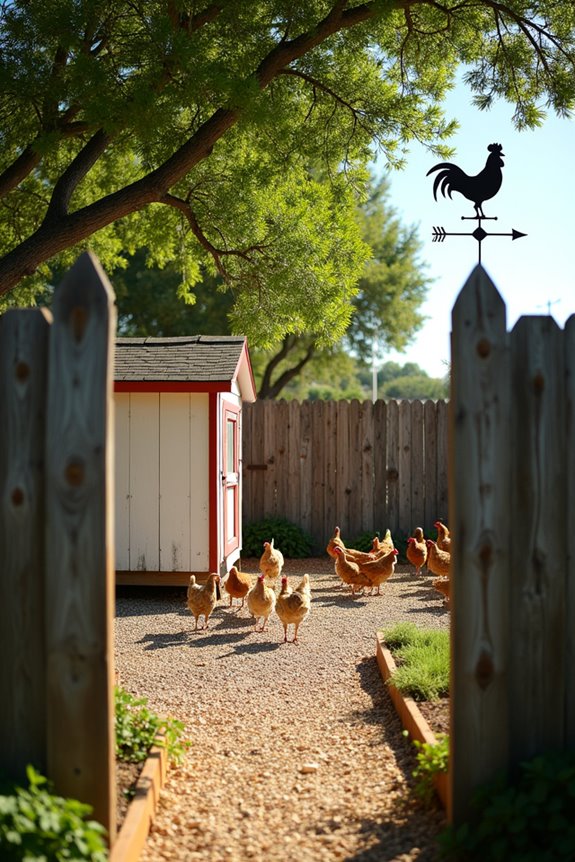
If you’re thinking about raising chickens in Texas, you’ll want to know that major cities like Austin, Dallas, Houston, and San Antonio actually do permit backyard flocks, though each one has its own specific rules about how many birds you can keep and where your coop has to sit on your property. Understanding your local permit requirements by region is the difference between a successful backyard operation and running into trouble with code enforcement. Here’s what each of these places demands so you can figure out if your setup will work.
Major Texas Cities Allowing Chickens
Just how much freedom do you actually have regarding raising backyard chickens in Texas’s biggest cities? Major cities like Houston, Dallas, Austin, and San Antonio allow backyard chickens, each with their own specific rules you’ll need to follow.
Here’s what you’re looking at:
- Houston permits chickens under Chapter 6, letting you join thousands of urban farmers
- Dallas allows poultry with distance requirements outlined in Chapter 7
- Austin welcomes backyard flocks through Title 3 regulations
- San Antonio permits fowl with clear coop standards in Chapter 5
Each city sets limits on flock size and coop placement to keep everyone happy. Your Texas neighbors are already raising backyard chickens successfully.
Local Permit Requirements By Region
Now that you know major Texas cities allow chickens, you’ve got to understand that the rules aren’t the same everywhere—and that’s where things get complicated. Each municipality sets its own local ordinances, which means what flies in Austin might get you in trouble next door. You’ll find restrictions on flock size—some cities cap you at six hens, others allow more. Setback requirements vary too; your coop might need to sit ten, fifteen, or even twenty feet from property lines depending on where you live. Roosters? Forget about it in some places. Before you build anything, check your specific city’s Municipal Ordinances page. Don’t assume your neighbor’s rules apply to you. This research matters because penalties can hurt.
Building a Coop That Won’t Get You Cited

Where exactly should you put that coop? Your placement matters because livestock ordinances in Texas often mandate specific setback distances—typically 10 to 25 feet from property lines and house foundations. I’ve learned that checking these requirements first saves headaches later.
Coop placement matters—Texas livestock ordinances typically require 10 to 25 feet setback from property lines and foundations.
Here’s what separates compliant coops from citation magnets:
- Ventilation systems that prevent ammonia buildup and odor complaints from neighbors
- Secure containment keeping hens contained, reducing pest attraction and escape risks
- Waste management plans with regular cleaning schedules that demonstrate responsibility
- Strategic positioning away from shared property lines, respecting your community’s space
Design your coop with proper drainage, adequate spacing per bird (3-4 square feet inside, 8-10 outside), and materials that withstand Texas heat. When you’re thoughtful about construction details, you’re not just following rules—you’re showing neighbors you’re a responsible keeper they can trust.
What Could Go Wrong? Disease and Liability Explained
Beyond building the proper coop, you’ve got to think about what happens when things go sideways—and they can, more often than you’d think. Disease transmission, particularly Salmonella exposure from handling birds or contaminated surfaces, poses real health risks to your family and neighbors. Liability becomes complicated fast—if your chickens cause property damage, bite someone, or spread illness, you’re potentially on the hook financially. Your homeowners’ insurance might not even cover poultry-related claims, which could leave you vulnerable. Additionally, HOAs can enforce fines for noncompliance regardless of city code permissions, creating legal conflicts. I’d recommend checking your specific coverage limits and consulting your insurer before bringing birds home. Understanding these worst-case scenarios now prevents costly headaches later.
Selling Eggs From Your Backyard Flock: Is It Legal?

So you’ve got a thriving flock and you’re thinking about turning those fresh eggs into a little side income—but here’s where things get tricky, because selling eggs from your backyard isn’t just about having happy chickens anymore.
Before you start collecting money, you’ll need to navigate local ordinances, HOA covenants, and state agriculture rules. Here’s what matters:
- Your city or county may require permits or health inspections before you sell anything
- HOA bylaws could ban commercial activity, even if municipal codes allow backyard chickens
- Some jurisdictions restrict direct consumer sales from home, requiring licensed routes instead
- State registration with the Texas Department of Agriculture might apply if you scale production
Check with your local health department and review your HOA agreement carefully. What’s legal in one Texas neighborhood might be prohibited in yours.
How to Handle Complaints Before They Escalate
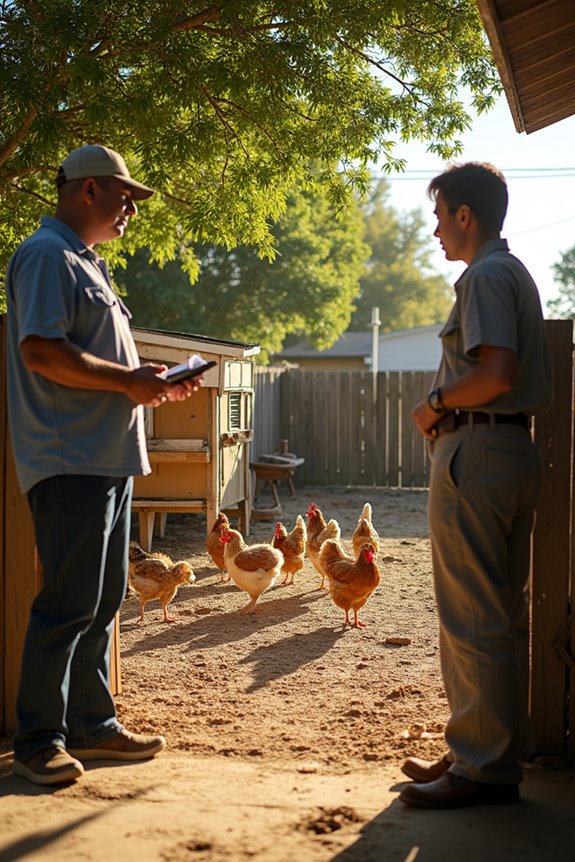
Why do so many backyard chicken keepers get blindsided by neighbor complaints? You’re excited about your flock, following backyard chickens laws, but you’ve overlooked one important step: talking to your neighbors first.
| Issue | Documentation | Action |
|---|---|---|
| Noise | Date, time, duration | Offer quiet hours |
| Odor | Frequency, intensity | Share coop maintenance plan |
| Pets | Encounters, dates | Propose fencing limits |
I recommend documenting disturbances yourself before complaints arrive. Write down noise incidents, odor problems, and any trash issues with specific times. Review your HOA bylaws and city ordinances together—know your setback requirements and flock size limits. Then reach out. A simple conversation about your coop maintenance schedule builds trust. If tensions rise, seek mediation through your HOA board instead of escalating to fines. Compile your compliance evidence: photos of proper enclosure, sanitation records, required distances. This proactive approach protects your flock and your neighborhood relationships.
What Happens If You Violate Local Chicken Laws?
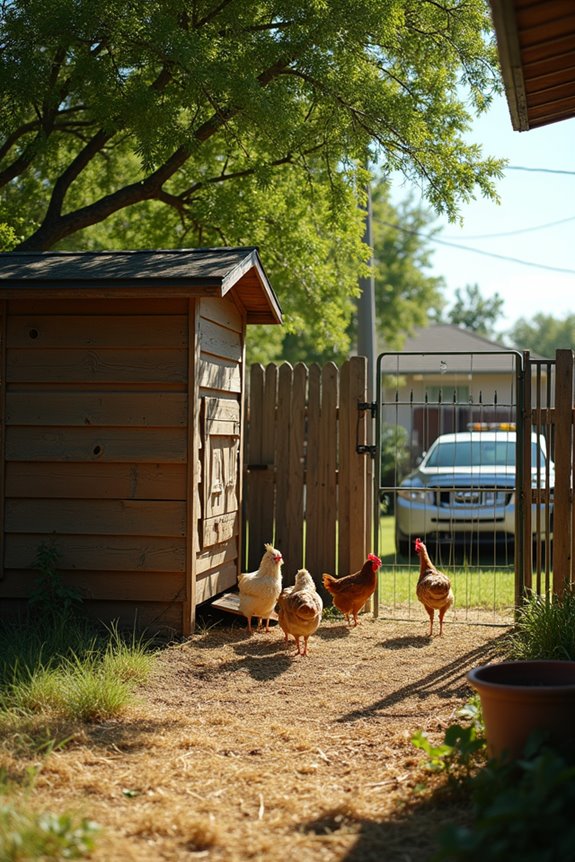
If you’re keeping chickens without a permit or against your city’s ordinances, you’ll face citations and fines that can stack up fast—sometimes starting at $100-$500 per violation and climbing higher with each offense. Your HOA can pile on additional enforcement, including mandatory removal of your coop and legal fees, even if the city technically allows backyard poultry. The real trouble hits when you try selling your home or refinancing, because these violations show up in title reviews and disclosures, potentially complicating your property transaction or costing you thousands to resolve before closing.
Fines And Legal Consequences
Discover what actually happens when you’re caught breaking chicken ordinances in Texas, and you’ll realize the financial hit goes way beyond a simple city fine.
When you violate local chicken laws, the penalties stack up fast. You’re not just facing city-code citations—you’re also dealing with HOA fines, legal fees, and potential enforcement costs that escalate with repeated infractions. Here’s what you’re actually risking:
- Multiple fines from both your municipality and HOA simultaneously
- Escalating penalties that increase each time you’re caught violating
- Legal dispute costs that drain your savings and affect property resale value
- Construction-phase enforcement that ramps up inspections and scrutiny
These violations create ongoing legal headaches. The longer you ignore them, the more complicated your situation becomes. Your property rights get tangled up, and resolving everything takes time, money, and stress you didn’t anticipate.
HOA Enforcement And Disputes
Even when your city says chickens are legal, your HOA can still shut you down and hit you with fines. HOA enforcement operates independently from city codes, meaning your neighborhood’s covenants might explicitly ban livestock regardless of what your city permits. They’ll focus on noise complaints, odor issues, or nuisance violations as enforcement triggers. You could face legal fees stacked on top of fines—costs that pile up fast.
Your best defense? Attend HOA meetings and review your by-laws carefully for any exceptions, like educational poultry provisions. Document your compliance with city codes thoroughly. If enforcement seems unfair, request public records and seek clarification directly from your HOA. Consider legal guidance to understand how state, city, and covenant rules interact. Know your ground before you move forward.
Resolving Current Violations
You’ve done your homework on HOA rules and city codes, but what happens when you’re already keeping chickens and someone files a complaint?
First, understand what you’re facing:
- HOA enforcement can hit your wallet hard—fines accumulate monthly until you comply
- City citations create a legal paper trail that strengthens enforcement cases against you
- Removal orders mean losing your flock, sometimes immediately, without negotiation time
- Legal fees drain savings fast if you contest violations through formal channels
Act quickly. Gather your city codes, HOA bylaws, and any recent amendments. Attend HOA meetings to understand enforcement priorities. Request public records showing how similar violations were handled. If enforcement seems inconsistent or unfair, consult a lawyer familiar with Texas property law. Your best outcome depends on demonstrating good faith compliance efforts now, not later.
Your Action Plan: Starting Your Flock the Right Way
Before you build that coop or order your first chicks, the legwork you do now will save you from heartbreak later. Start by pulling your HOA documents and city ordinances. You need the exact wording about livestock restrictions and Texas HOA rights regarding poultry exceptions. Next, contact your city planning department for permit requirements, flock size limits, and setback distances from property lines. Then attend your HOA board meeting with documentation showing educational or personal-use distinctions. Request written clarification on whether chickens fall under blanket livestock bans or if exceptions exist. Finally, monitor Texas legislative developments like HB 1686 that could strengthen your position. This systematic approach turns confusion into confidence, positioning you as an informed homeowner rather than someone operating in gray areas.