

Your HOA can legally enter your backyard only in specific situations: when your CC&Rs explicitly permit it, an easement authorizes it, you’ve given consent, or an emergency threatens immediate harm.
Most backyards are private property, so the HOA needs documented rights and advance notice—typically delivered by mail or email detailing purpose and timeline.
Without clear authorization, entry is trespass.
If you’re unsure whether your HOA has legal grounds, reviewing your governing documents reveals exactly where their authority ends and yours begins.
What Your CC&Rs Actually Permit: The Legal Limits of HOA Entry

How much power does your HOA actually have to walk into your backyard? The truth is, it’s limited. Your CC&Rs define entry rights, and they typically restrict access to common areas or easements, not your private backyard. Your HOA needs explicit permission or a documented exception to enter.
Here’s what matters: entry rights must align with stated purposes—maintenance, compliance checks, that sort of thing. They’re bounded by notice requirements, acceptable hours, and basic privacy considerations. Before enforcement procedures kick in, your HOA must follow documented steps: send notices of violation, give you deadlines to remedy issues, and outline consequences.
The landscape takeaway? Review your specific CC&Rs carefully. Look for language about backyard entry, landscape maintenance, or obstruction removal. Understanding these limits protects you.
When Emergencies Override Your Backyard Privacy
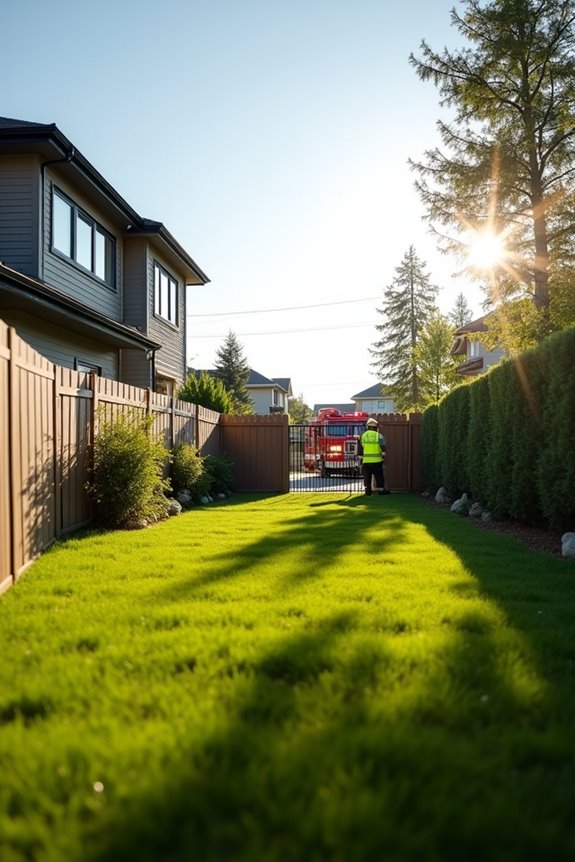
What happens when your backyard becomes a genuine threat to safety—a collapsing fence leaning toward a neighbor’s property, a drainage problem flooding adjacent lots, a gas leak seeping from your yard? That’s when emergency entry changes everything.
Your HOA gains emergency powers to bypass notice requirements and enter your backyard without typical privacy protections. They’ll act fast, narrowly focused on stopping immediate harm:
Your HOA gains emergency powers to bypass notice requirements and enter your backyard without typical privacy protections when immediate danger threatens.
- Stabilizing hazardous structures before collapse occurs
- Stopping water damage spreading to neighboring units
- Addressing utility dangers threatening residents
- Documenting conditions and actions taken
- Following up with repair demands
Here’s what matters: emergency entry isn’t about convenience—it’s about protecting your whole community. Your privacy override happens only when genuine danger exists. Afterward, your HOA must document everything, keeping records transparent and limiting liability while maintaining the trust we all depend on.
Notice Requirements: How Much Warning Must the HOA Give?

Emergency entry operates differently from routine inspections and maintenance—once that immediate danger passes, your HOA must follow the rules, which center on one thing: giving you fair warning. Your CC&Rs spell out exactly how much advance notice you’re owed, typically delivered by mail or email. Most HOAs require written notice detailing the purpose, the violation or maintenance issue, and your deadline to fix it. Entry timing matters too—they can’t show up at midnight. Non-emergency entry without proper notice? That’s trespass, plain and simple. If your HOA skips this step, you’ve got grounds to push back. Review your CC&Rs, request written justification, and don’t hesitate to consult an attorney if they’re overstepping boundaries.
Common Areas vs. Private Property: Where HOA Rights End
Where exactly does your HOA’s authority stop and your private property begin? That’s the million-dollar question, and I’m here to help you understand the boundary.
Your HOA can access common areas freely—think shared pools, sidewalks, and landscaped entrances. But your backyard? That’s different. Here’s what matters:
- Common areas belong to everyone; private yards belong to you alone
- CC&Rs spell out which spaces the HOA maintains and can enter
- Notice requirements protect your privacy before any entry attempt
- Trespass laws kick in when HOAs cross into your yard without permission
- Access rights for easements must be documented in your governing documents
Emergency situations bypass these rules temporarily. Without explicit permission, a court order, or documented easement language, your HOA entering your backyard crosses from authority into potential trespass territory. Know your documents.
Maintenance Entry vs. Enforcement: Two Different Legal Bases

I need to show you the critical difference between why your HOA can enter your backyard for maintenance versus enforcement—they’re actually operating under two separate legal powers that carry completely different rules and limitations. When the HOA maintains that fence line or inspects drainage along your property, they’re relying on specific easement rights outlined in your CC&Rs, which typically allows them with proper notice and during reasonable hours. But here’s what gets tricky: if they’re trying to enforce a rule violation—say, removing an unapproved structure or citing you for overgrown landscaping—they need either explicit enforcement authority in your governing documents, your written permission, or in some cases a court order, because enforcement carries stronger privacy protections than routine maintenance.
Maintenance Duties and Authority
While most homeowners understand that HOAs can enforce rules, many don’t realize that maintenance entry and enforcement actions are actually two separate legal animals with completely different foundations. Your HOA’s maintenance duties stem directly from governing documents, which spell out exactly what they’re responsible for maintaining.
Here’s what gives your HOA legitimate maintenance authority:
- Explicit CC&R authorization limiting entry to common areas or easements
- Notice requirements demanding advance written notification before entering
- Emergency exceptions allowing immediate access for urgent safety threats
- Documented procedures protecting you against trespass claims
- Separate enforcement basis that doesn’t automatically grant backyard access
Understanding this distinction protects you. Maintenance access isn’t a blank check. Your HOA needs clear authority, proper notice, and legitimate maintenance purposes—not enforcement agendas—to legally enter your space.
Enforcement Actions and Limits
Now that we’ve covered what your HOA can do for maintenance, let’s talk about what they’re actually allowed to do when they’re enforcing rules—because here’s the thing: enforcement entry operates on completely different legal ground, and it’s got its own set of rules you need to understand.
When your HOA wants to enter your backyard to enforce CC&Rs violations, they can’t just show up. They need documented proof of a violation, then send you formal notice with a deadline to fix it. That’s your chance to remedy the problem yourself. Entry without permission before completing this process? That’s trespass risk territory. The emergency exception exists—immediate safety threats bypass normal procedures—but routine enforcement demands proper notice and waiting periods. Understanding this distinction protects your property rights.
Easements and Drainage: Where HOA Authority Is Strongest
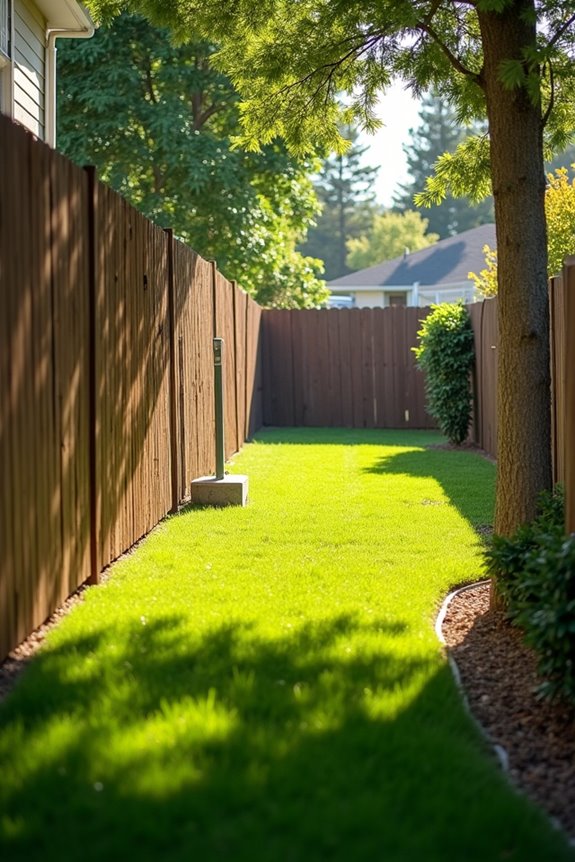
Easements—like drainage lines, utility corridors, or stormwater systems that cross your property—give your HOA their strongest legal ground for backyard access, and they’re different from the vague “common area maintenance” claims that don’t hold up in court. These easements are recorded documents with specific boundaries and purposes, so when your HOA needs to inspect a drainage pipe, repair a swale, or clear a clogged culvert on your lot, they’ve got written authority to do it—but only within that easement zone and only for those maintenance tasks. Knowing what easement actually sits under your grass versus what the HOA just *claims* gives them access to is necessary, because crossing those lines, literally and legally, turns their right into trespass.
Common Easement Types And Purpose
What gives an HOA the muscle to enter your backyard when you’d rather they didn’t? Easements, my friend. These legal agreements grant your HOA specific access rights to your property for legitimate purposes. Here’s what you’re dealing with:
- Drainage easements authorize repairs, installation, or maintenance of stormwater infrastructure crossing your yard
- Utility easements protect lines for water, gas, or electric that serve the community
- Landscape corridors allow trimming and upkeep of shared vegetation areas
- Front and side-yard easements enable irrigation maintenance adjacent to common spaces
- Maintenance access routes support general infrastructure preservation across multiple lots
The strongest HOA authority comes from easements recorded in your CC&Rs with proper notice procedures. Without explicit documentation, backyard entry becomes trespass. Your HOA can’t simply wander through without legitimate drainage or maintenance purposes tied to the easement scope.
Drainage Maintenance And Access Rights
Where does your HOA’s authority actually bite down hardest? Right here, in drainage easements. Your governing documents likely grant the HOA access to specific drainage corridors for maintenance, repairs, and inspections. Here’s what that means for you: they can enter your yard, but only within that defined easement area—not your whole backyard.
For routine work, you’ll get access notice and reasonable scheduling. They’re limited to reasonable hours, minimizing disruption to your life. Emergency entry’s different, though. If drainage failure threatens property damage or safety, they can enter immediately without advance notice.
The critical boundary? They can’t venture beyond the easement scope. Accessing unrelated landscaping or your entire yard risks trespass. Understanding these limits protects you. Your governing documents spell everything out—read them carefully.
Distinguishing Easements From General Entry
How’d you know whether your HOA can legally step foot in your backyard? The answer lies in understanding the difference between easements and general entry rights.
Your CC&Rs and recorded documents spell out what your HOA can actually do. Here’s what matters:
- Easements are explicit permissions granting access for specific purposes like drainage or utility work
- Notice requirements typically mandate the HOA inform you before entering
- Drainage easements specifically authorize inspections, repairs, and maintenance of water infrastructure
- Exceeding scope means entering beyond what’s written—that’s trespass
- Without easement language, your backyard stays private; the HOA lacks broad authority
The strongest HOA access authority comes from detailed easement language defining scope, duration, and notice procedures. Violating these boundaries exposes the HOA to trespass claims. You’ll want to review your recorded documents carefully to understand your exact situation and protect your property rights.
When Entry Becomes Trespass: The Legal Line

When does an HOA’s right to enter your backyard cross the line into trespass? The answer hinges on whether they’ve followed proper procedures outlined in your governing documents. Without written advance notice—typically at least 48 hours—and without your consent, entry becomes illegal trespass. Non-emergency backyard access requires specific details: the exact date, time window, and purpose. Your HOA can’t simply show up whenever they want. They must respect reasonable hours and documented reasons tied to maintenance or safety compliance. If they enter your private space without this foundation, they’re violating both your privacy rights and California law. Courts recognize this distinction clearly: proper notice separates lawful access from unauthorized intrusion the moment procedures break down.
Florida Trespass Law and HOA Access: How They Intersect

Does your HOA really have the legal authority to walk into your backyard whenever they please? Here’s what you need to know: Florida trespass law and HOA access rights operate on different levels. Your CC&Rs form the contract governing HOA entry authority—not criminal statutes alone.
Florida trespass law and HOA access rights operate differently—your CC&Rs form the binding contract governing entry authority.
Your HOA can legally access your backyard when:
- Entry serves documented maintenance of common areas or easements
- Urgent safety or repair needs exist requiring immediate action
- Notice requirements in your CC&Rs are properly followed
- Board-approved policies explicitly authorize specific entry types
- Compliance inspections align with governing documents
Without explicit authority in your CC&Rs and proper notice requirements met, unauthorized backyard entry crosses into civil trespass territory. Understanding this intersection protects your property rights while respecting legitimate HOA functions.
Review Your CC&Rs for Backyard Entry Rights

Where’s the line between your private backyard and your HOA’s right to access it? Your CC&Rs are the answer. These documents spell out exactly when your HOA can enter your backyard and when they can’t. You’ll find the specifics about entry rights, notice requirements, and what counts as legitimate reasons—whether that’s backyard inspections, maintenance, or emergencies. Most communities require written notice before non-emergency access, giving you advance warning about timing and purpose. Read your CC&Rs carefully. Look for language about notice periods, allowed hours, and specific circumstances permitting entry. If the documents don’t explicitly authorize backyard access, your HOA’s hands are legally tied. Understanding these rules protects your privacy and helps you know exactly what you’re entitled to.
Board Policies: Stop Surprise Entries
Now that you know what your CC&Rs permit, it’s time to look at how your board actually enforces those rights—and how you can prevent them from showing up unannounced at your back door.
Strong board policies protect you by requiring advance written notice before any entry. Here’s what should be included:
Strong board policies protect your privacy by requiring advance written notice before any entry into your home.
- Specific purpose of the visit (maintenance, inspection, or CC&R enforcement)
- Exact date and estimated duration
- Reasonable hours unless emergency conditions apply
- Your right to request formal written policy documentation
- Clear entry timelines aligned with governing documents
When your board follows these procedures, surprise entries stop. You’ll know exactly when inspectors arrive, why they’re coming, and how long they’ll stay. This protects your privacy rights while keeping everyone accountable. Demand these standards from your board today.
Unauthorized Backyard Entry: What Happens Next
Unauthorized Backyard Entry: What Happens Next
What’ll you do if your HOA shows up at your back gate without warning? First, document everything. Take photos, note the date and time, and record who entered and why. Request written justification for their entry within five business days—this forces them to prove their authority under your governing documents.
| Step | Action | Timeline |
|---|---|---|
| 1 | Document unauthorized entry | Immediately |
| 2 | Request written notice | 5 days |
| 3 | Review CC&Rs | 1 week |
| 4 | Send formal demand letter | 2 weeks |
| 5 | Pursue dispute resolution | 30+ days |
Review your CC&Rs carefully. If no maintenance or safety clause justifies their entry, you have trespass grounds. Send a certified letter demanding they cease unauthorized access. Consider mediation or arbitration before litigation—these dispute resolution options cost less and resolve conflicts faster while keeping your community relationships intact.
Document Everything: Create a Paper Trail

Once you’ve confronted the unauthorized entry and sent that demand letter, your next move is building a complete record of what happened—because when disputes escalate, documentation becomes your strongest defense.
Start creating your HOA access documentation immediately:
- Write down every entry attempt with exact dates, times, and who showed up
- Snap photos or videos before and after any backyard activity to prove impact
- Save all notices, emails, and board minutes referencing your property
- Record your responses in writing, especially denials of access or clarification requests
- Match each entry to specific governing documents and bylaws that authorize it
This paper trail ties everything together. Your chronological record proves whether the HOA followed notice and consent rules and establishes entry legality. You’re protecting yourself—and your neighbors too—by holding the HOA accountable to their own rules.
Send a Cease-and-Desist for Unauthorized Backyard Entry

How much longer are you going to let this slide?
When your California HOA violates notice requirements, you have legal recourse. Send a formal cease-and-desist letter demanding they stop unauthorized entry immediately. Here’s what makes it effective:
| Element | Your Action | Why It Matters |
|---|---|---|
| Dates | List specific incidents | Proves pattern of violations |
| CC&Rs | Reference exact sections | Shows legal violation |
| Notice | Demand 14-day written advance | Establishes your boundary |
| Documentation | Request board resolutions | Exposes lack of authority |
Your letter converts frustration into legal protection. State explicitly: future entries require proper notice under California HOA law and your CC&Rs. Demand written confirmation of compliance. If they ignore you, mention potential civil actions, mediation, or arbitration. You’re not being difficult—you’re protecting your home. Consult a California HOA attorney if needed. You have the right to protection.
When to Seek Legal Counsel for Entry Disputes

Why are you still unsure about your rights? When your HOA enters your backyard without clear permission, it’s time to get professional help. An attorney interprets your CC&Rs, reviews notice requirements, and determines if the Davis-Stirling Act was violated.
When your HOA enters your backyard without permission, consult an attorney to review your CC&Rs and Davis-Stirling Act compliance.
Consider calling legal counsel in these situations:
- Your CC&Rs lack clear entry consent language
- The HOA didn’t provide adequate notice before entering
- You suspect unlawful trespass occurred on your property
- Documentation shows repeated unauthorized access patterns
- You need guidance on dispute resolution or litigation
Legal counsel evaluates whether entry violated your privacy rights under California law. They’ll help you understand your options—from mediation to formal remedies—and guide you through protecting what’s yours. Address this with professional assistance; your backyard deserves the same protection as your front door.
Propose CC&R Amendments to Restrict or Clarify Entry

If you’ve dealt with vague entry language in your CC&Rs or watched your HOA come through your backyard without solid notice, you already know the problem—unclear rules create chaos. The solution? Propose a CC&R amendment that spells everything out. You’ll define which areas count as backyard, what purposes justify entry (maintenance, safety inspections), required notice periods like 10–30 days, and allowed timeframes. Follow your HOA’s formal amendment process: draft the language, distribute it to members, allow comment periods, and secure board approval or member vote through your governing documents. Clear amendments tie entry rights to specific purposes, respecting your space while protecting community interests. It’s collaborative problem-solving that strengthens confidence in the rules.