
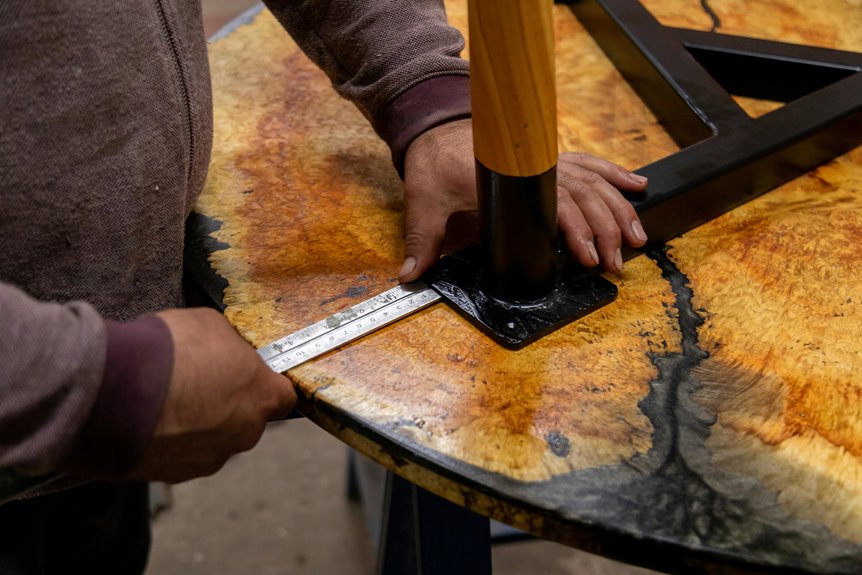
I measure my kitchen table from the floor to the apron’s bottom edge—not the tabletop—because that’s where your legs actually go.
Standard tables sit around 30 inches high, and I want about 10–12 inches of clearance between the apron and my chair seat for comfortable knee room.
I grab my tape measure, place it against the floor, and run it straight up to where the apron begins.
This simple measurement tells me if I’ve got the right setup, though there’s more to getting this matched to your household’s needs.
Standard Dining Table Height: 28–30 Inches (and Why That Matters)
Ever wonder why some kitchen tables feel just right while others leave you cramped or reaching too far?
The standard dining table height ranges from 28–30 inches, measured from floor to tabletop. Most tables sit at exactly 30 inches, which creates that comfortable spot for dining. You’ll want chair seat heights between 17–19 inches to pair with your table. This pairing matters because you need about 10–12 inches of clearance under the table, between the chair seat and tabletop underside.
Getting your dining room setup right affects everyone. Whether you’re hosting traditional meals, working from home, or making sure wheelchair users can join comfortably, these dining table dimensions matter. Measuring from floor upward helps confirm your table meets these accessibility standards. When dimensions align properly, your dining experience becomes more functional and welcoming.
How to Measure Correctly: Floor to Underside, Not Tabletop
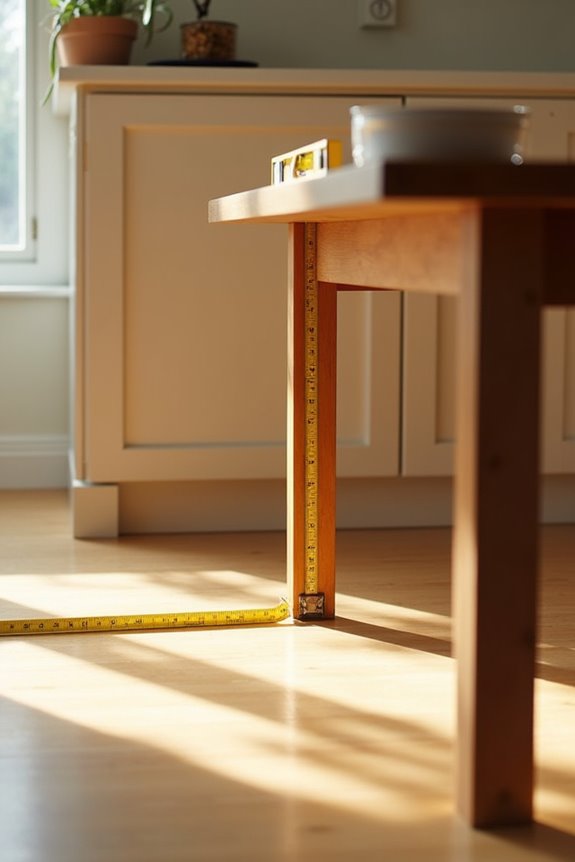
When you’re measuring your kitchen table, where exactly should your tape measure stop? At the underside, not the tabletop itself. This matters for your seating comfort.
Lay your tape measure flat against the floor, then extend it vertically up to the bottom of your table’s apron. Don’t stop at the tabletop height—that measurement won’t tell you what you actually need. The apron thickness directly reduces your under-table clearance, and ignoring it leads to cramped legs during dinner.
This floor to underside measurement reveals your true usable height. Verify it by sitting in your actual chairs, checking that you’ve got 10–12 inches of knee clearance between seat and table. That’s when you know your measurements and dining table height work for real-world comfort.
The 10–12 Inch Legroom Rule: Why It Changes Everything
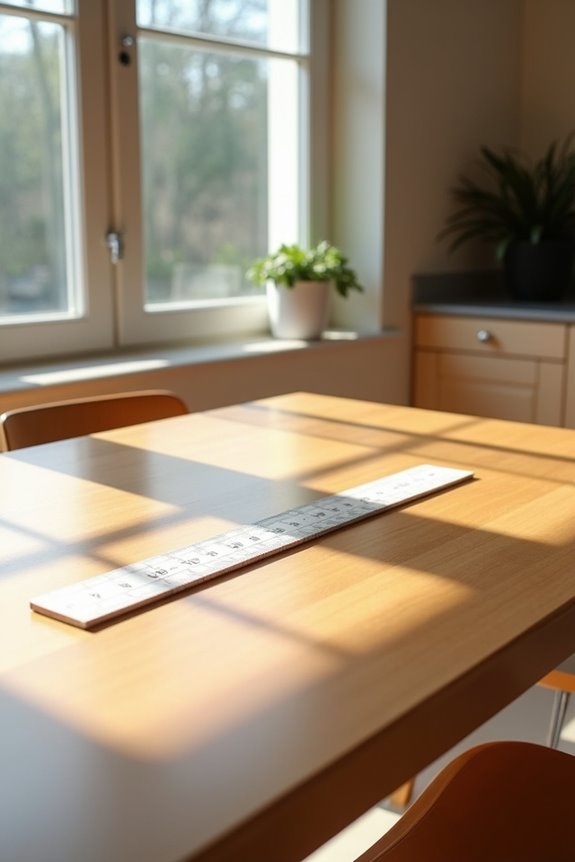
Why does legroom matter so much more than you’d think? When you’re sitting at your kitchen table, that 10–12 inch clearance between the table underside and your chair seat height is important. I measure from the bottom of the apron, not the tabletop, because that’s where real obstruction happens. This knee room prevents your legs from jamming against the table when you shift positions or the cushion compresses. Without adequate legroom, even a beautiful dining table becomes frustrating. If your apron clearance falls short by 3–5 inches, you’ve got options: lower your table, raise your chair seat, or choose a taller chair. Getting your kitchen table measurements right helps everyone feel comfortable, welcomed, and able to enjoy meals together.
Customize Dining Table Height for Your Household
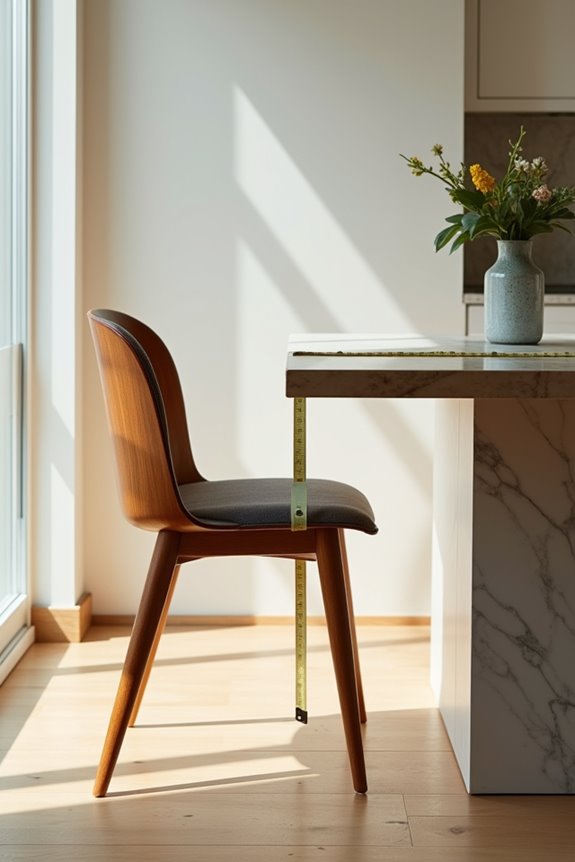
How do you know what height works best for your actual household? I’ve found that customizing your dining room table height starts with understanding who’ll use it most. If you’re working with standard dining table height around 30 inches, I’d aim for the 29 inch height guideline—it accommodates typical 18-inch chairs perfectly. Measure your chair height from floor to seat, then check that you’ve got roughly 10-12 inches clearance between seat and tabletop. Here’s what I do: I assess my household’s heights honestly. Got mixed ages or abilities? Adjustable stools solve this well, letting everyone find their comfort. Prefer alternatives? Counter height options run 34-36 inches with 24-26 inch stools. Your table height measurement should match your family’s actual needs, not design magazines.
Five Measurement Mistakes That Ruin Comfort (and How to Avoid Them)
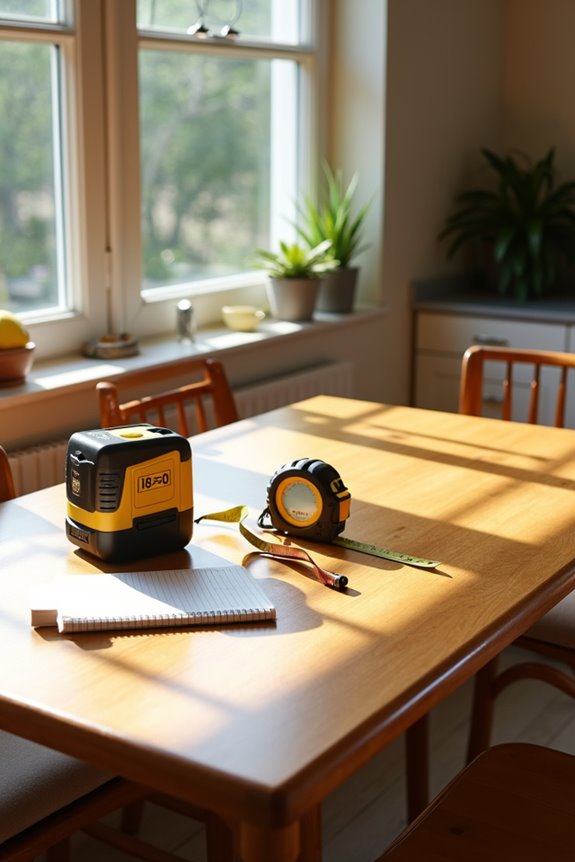
Most people don’t realize they’re making measurement errors until they’ve already bought their table and chairs—and that’s when comfort falls apart.
I’ve learned that proper table height measurements require precision. Here’s what trips up most folks:
- Measuring only to the tabletop instead of the apron bottom, which steals legroom you’ll need
- Guessing chair seat height rather than calculating it 10–12 inches below your floor to tabletop measurement
- Forgetting to account for knee clearance—that essential 10–12 inch gap between seat and underside of table
- Skipping the test seating before purchase, relying on advertised dimensions without verification
Standard dining height works around 30 inches from floor to tabletop. But the key point: your specific setup depends on your space. I recommend measuring from floor to tabletop carefully, then sitting with intended chairs to verify seating comfort actually works for you.