
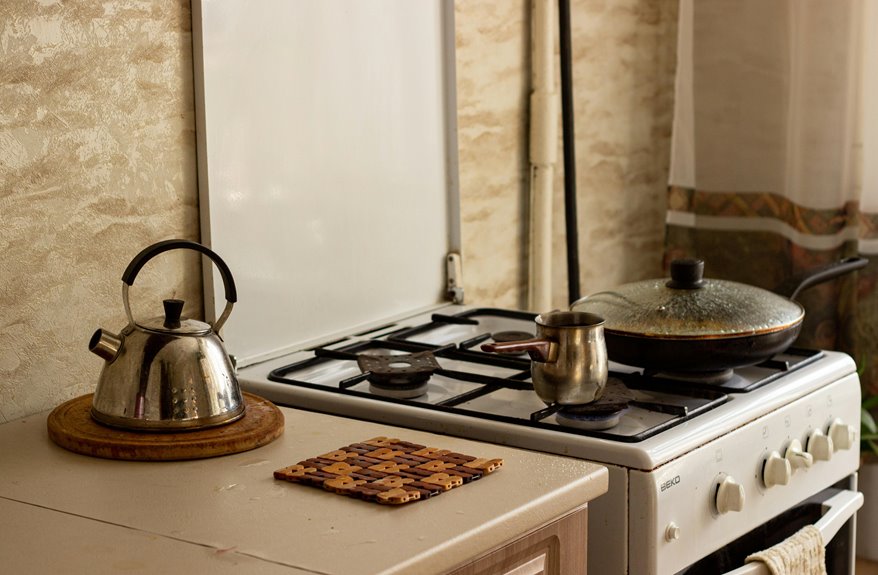
Cotton kitchen cloths ignite around 250°C (482°F), but here’s what catches most people off guard: oily rags can spontaneously combust at far lower temperatures through internal heat buildup, sometimes igniting hours after you’ve tossed them aside without ever touching a flame.
When oils oxidize inside bunched fabrics, they generate their own heat—trapping it tight.
You’re looking at temperatures climbing to 150–200°F within minutes, especially with microfiber.
The real danger? Confinement. Stacked rags can’t cool down, so combustion sneaks up on you.
Understanding which fabrics and storage methods actually protect your kitchen is important for safety.
When Kitchen Cloths Ignite: Temperature Thresholds by Fabric Type
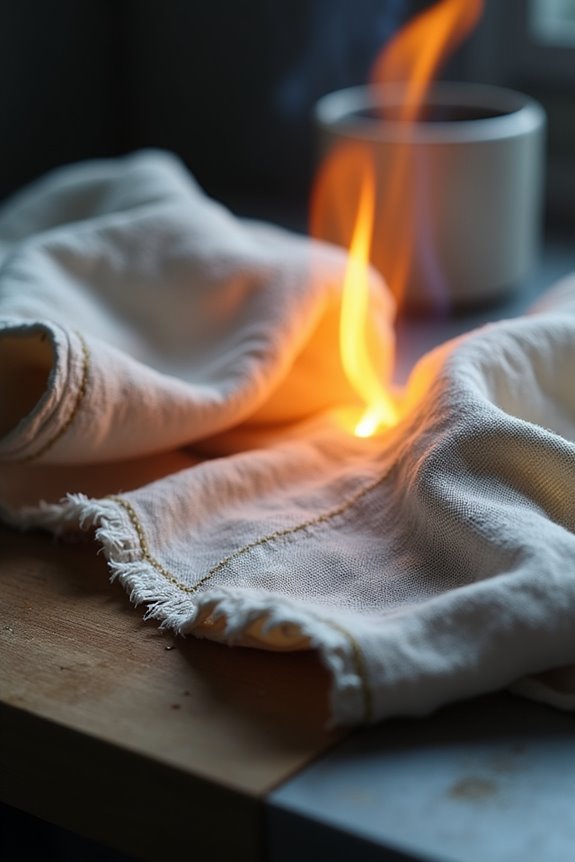
Ever wondered why your kitchen cloth suddenly feels hot after wiping down a stovetop, or worse, why it might actually catch fire? Different fabrics have wildly different ignition points, and it matters more than you’d think. Cotton, that everyday kitchen staple, can ignite around 250°C (482°F) under the right conditions. But here’s where oils complicate things: when you’ve wiped up cooking oils and your cloth sits bunched in a corner, those oils oxidize and generate heat internally. Synthetic fabrics throw another wrench into the mix—they might ignite at lower or higher temperatures depending on what they’re made from. The real issue? Treated cloths with finishes or solvents are even more combustible than untreated ones, lowering that ignition threshold considerably.
How Oil and Grease Accelerate Internal Heat Buildup
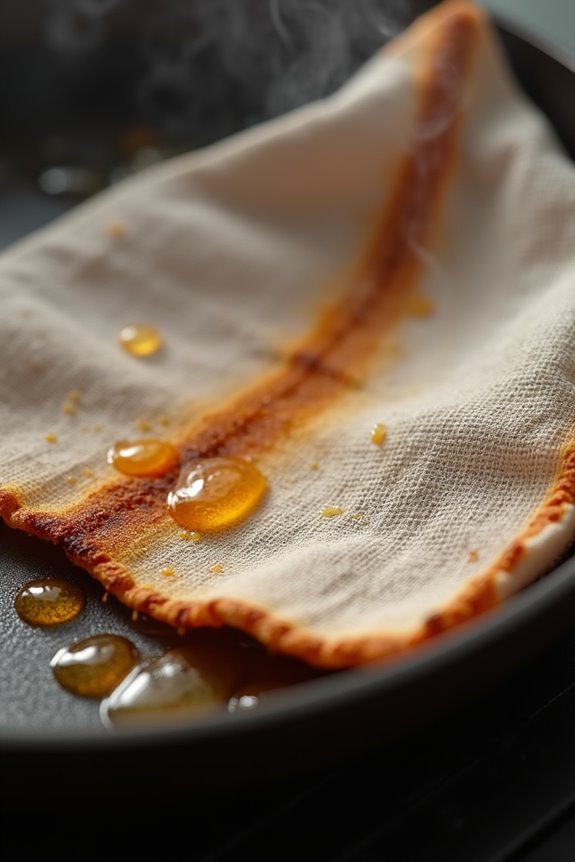
Why do oily kitchen cloths pose such a serious fire risk even after you’ve finished cooking? When grease soaks into fabric, it doesn’t just sit there—it actively self-heats as the oil oxidizes. This chemical process generates internal temperature increases that accelerate over time, even when you’re not actively using the cloth.
Here’s what happens: you pile your greasy rags together, and they trap heat, preventing proper cooling. The self-heating intensifies, potentially reaching ignition temperatures hours later. That’s the dangerous part—delayed ignition catches most people off-guard.
Pre-washing and drying your cloths removes much of the oil, significantly slowing self-heating processes. Proper separation and disposal matter tremendously. Store cloths individually, away from combustibles, allowing heat to escape safely rather than building dangerously inside bunched fabric.
Spontaneous Combustion: Why Stacking and Confinement Are Dangerous
Have you ever tossed a wet, greasy cloth into a corner and forgotten about it for a few hours? That’s when danger creeps in. When you stack or bunch oily rags together, you trap heat inside them, and that confinement slows down how quickly the temperature drops. The oxidation process keeps generating warmth from within the fabric itself—heat that can’t escape because it’s surrounded by more cloth. Hours later, spontaneous combustion can ignite without any flame touching it. I’ve learned that spreading rags flat and letting air circulate around them prevents this buildup. Store oily cloths in ventilated containers instead of piled in corners, and you’ll protect your kitchen from fire risk.
Heat Warning Signs Your Cloth Is About to Catch Fire
I’ve learned the hard way that you’ve got to watch for three critical warning signs before your oily rags burst into flames, and I’m talking about discoloration or char marks appearing on the cloth’s surface, smoke wisping up from the pile, and that unmistakable chemical smell that hits you before you see any visible fire. Your cloth’s temperature will rise noticeably—sometimes reaching 150 to 200 degrees Fahrenheit within minutes of oxidation—and you’ll notice the texture changing from soft to stiff or brittle, which tells me the fibers are breaking down and heat’s building dangerously inside. Once you spot even one of these signs, you need to get that rag into water or open air immediately, because waiting another five minutes could mean watching your workshop go up in smoke.
Discoloration And Char Marks
Watch your kitchen cloth carefully, because discoloration is one of the first things you’ll notice when heat starts damaging those fibers—and it’s your biggest clue that danger’s creeping in. You’ll see darkening or browning around the cloth’s fibers, which means exposed heat damage is already happening. Don’t ignore it.
| Stage | Appearance | Risk Level | Action | Timeline |
|---|---|---|---|---|
| Early | Slight discoloration | Low | Monitor closely | Hours |
| Mid | Visible browning | Medium | Reduce heat exposure | Hours |
| Advanced | Char marks present | High | Remove from heat | Minutes |
| Critical | Stiff, brittle edges | Severe | Discard immediately | Imminent |
| Dangerous | Burnt odor detected | Extreme | Keep away from flames | Now |
Char marks show fibers carbonizing from sustained intense heat. When you spot these dark spots or scorched areas, your cloth’s exceeded safe limits. That burnt smell? It’s your final warning before spontaneous combustion becomes real.
Smoke And Odor Detection
When’s the last time you actually stopped to smell your kitchen cloth? I’m talking about really paying attention. If you notice visible smoke rising from your cloth or detect a distinctive oily, burnt odor, that’s your signal to stop immediately. These warning signs tell you fire risk is real and present. Don’t ignore that persistent warm feeling either—it means heat’s building inside the fabric’s folds. After using oils or finishes, watch your cloth closely for the next 15 minutes. That’s when trapped heat pockets can cause spontaneous combustion. If smoke appears, the odor intensifies, or warmth becomes noticeable, dispose of it safely right away. Cool it down completely before storing anything. Pay attention to what your senses are telling you—they’re your best defense against cloth fires.
Temperature Rise And Texture
Your senses caught the smoke and smell, sure, but here’s what really matters: feeling that cloth change under your fingers. When you touch your kitchen towels and they’re noticeably warm—warmer than room temperature—that’s your warning sign. The temperature rise happens because oils trapped in the fabric generate heat internally, even hours after you’ve finished working. This isn’t gradual; it accelerates. What started cool becomes hot, then uncomfortably hot. You’ll notice the texture shifting too: the cloth becomes stiff, almost brittle. That’s oxidation happening in real time. Don’t ignore these warnings. Spread those rags flat immediately, or soak them in water. Bunching them up only traps more heat, pushing that temperature rise dangerously higher. Pay attention to what you’re observing—it’s protecting you.
Safe Storage: Keep Oily Cloths Away From Ignition Risks
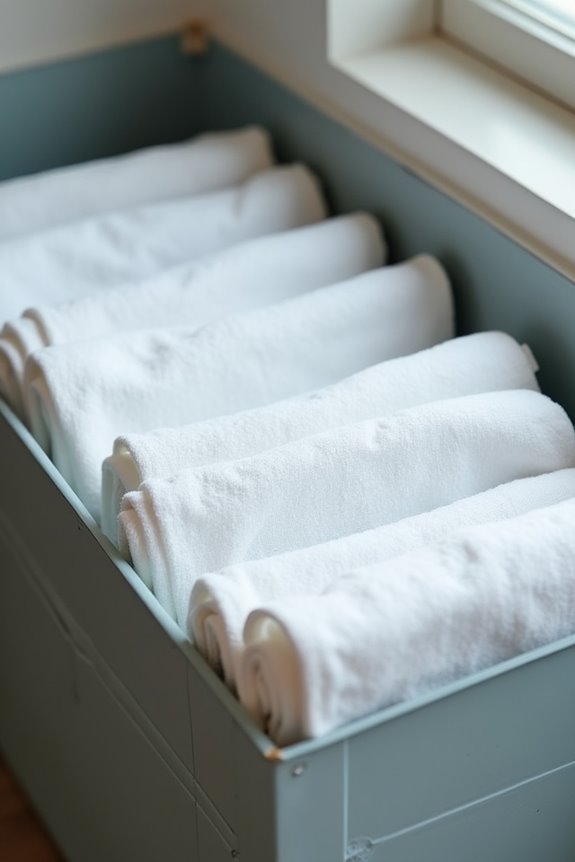
Because heat can build up inside bunched rags faster than you’d expect, oily cloths stored carelessly become a serious fire hazard—and spontaneous combustion isn’t some rare occurrence we read about online, it’s a real danger that catches people off guard.
Here’s what I’ve learned: never pile oily rags together. Instead, spread them flat or hang them individually in a cool, ventilated space away from ignition sources. After each use, immediately place oily rags in metal containers with tight-fitting lids designed specifically for oily waste. This prevents heat accumulation and dangerous hotspots.
Store these containers away from electrical outlets, machinery, and sunlight. Regular disposal through proper channels keeps your workspace safe. Train your team consistently on these practices—it’s not complicated, just necessary.
Pre-Wash and Immediate Drying: Two Critical Protection Steps
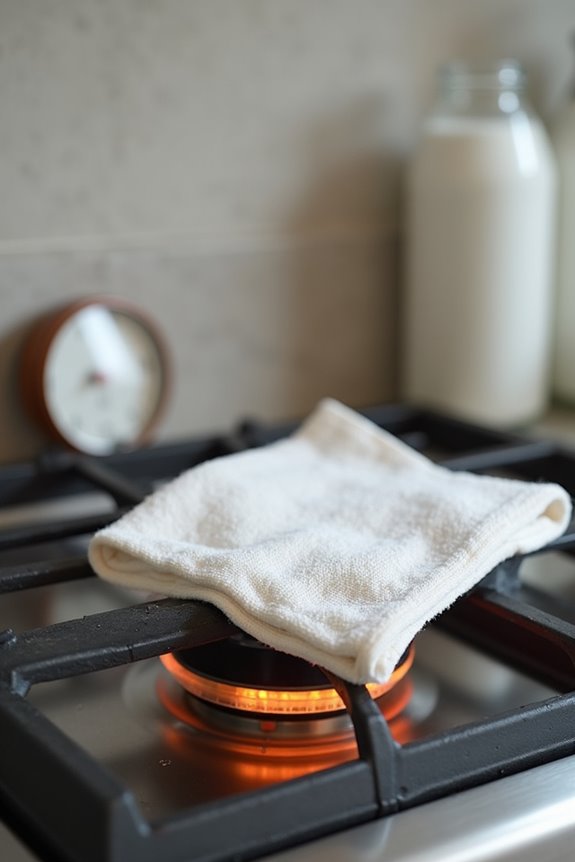
How do you eliminate the hidden danger that’s already baked into your contaminated rags before they even reach the washer? I pre-wash those oily cloths myself, scrubbing out grease and oil aggressively to remove as much contamination as possible. Following manufacturer guidelines on soak times and chemical concentrations matters—I don’t skip these steps.
Once I load everything into my commercial washer-extractor, I target that stubborn grease removal directly. Then comes the critical part: I pull everything from the dryer immediately when the cycle finishes. That residual heat sitting there? It’s your ignition risk waiting to happen. Removing items promptly stops heat from building up and creating dangerous conditions. These two steps—serious pre-washing and immediate removal—protect my workspace and keep everyone safe.
Cotton, Linen, and Microfiber: Which Kitchen Cloths Are Safest
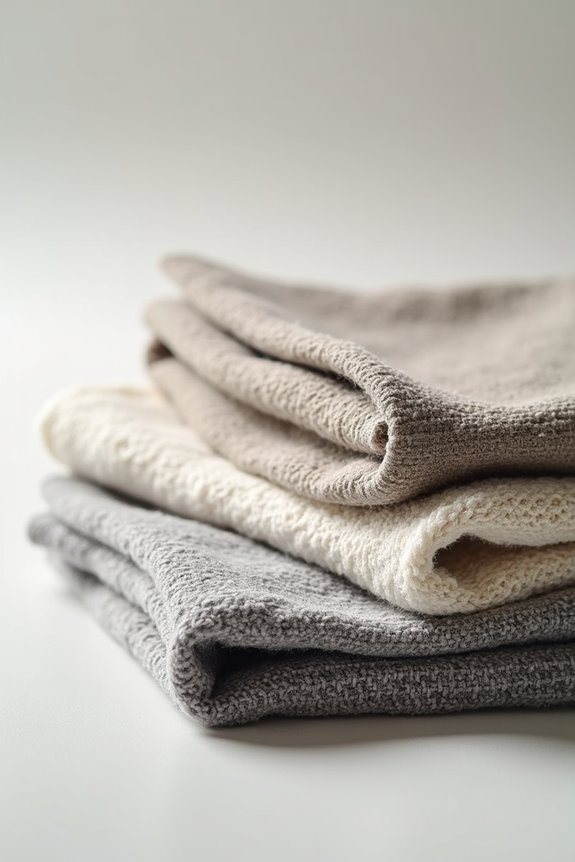
Once you’ve got your washing and drying routine locked down, the next thing that matters is what those cloths are actually made from—because not all fabrics behave the same way when they’re sitting there soaked with oil and heat. Cotton towels ignite at lower temperatures than synthetic fibers, making them risky near hot surfaces. Linen has a higher ignition temperature, but it’ll still catch fire under sustained heat or flames. Microfiber cloths are particularly concerning because they’re highly absorbent, which seems beneficial until you bunch them with oily rags and heat builds up inside. That’s when spontaneous combustion becomes a real risk. Here’s what works: disperse your cloths to dry completely in well-ventilated spaces, never bunched tight together.
When to Replace or Safely Discard Oily Kitchen Cloths
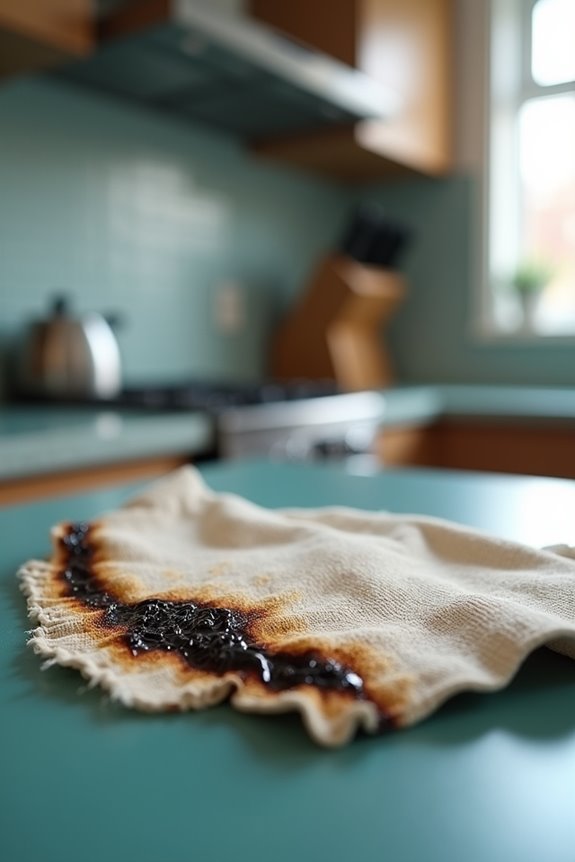
So when’s the right time to toss that oily rag instead of washing it? I’ve learned the hard way that oily towels pose a serious ignition risk if you’re not careful. Here’s what I do: I never leave them bunched up on surfaces because that’s where spontaneous combustion happens. Instead, I flatten them out immediately after use, then wash them separately using commercial-grade laundering. After the dryer cycle finishes, I pull them out right away—no stacking warm items together. If a cloth ever feels hot or starts to smolder, I move it away from everything and dispose of it safely. That ignition risk isn’t worth gambling with your kitchen’s safety.