
I’ll share the three essentials for nailing your can light placement.
First, divide your ceiling height by two—an eight-foot ceiling means spacing fixtures roughly four feet apart for even illumination.
Second, keep lights away from your TV and seating areas; position them along room edges instead to minimize glare.
Third, start with six fixtures for a typical room, then test the layout with a flashlight before committing to holes. Adjust brightness with dimmers, and you’ll find the right balance of light for your space.
Calculate On-Center Spacing Using the Half-Height Rule
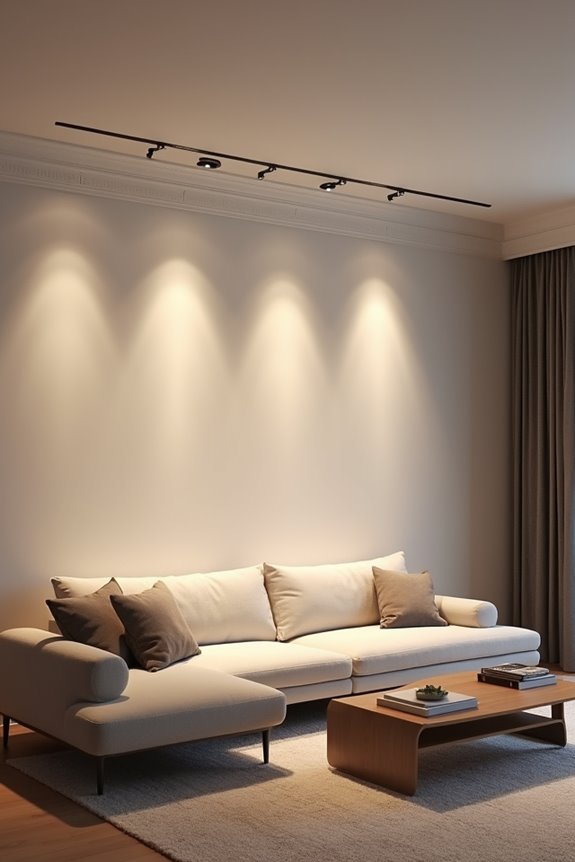
When you’re staring up at your living room ceiling trying to figure out where those can lights should actually go, the idea is—you don’t need to guess. The half-height rule provides a clear method for this calculation. Here’s how: take your ceiling height, divide it by two, and that’s your spacing between can lights. For an eight-foot ceiling, you’re looking at roughly four feet between each fixture. This straightforward calculation allows even illumination across your entire room because each light covers an equal portion of ceiling space. You’ll avoid that annoying crowding near walls while maintaining balanced brightness throughout. It’s a reliable method for achieving professional-looking results without overthinking the placement.
Position Lights Away From the TV and Major Seating Areas
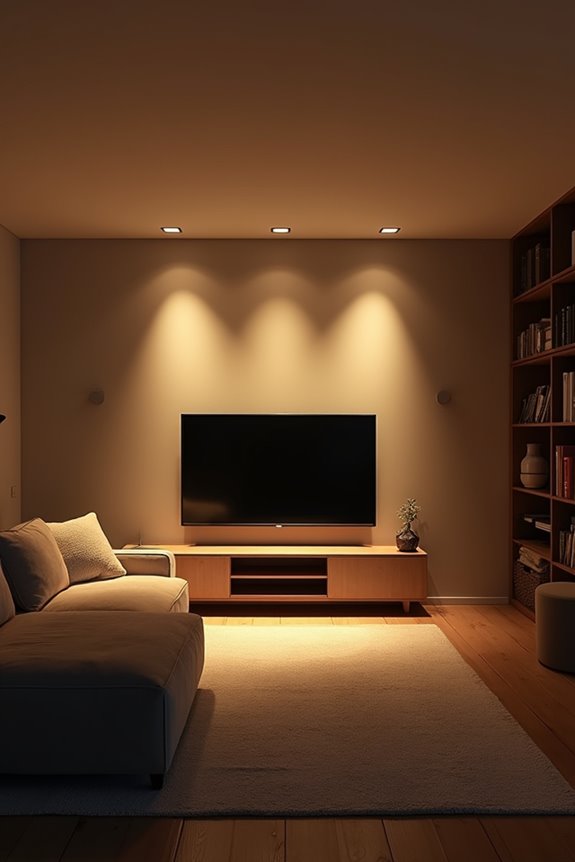
Now that you’ve got your spacing figured out, there’s another layer to getting it right—because placing those cans evenly across your ceiling won’t matter much if you’re bathing your TV screen in glare the moment you settle in to watch something.
I keep my can lights at least 2–3 feet away from the back edge of my seating area. This distance minimizes reflected glare on that screen. Instead of centering fixtures over the couch, I position them along room edges and corners. I’ll use wall wash techniques from side walls, letting light spread gently rather than spotlight directly onto my viewing zone. The result? Even brightness without hotspots. Adding dimmers lets me dial down brightness during movies, balancing screen contrast with ambient light.
Choose the Right Number of Fixtures for Your Room’s Brightness Needs
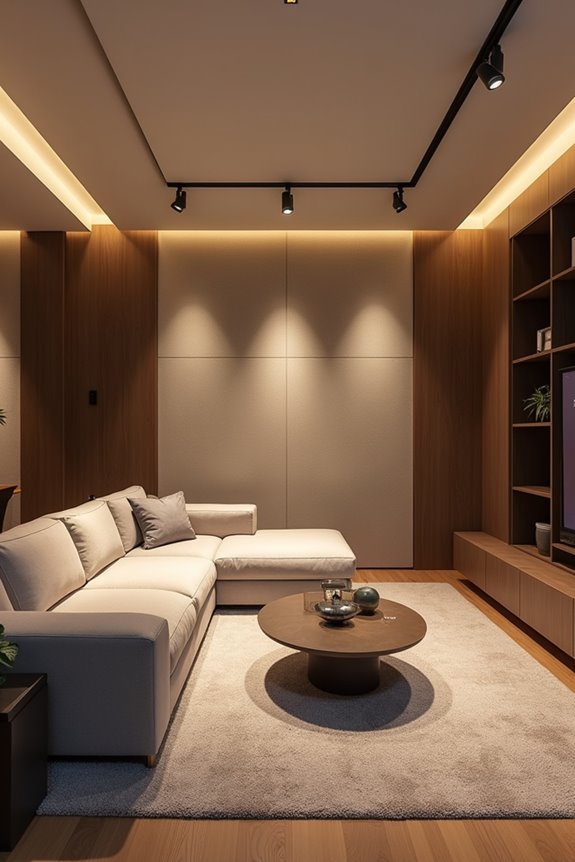
How many can lights do you actually need in your living room? I’d start with six recessed lights for a typical room, spacing them roughly four to five feet apart. For a 21-by-11-foot space with an 8-foot ceiling, that even distribution creates a balanced room wash without overwhelming the area. Keep fixtures two to three feet from walls to avoid that awkward, cramped feeling and maintain nice ceiling balance.
Before you commit, test the layout using a flashlight. Tape it to your ceiling or have someone hold it at different positions so you can see how brightness actually feels in your space. You might discover six lights work perfectly, or you’ll catch that you need adjusting. Adding dimmers lets you dial brightness up or down depending on whether you’re watching TV or entertaining, which might eliminate needing extra fixtures altogether.