
I’d skip drinking straight from your bathroom tap. Here’s why: bathroom water sits longer in less-used pipes, letting bacteria multiply and heavy metals like lead leach from older fixtures and solder. Your kitchen tap pulls fresher water directly from the main supply, which keeps contaminants lower. Hot bathroom water dissolves lead even faster. If you’re thirsty, grab cold kitchen water instead, use a point-of-use filter, or stick with bottled. The specifics on what’s actually hiding in those pipes might catch you off guard.
Why Your Bathroom Tap Water Isn’t the Same as Kitchen Water
Ever wonder why your bathroom water tastes different from your kitchen water, even though they’re coming from the same house?
Here’s the thing: your bathroom water takes a longer journey. It travels through less-used pipes and storage tanks, which means stagnation happens more easily. While your kitchen tap pulls fresh water directly from the main supply, bathroom water sits longer in those lines, allowing contaminants to build up.
Your bathroom fixtures might be older too, potentially leaching lead or rust into what comes out. Because bathroom taps sit near sinks and toilets, bacteria can accumulate there. Your kitchen water gets tested and maintained more carefully—it’s your drinking source, after all. Bathroom water? Not so much. For this reason, I’m concerned about the differences, and why you should be aware of what’s actually flowing from that tap.
Common Contaminants Lurking in Bathroom Plumbing
I’ve discovered that your bathroom tap’s water quality faces three major threats you should know about—bacterial growth thriving in stagnant pipes where water sits for hours, heavy metals like lead leaching from corroded fixtures and older plumbing materials that haven’t been replaced in decades, and sediment plus mineral buildup accumulating in storage tanks or water heaters that lack regular maintenance. When water lingers in bathroom lines instead of flowing constantly like kitchen water does, bacteria multiply rapidly while rust particles and debris settle into the system, creating layers of contamination that degrade water quality. Understanding these specific contaminants helps explain why bathroom water demands different safety standards than the water you’re drinking from your kitchen sink.
Bacterial Growth And Stagnation
What’s really happening inside your bathroom pipes when you’re not using that sink? Bacteria are throwing a party. When water sits stagnant in your bathroom taps, microbes proliferate rapidly, building up a slimy layer called biofilm on pipe interiors. This biofilm clings to surfaces like unwanted guests, creating a protective shield that shields bacteria from cleaning attempts. The longer water lingers—sometimes days in rarely used fixtures—the thicker this contamination layer becomes. Your bathroom environment makes it worse: toilets nearby, cleaning products, residues all mixing into slow-moving water. It’s unsettling. Flushing your tap for several seconds before drinking helps reduce bacterial presence, but here’s the catch: it doesn’t eliminate the problem entirely. You’re working with biology here, not a quick solution.
Heavy Metals From Corroded Pipes
How do you know if your bathroom pipes are slowly poisoning you? Corrosion happens silently, leaching heavy metals into your water over time.
What you should know about protecting your family:
- Lead from older plumbing dissolves into water, especially in homes built before 1986
- Stagnation periods increase contact time between water and corroded pipes, raising contamination levels
- Copper and iron corrosion release metals that affect health, particularly children’s development
- Orthophosphate inhibitors help prevent lead solubility, though effectiveness varies with your water chemistry
What you can do: Replace old lead-containing solder and consider PEX pipes. Regular backflow testing catches problems early. You can’t see these metals, but they’re there—which means action matters. Your family’s health depends on what flows from that tap.
Sediment And Mineral Buildup Risks
While corroded pipes slowly poison your water with invisible heavy metals, another problem’s building right before your eyes—sediment and mineral deposits that clog your fixtures and compromise water quality. I’ve noticed this in my own bathroom: hard water minerals like calcium and magnesium precipitate inside pipes and aerators, leaving stubborn scale that affects both taste and flow. Your aging plumbing becomes a trap where sediment accumulates, especially in rarely-used bathroom taps with longer water residence times. When you finally turn on that faucet, particulates release into your water. Regular flushing helps temporarily, but here’s the frustrating reality—it won’t eliminate mineral buildup without addressing your source water hardness and pipe materials. You’re fighting a battle that requires understanding your water’s composition first.
How Stagnant Water Increases Bacterial Growth
When water sits motionless in your bathroom pipes for hours or days, you’re creating a perfect breeding ground for bacteria like Legionella and Pseudomonas, which thrive in stagnant environments where chlorine and other disinfectants have already dissipated. This residence time—sometimes stretching from overnight to several days in rarely used fixtures—allows biofilm to form on pipe walls, trapping sediments and metals like iron and manganese that not only cloud your water but also shelter pathogens from any remaining protection. The fix is straightforward and effective: flushing your taps for several seconds each morning brings fresh, chlorinated water from the mains, interrupting that microbial multiplication cycle before contamination has a chance to accumulate.
Stagnation Creates Microbial Breeding
Stagnation Creates Microbial Breeding
Ever wonder why your tap water tastes off after you’ve left for vacation?
When water sits idle in your pipes, stagnation creates the perfect environment for microbial growth. Here’s what happens:
- Disinfection residuals drop: Chlorine levels plummet within hours, leaving your water defenseless
- Biofilm builds up: Bacteria colonize faucet aerators and showerheads, forming slimy protective layers
- Pathogens multiply: Legionella and Pseudomonas thrive in stagnant conditions, multiplying rapidly
- Metals concentrate: Lead and copper leach from pipes, accumulating in standing water
Water safety matters. The solution is straightforward: regular flushing addresses this issue. Run your taps for a few minutes before drinking or cooking. This simple habit flushes out accumulated bacteria, restores disinfection residuals, and keeps your water quality consistent. You’re protecting your family with one easy step.
Residence Time and Contamination
How long does water actually sit in your bathroom pipes before you use it? It’s probably longer than you’d think. When water sits in your plumbing system, the residence time stretches, giving contaminants more opportunity to accumulate. Stagnant water becomes a breeding ground for bacteria and metal leaching from older pipes, especially in warm bathrooms.
Here’s what happens: longer residence time means metals dissolve into the water from your fixtures, affecting both taste and safety. Bacteria like Legionella thrive in this environment. Even flushing your tap briefly before drinking won’t eliminate chemical residues or microbial growth that’s already established.
This is a legitimate concern. Understanding how residence time affects your water quality allows you to take action and protect your family’s health through informed decisions.
Bacterial Proliferation in Pipes
Because your bathroom tap sits unused for hours or even days, the disinfectant chlorine that protects your water gradually breaks down, and bacteria start taking hold.
I want you to understand what’s happening inside those pipes. When water stagnates, conditions become suitable for bacterial growth:
- Residual disinfectants diminish, removing your water’s natural protection
- Biofilm develops on inner pipe surfaces, creating bacterial colonies
- Legionella thrives in warm, stagnant environments within storage tanks
- Dead-end piping sections experience minimal water turnover
The longer water sits, the more danger increases. Bacteria multiply rapidly in these forgotten spaces, especially in bathroom plumbing where infrequent use means less flushing action. Your kitchen taps stay safer because regular use keeps water moving and disinfectants active. This stagnation poses a real health risk.
Lead Pipes and Corroded Fixtures: What You Need to Know
When I turn on my bathroom tap, I’m not usually thinking about what’s traveling through the pipes behind my walls—but maybe I should be. Lead pipes and corroded fixtures pose serious risks to drinking water safety that I can’t ignore, especially for children and pregnant individuals in my household.
| Risk Factor | Impact | Solution |
|---|---|---|
| Lead pipes | Release lead over time | Replace with modern materials |
| Soldered joints | Contain lead in older homes | Test water regularly |
| Stagnant water | Increases contaminant leaching | Flush pipes before drinking |
Orthophosphate added to water supplies helps form protective barriers, though effectiveness varies. I’m taking action: testing my tap water, checking fixture age, and replacing corroded components. These steps are necessary for protecting my family’s health today.
Which Bathroom Fixture Materials Leach Contaminants
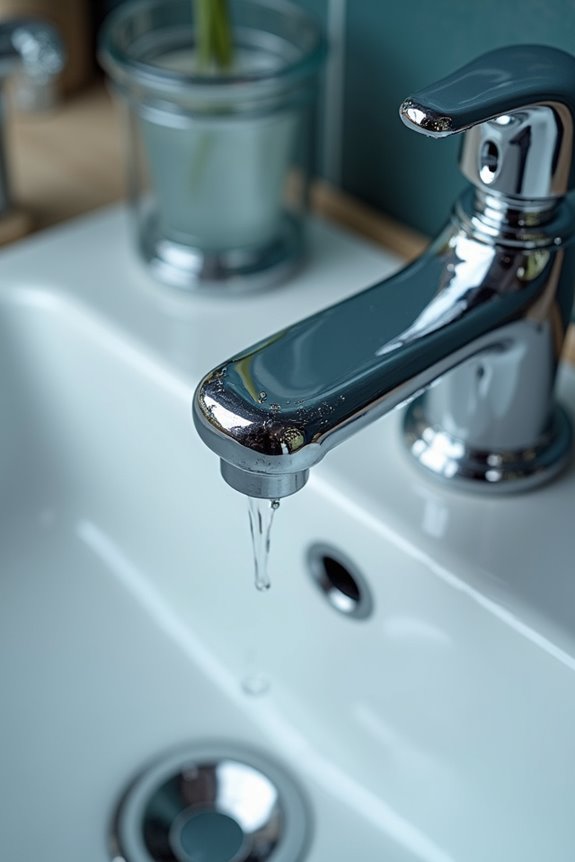
I’ve found that brass and copper fixtures—the ones you probably have right now in your bathroom—can release metals into your water because they’re often soldered together with lead-based solder, which dissolves over time, especially when water sits in those pipes between uses. When I investigated my own bathroom setup, I discovered that even “lead-free” fixtures can contain up to 0.25% lead in brass components, and that low-level leaching accumulates quickly in stagnant water. You’re basically choosing between older fixtures that leak dangerous metals or newer ones that might still contain trace amounts, which is why understanding what’s actually flowing from your tap matters.
Brass and Copper Fixtures
Have you ever wondered why that metallic taste sometimes hits your tongue when you drink straight from your bathroom tap? That’s likely your brass fixtures and copper leaching metals into your water. Here’s what’s happening:
- Older brass fixtures contain higher lead content, which corrodes and seeps into your drinking water over time
- Water chemistry—pH levels, hardness, and mineral content—speeds up copper leaching notably
- Stagnant water sitting in bathroom pipes accumulates dangerous metal concentrations overnight
- Regular flushing helps, but it’s not a complete solution
The risk depends on your home’s age and water conditions. If you’re concerned, installing certified lead-free brass fittings and using point-of-use filters provides real protection. Safe drinking water from your tap is important.
Lead-Based Solder Risks
Where’s that lead coming from in your bathroom water? If your home was built before the 1980s, chances are your pipes are joined with lead-based solder. That solder corrodes over time, especially when water sits stagnant in bathroom lines, leaching lead directly into what you’re drinking.
Here’s what happens: older fixtures combined with stagnant water create the perfect conditions for lead contamination. The longer water stays in contact with that corroded solder, the higher your exposure risk climbs.
You have options, though. Get your water tested first—do this. Then consider lead-specific filtration systems or replacing those older pipes entirely. Water treatment plants sometimes add orthophosphate to reduce lead solubility, but that’s not a complete solution. You need to take action yourself.
What the EPA Actually Requires for Tap Water Safety
So what exactly does the EPA demand from your local water system, and why should you care? They’re not messing around when it comes to keeping your drinking water quality safe. Here’s what they’re actually requiring:
- Routine testing for bacteria, lead, metals, and disinfection byproducts—systems must report findings annually
- Maximum contaminant levels (MCLs) that set hard limits on dangerous substances in your tap water
- Corrosion control measures specifically designed to prevent lead from leaching out of pipes into your home
- Customer notification about violations, treatment changes, or boil-water advisories without delay
Your local utility is responsible for meeting EPA standards through regular sampling. They must keep you informed and compliant, period. Understanding these requirements helps you know what protections you’re actually getting when you turn on that bathroom tap.
Can You Safely Drink Bathroom Tap Water After Boiling It?
Now that you know what the EPA actually requires your water system to deliver, you might wonder if you can just boil bathroom tap water and call it good—especially if you’re in a pinch.
Here’s the truth: boiling kills pathogens, but it doesn’t remove lead, chlorine byproducts, or heavy metals lurking in your pipes. When water sits in bathroom storage systems, dissolved metals accumulate—boiling won’t touch them.
| Contaminant | Boiling Removes? | Health Risk |
|---|---|---|
| Bacteria | Yes | Infection |
| Lead | No | Brain damage |
| Heavy metals | No | Organ damage |
Filtration requires extra work, but kitchen tap water or filtered options provide better protection. Your bathroom water and kitchen water come from the same source, yet bathroom pipes collect sediment differently. Don’t risk it.
When Bathroom Water Is Safe for Brushing Teeth and Rinsing
When I brush my teeth with bathroom tap water, I’m exposing my mouth to the same stagnation risks that plague storage tanks and heaters—bacteria can grow unchecked in pipes sitting idle overnight, especially in older homes where lead solder might leach into standing water. Flushing the tap for a few seconds helps, but it won’t eliminate the mineral buildup, disinfectant byproducts, or heavy metals that settle in bathroom fixtures over time. If you’re concerned about what’s actually in there, I’d recommend using filtered or bottled water for brushing and rinsing, which provides peace of mind without the guesswork.
Daily Oral Hygiene Safety
Have you ever wondered why your bathroom tap water might feel different than your kitchen water? I’ve learned that bathroom fixtures collect stagnant water longer, allowing metals, bacteria, and residue to build up before you brush your teeth. Here’s what I do to stay safe:
- Flush bathroom taps for several seconds before use to remove standing water
- Check for lead pipes or old alloys that leach metals into your water
- Consider using filtered water from the kitchen for brushing instead
- Install a dedicated bathroom filtration device for added protection
The truth is, bathroom plumbing conditions differ substantially from kitchen lines. While flushing helps reduce contaminants, it won’t guarantee complete removal. I’ve found that switching to filtered or treated water gives me confidence during my daily oral hygiene routine, knowing I’m protecting my health effectively.
Bacterial Growth and Stagnation
Beyond just flushing away visible sediment, there’s a bigger concern lurking in your bathroom pipes: bacterial growth that builds up over time. Here’s what happens: when you don’t use your bathroom tap regularly, water stagnates inside the plumbing system. This stagnation creates ideal conditions for bacteria to multiply and form biofilms—sticky layers that coat your pipes and faucet interiors. Unlike your kitchen tap, which gets constant use and fresh water circulation, bathroom water sits longer, allowing bacterial counts to climb considerably.
The solution is straightforward: flush your bathroom tap for several seconds before brushing your teeth or rinsing. This simple action reduces the immediate bacterial load that’s accumulated during periods of non-use. Still concerned? Consider using a trusted drinking source instead, or invest in filtration if bathroom water quality worries persist.
Filtration for Bathroom Use
So what’s your best move if you’re worried about what’s coming out of your bathroom tap? I’d install a bathroom filtration system that addresses your water quality concerns directly. You’ve got solid options:
- Under-sink filters like the Fortitude Compact target specific contaminants without replacing your entire plumbing
- Shower filters such as Sparkle reduce chlorine and minerals that dry out your skin and hair
- Whole-house systems treat water at the source, benefiting every fixture while filtering lead, chlorine, and sediment
- Regular maintenance keeps your filters working effectively against bacteria and heavy metals
These systems improve how your water feels and performs. However, skip drinking directly from your bathroom tap entirely. Instead, rely on filtered kitchen sources for consumption. Your filtration choice depends on your specific needs and budget constraints.
Why Hot Water From Bathroom Taps Is Less Safe Than Cold Water
Ever wondered why you shouldn’t drink hot water straight from your bathroom tap? Here’s the thing: hot water dissolves lead and copper from pipes far more readily than cold water does, creating serious health risks when you’re just trying to grab a drink. That heat accelerates chemical reactions, releasing disinfectant byproducts that affect both taste and safety. Meanwhile, your bathroom hot water sits stagnant in pipes and tanks, allowing dangerous microbes to multiply unchecked—something cold water doesn’t encourage. Mineral scale and sediment accumulate in your shower system too, adding contaminants at the point of use. That’s why experts recommend drawing cold water from your kitchen tap instead, then cooling or filtering if needed.
Signs Your Bathroom Plumbing Needs Professional Testing
How do you know when your bathroom water’s actually become a health hazard?
Certain warning signs demand immediate professional attention. Here’s what to watch for:
Certain warning signs demand immediate professional attention for your bathroom water safety.
- Discolored water or visible staining on fixtures—this signals metal leaching and contamination
- Metallic taste or unusual odors—red flags for lead and bacterial growth in stagnant pipes
- Visible corrosion on bathroom fixtures and connectors
- Water sitting unused for extended periods, which allows bacteria to multiply
Bathroom plumbing harbors higher lead levels than kitchen taps because older fixtures rarely get upgraded. When water sits in those pipes, contamination worsens. Schedule professional testing and backflow inspections rather than waiting. A comprehensive assessment catches lead pipes, cross-connection issues, and safety violations before they become serious problems. It’s a worthwhile investment.
Does Whole-House Filtration Make Bathroom Water Safe?
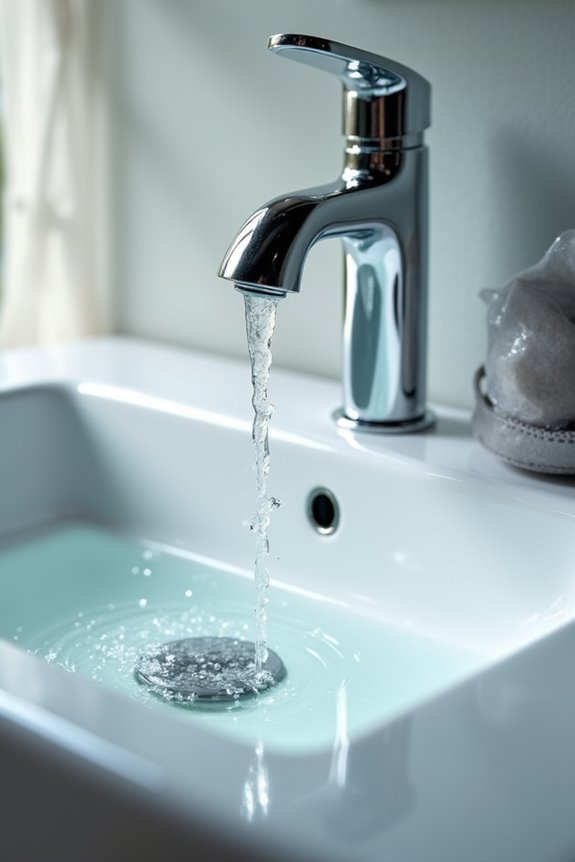
Professional testing reveals the problems, but it doesn’t fix them—and that’s where whole-house filtration steps in. Installing a whole-house filter with a pre-filter—like a 48,000 grain softener—addresses chlorine, sediment, and heavy metals before they reach any tap.
| Filtration Type | What It Removes | Bathroom Impact |
|---|---|---|
| Whole-house filter | Chlorine, sediment, heavy metals | All fixtures benefit equally |
| Softener addition | Mineral buildup | Reduces skin dryness, scaling |
| Pre-filter stage | Larger particles | Protects main system, extends life |
Combined filtration and water softening addresses hard water issues directly. You’re not just hoping your water is safer—you’re actively verifying it meets potable standards. Regular maintenance and professional testing keep your system working effectively.
Installing Point-of-Use Filters in Your Bathroom
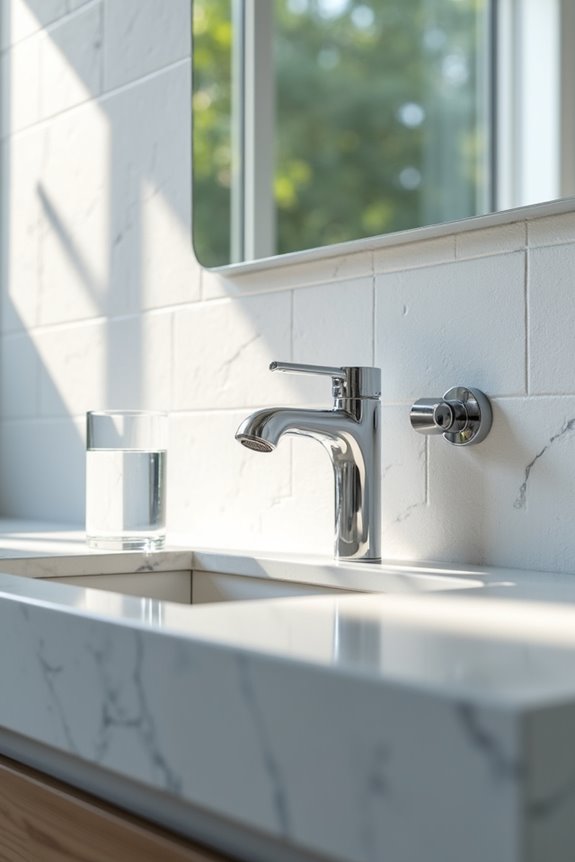
Why settle for hoping your bathroom water’s safe when you can filter it right at the faucet? Point-of-use filters deliver real protection where you need it most.
Here’s what bathroom filtration tackles:
- Removes chlorine, sediment, and heavy metals directly at the source
- Targets lead contamination from aging copper pipes in your bathroom line
- Improves taste and safety for drinking and brushing teeth
- Uses compact systems like under-sink filters and shower spot filters
Installation matters, though. You’ll want to replace filters regularly—exhausted filters lose their capacity to catch metals and microbes. I still drink from my kitchen tap when possible and flush bathroom lines before use, minimizing stagnation effects. This approach keeps you protected without overthinking it.
Flushing Bathroom Tap Water: A Simple Safety Step
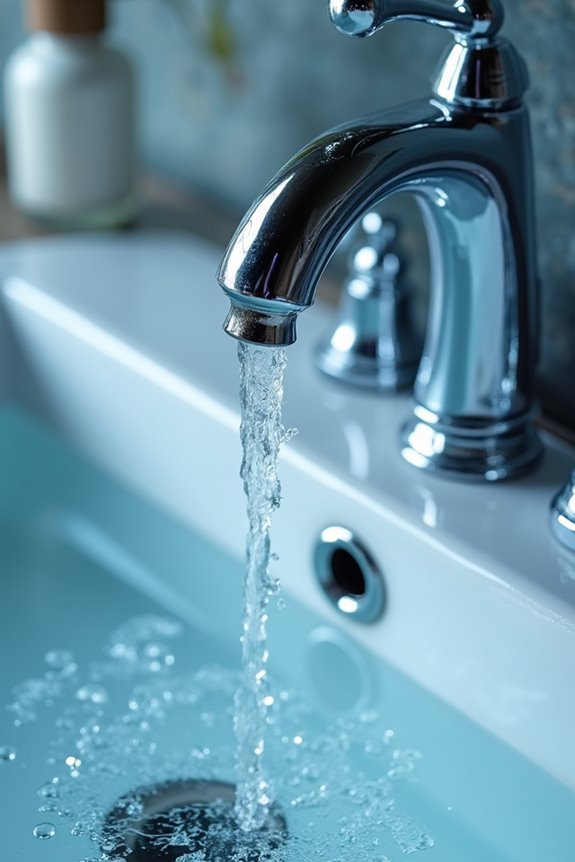
When’s the last time you thought about what’s sitting in your bathroom pipes while you sleep? I didn’t either, until I learned that stagnant water in bathroom fixtures can harbor bacteria, lead, and copper. Here’s what changed my approach to bathroom safety.
Before filling a glass, I run the tap for a few seconds. This simple flushing action brings fresher water from the main line, replacing what’s been sitting idle. Since bathrooms typically have less frequent use and older plumbing than kitchens, this step really matters.
The longer water sits in pipes, the more contaminants leach out. By flushing briefly, I’m reducing taste and odor issues while protecting my health. Combined with regular plumbing maintenance, this habit keeps my bathroom tap water safer for drinking.
Safer Alternatives When Bathroom Tap Water Isn’t an Option
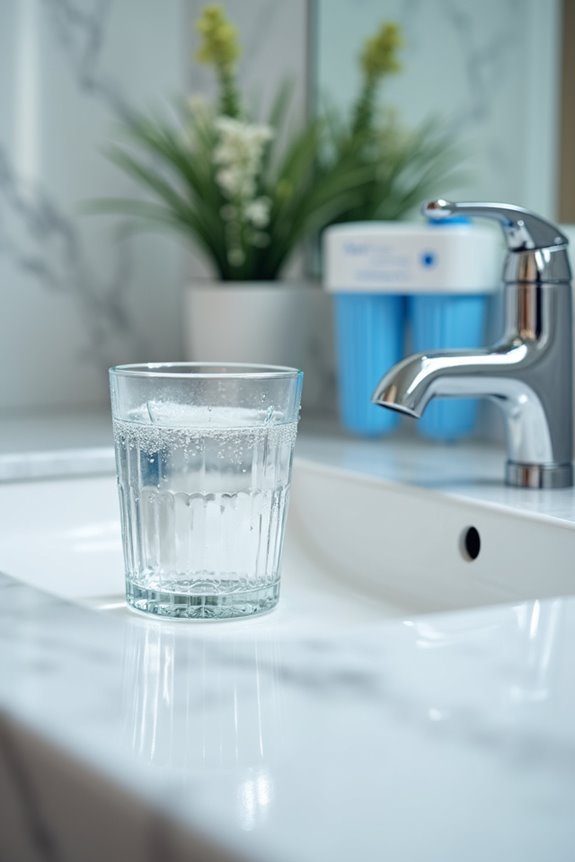
How do you know when flushing just isn’t enough? When you’re concerned about what’s coming from your bathroom tap, shifting to safer alternatives makes sense. Here’s what I recommend:
When flushing isn’t enough, safer water alternatives make sense for your family’s health.
- Bottled water for drinking and cooking—it’s filtered before reaching your home
- Kitchen tap water with a certified filtration system that removes lead and contaminants
- Under-sink filters specifically designed to catch heavy metals and sediment
- Whole-house filtration systems that protect your entire plumbing network
I understand this feels like extra work. But protecting yourself from potential lead exposure and bacteria isn’t something to skip. Your health matters more than convenience. These alternatives are practical solutions that work for families who need clean, trustworthy water.
How to Request a Water Quality Report From Your Supplier
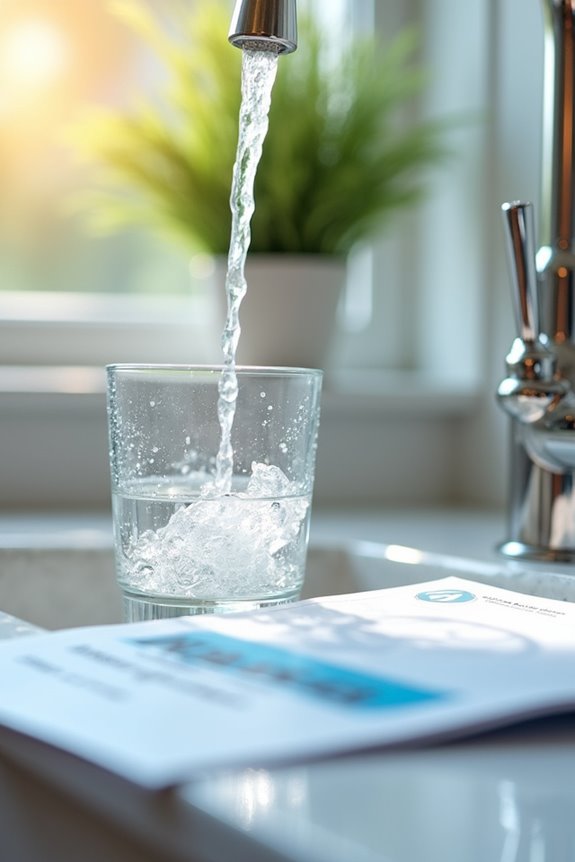
The moment you decide you need real answers about what’s flowing through your pipes, you’ve got to contact your local water utility directly—and here’s the catch: they’re legally required to give you what you’re asking for. Call them up, provide your service address, and request your water quality report, officially called the Consumer Confidence Report (CCR). This annual document lists every contaminant they’ve tested—bacteria, lead, disinfection byproducts—plus whether levels meet EPA standards. You’ll find it online or in your mailbox, usually. If your utility drags its feet, file a public records request under local consumer rights laws. Ask specifically about your service line’s pipe material and backflow testing details too. You have a right to transparency.