

I’ve found that the three best foods to feed deer in your backyard—natural woody browse, nuts and seeds, and strategic minerals—work together to keep your herd healthy through winter without the digestive problems that come from introducing unfamiliar feeds.
Woody plants like buds and twigs form your foundation, while scattered acorns and hickory nuts fill gaps when browse runs thin.
Mineral blocks scattered throughout your yard complete the picture, supporting fat reserves and overall health.
There’s actually a specific way to combine these that prevents the digestive upset most people encounter.
Natural Woody Browse: The Winter Staple

Why do so many of us struggle to keep deer healthy through the cold months? I’ve learned the answer: we’re overthinking it. Deer thrive on natural woody plants—buds and twigs that form their true winter forage. This high-fiber diet, paired with leaf litter they scrape away, sustains them through harsh seasons.
I don’t introduce new foods mid-winter anymore. That disrupts digestion when browse is their primary source. Instead, I manage what’s already here. By pruning red maple and yellow birch strategically, I increase accessible deer browse within reach. These seasonal browse options build fat reserves naturally.
When March brings severe conditions, I simply expand similar woody plant access rather than switching foods. This approach keeps their energy stable, honors their adapted biology, and it’s simpler than expected.
Add Nuts and Seeds If Browse Is Scarce
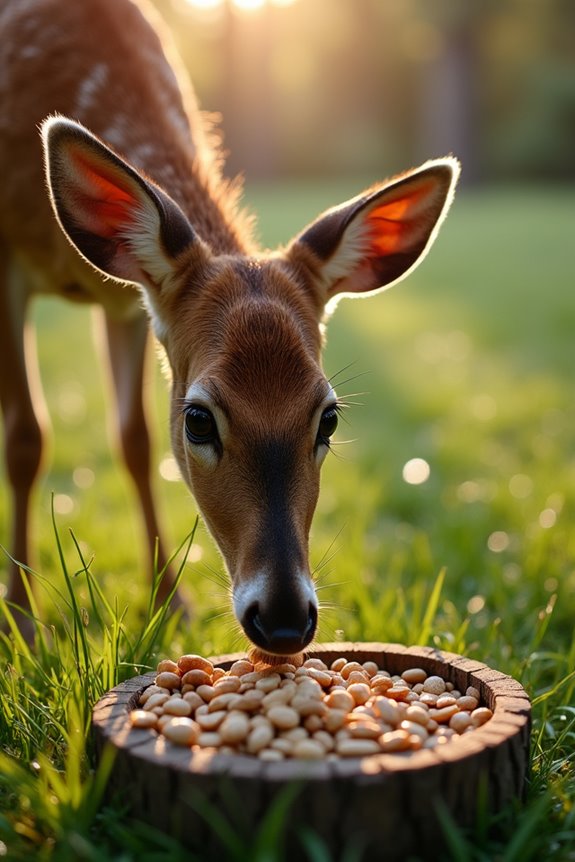
When your property doesn’t have enough natural woody plants—maybe you’ve got mostly open meadow or sparse understory—relying solely on browse won’t work, and that’s when nuts and seeds become your backup plan. I’ve found that acorns and hickory nuts work well as supplemental feed because they’re packed with protein and fats deer need during cold months.
Here’s what I do: I scatter plain nuts and seeds in a designated feeding area, which reduces competition and lets deer forage naturally. I avoid shelled corn and human-grade mixes with additives—local peanut pickouts work well instead. The key is balancing this deer feed with available natural forage so their rumen health stays sound. When you combine browse scarcity solutions thoughtfully, you’re supporting your herd through harsh seasons without causing digestive upset.
Minerals and Produce: When to Use Them
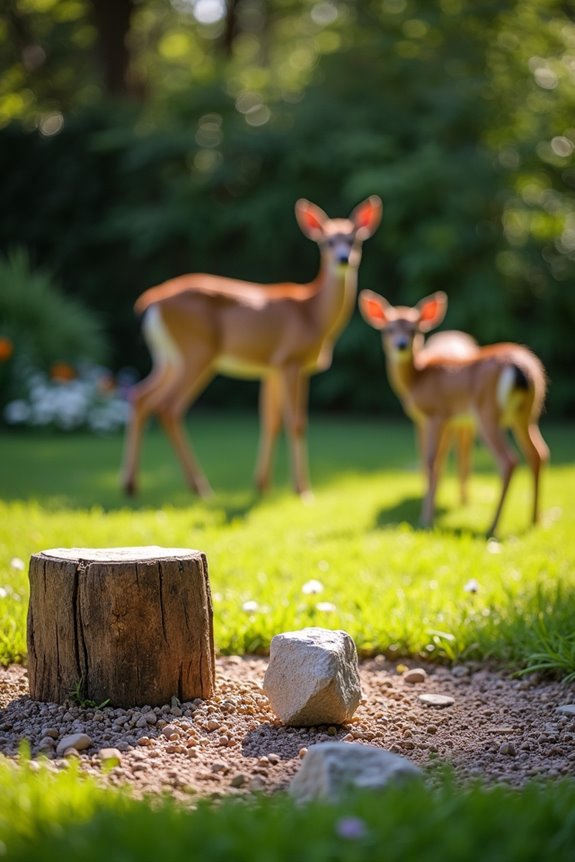
Deer need minerals just as much as they need protein and fats, especially when winter strips the terrain bare. Mineral blocks support their rumen health and fill nutritional gaps in their winter forage.
When you’re planning your supplemental food strategy, here’s what works:
- Scatter mineral blocks throughout your yard so deer access them naturally alongside browse
- Skip produce entirely during winter—it lacks the nutrients they need and can upset their digestive systems
- Combine minerals with natural plants like acorns and hickory nuts for balanced nutrition
The key? Avoid starches completely. Corn-based diets cause digestive problems in deer. Instead, focus on mineral supplementation paired with nuts and wild grains. Your deer population will thrive, and you’ll feel connected to supporting their survival through harsh seasons.