
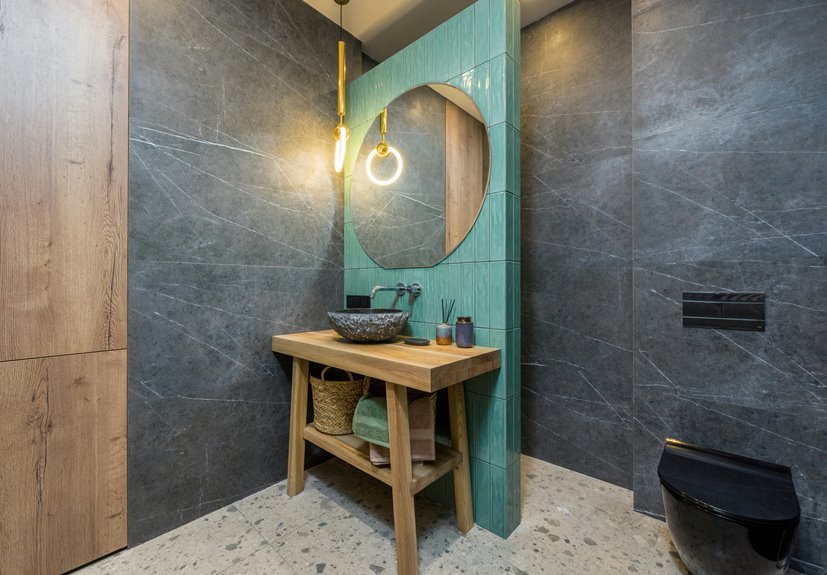
A bathroom vanity is the sink, countertop, and storage combined into one functional hub that serves your daily routine. To choose the right one, assess who uses it and how often—kids need different heights than adults, and multiple people might benefit from dual sinks to reduce morning congestion.
You’ll measure your space carefully, pick between wall-mounted or freestanding styles, select your countertop material based on durability, and coordinate hardware finishes with your overall design.
Getting these details right helps your bathroom function smoothly every single morning—and there’s much more to consider about each decision.
What Is a Bathroom Vanity and Why It Matters
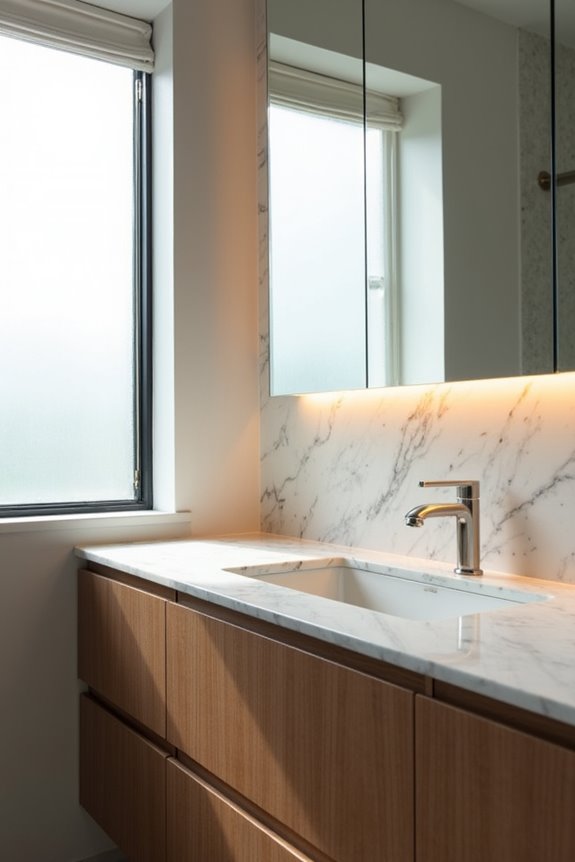
Ever wonder why your bathroom feels disorganized, even when it’s technically clean? A bathroom vanity is the built-in unit that combines your sink, countertop, and storage into one centralized hub. It’s where everything comes together—literally. Your vanity centralizes all your daily essentials and anchors your plumbing, making everything accessible and functional. Think of it as the command center for your bathroom routine.
Why does it matter? A well-chosen vanity maximizes your space, provides durable countertop surfaces that withstand daily wear, and offers smart storage for toiletries. It connects to your existing plumbing rough-ins, so installation works smoothly. Beyond function, it sets your bathroom’s aesthetic tone. You’re not just buying furniture; you’re creating a personal retreat that works as hard as you do. That’s why selecting the right vanity improves your entire bathroom experience.
Assess Who Will Use the Vanity and How Often
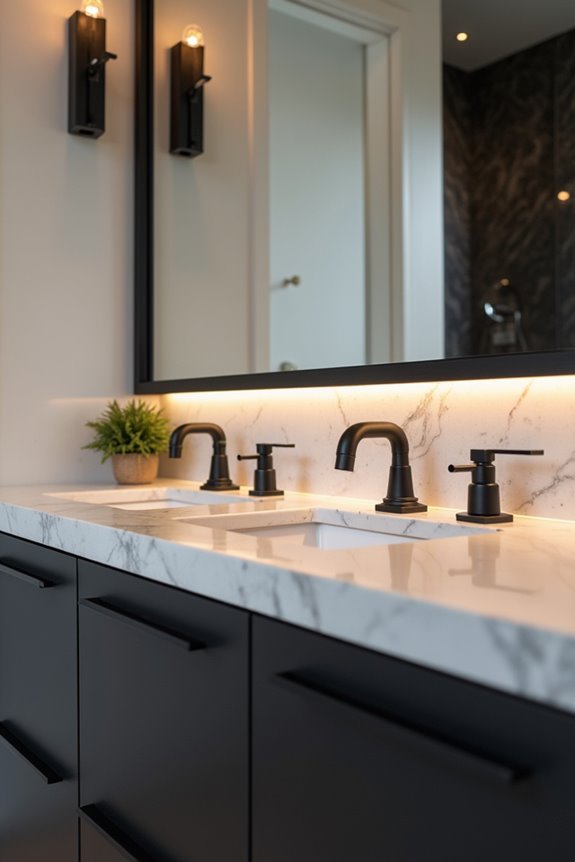
Who’s actually using your bathroom, and how many of them are fighting over sink space every morning?
Understanding your vanity’s real users shapes everything about how you’ll design it. Different households need vastly different solutions, so here’s what matters:
- Vanity height and counter space should match your primary users—kids need lower access, while adults typically prefer 36 inches standard height
- Storage configuration works best when each person gets dedicated drawers or cabinets, preventing daily clutter conflicts
- Multi-user use demands either dual sinks or strategic counter layouts that accommodate simultaneous grooming routines
- Accessibility features like knee clearance and wheelchair-friendly widths (minimum 32 inches) make the space usable for everyone
When you assess user needs honestly, you’ll eliminate bottlenecks and create a vanity that genuinely serves your household instead of frustrating everyone daily.
Single Sink or Double: Which Fits Your Lifestyle
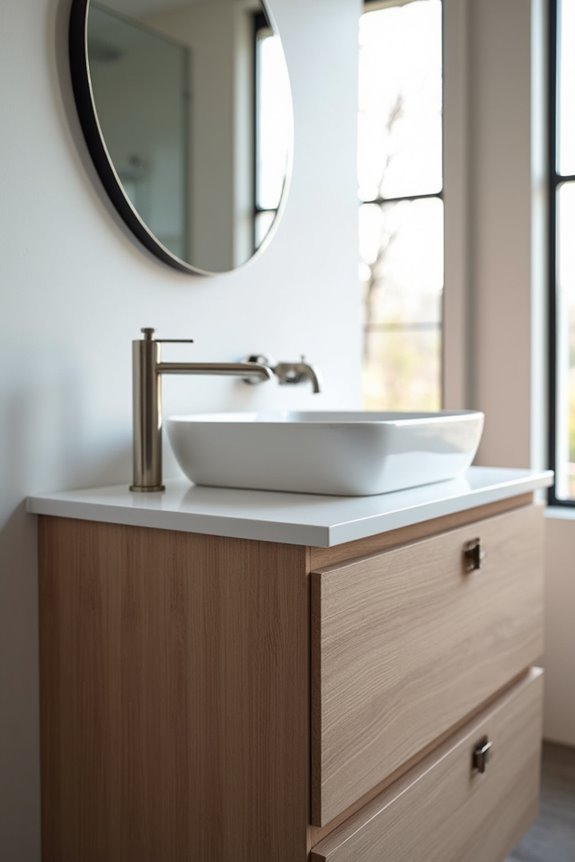
How many people are actually jostling for mirror space in your bathroom each morning? That question determines whether you need a single sink or double vanity. If you’re living solo or in a powder room, a single sink keeps your bathroom vanity compact and affordable. But here’s the thing: shared bathrooms with multiple users benefit from a double vanity. You’ll eliminate morning bottlenecks, giving everyone separate work areas.
Double vanities require serious space planning though. You’re looking at 48 inches width minimum, plus substantial counter space and storage options for two people’s routines. If you’re tight on square footage now, consider starting with a single sink—you can always upgrade later by expanding to a wider configuration. Think strategically about your household’s actual needs before committing.
Choose Your Sink Style: Drop-In, Undermount, or Vessel
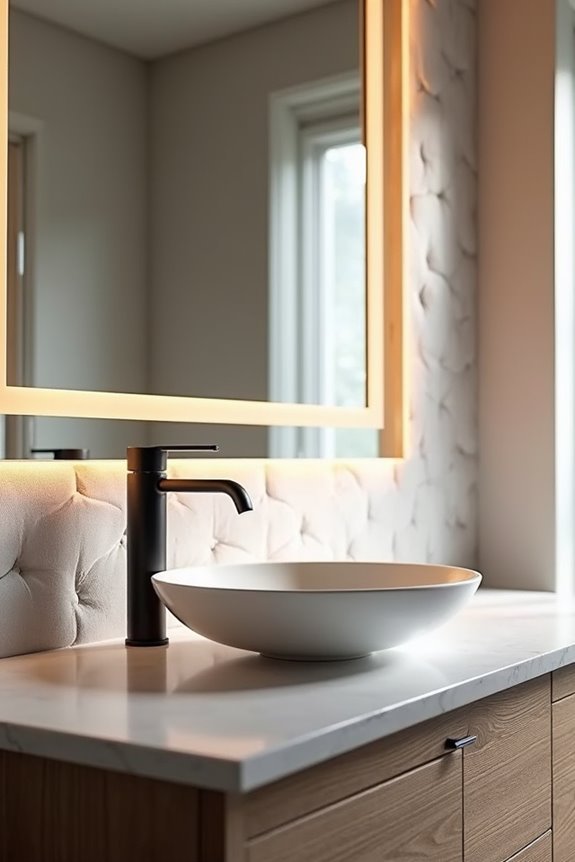
Now that you’ve figured out whether you need one sink or two, you’ll want to pick the style that fits both your bathroom layout and how you actually use the space. Drop-in, undermount, and vessel sinks each have distinct advantages. Here’s what you need to know about how each one installs, what makes them practical or visually appealing, and which one will work best for your specific situation.
Drop-In Sink Installation
Why do so many homeowners gravitate toward drop-in sinks? The answer’s simple: they’re straightforward to install and maintain. I’ll walk you through what makes this style so popular.
When you’re installing a drop-in sink, you’re basically setting the basin on your vanity top with the rim edge resting on the countertop surface. Here’s what you’re managing:
- Positioning the sink bowl centered on your countertop opening
- Applying waterproof sealant around the rim edge to prevent moisture intrusion
- Securing the sink from underneath using mounting clips
- Allowing sealant to cure before running water
The installation takes hours, not days. Since the sink isn’t mounted underneath, you’ll avoid complex undermount procedures. Maintenance focuses on sealing that rim edge and cleaning exposed edges regularly, keeping moisture from sneaking behind your vanity top.
Undermount Sink Benefits
If you’ve walked through a high-end bathroom showroom lately, you’ve probably noticed those sleek sinks that seem to disappear right into the countertop—that’s the undermount style at work. These installations offer practical advantages for your daily routine. The seamless edge eliminates that annoying lip where spills accumulate, making cleaning straightforward. You’ll gain precious counter space for your essentials, and the integrated look provides a polished appearance.
| Feature | Benefit | Consider |
|---|---|---|
| Seamless Edge | Simplified Cleaning | Professional Installation |
| Maximized Space | More Counter Area | Higher Upfront Cost |
| Premium Look | High-End Aesthetic | Countertop Material Requirements |
Undermount sinks work best with stone or solid-surface countertops requiring precise cutouts. Professional installation matters—proper sealing prevents water damage underneath. Yes, costs run higher than drop-in options, but the refined appearance you’ll achieve is worth the investment.
Vessel Sink Focal Point
While undermount sinks prioritize transition and hidden elegance, vessel sinks take the opposite approach—they’re unapologetically visible, sitting like a sculptural bowl right on top of your countertop and demanding attention the moment you walk in. If you’re drawn to making a statement with your bathroom design, vessel sinks deliver exactly that. Here’s what makes them work as central design elements:
- They create visual drama through sculptural shapes and finishes
- They pair beautifully with contemporary or transitional vanity styles
- They require taller faucet heights for proper functionality
- They demand thoughtful counter space planning around them
You’ll need to organize toiletries strategically since the basin sits elevated. The real advantage? Your vessel sink becomes the room’s primary design element, defining your entire bathroom aesthetic while demonstrating deliberate design choices.
Decide: Wall-Mounted or Freestanding Vanity
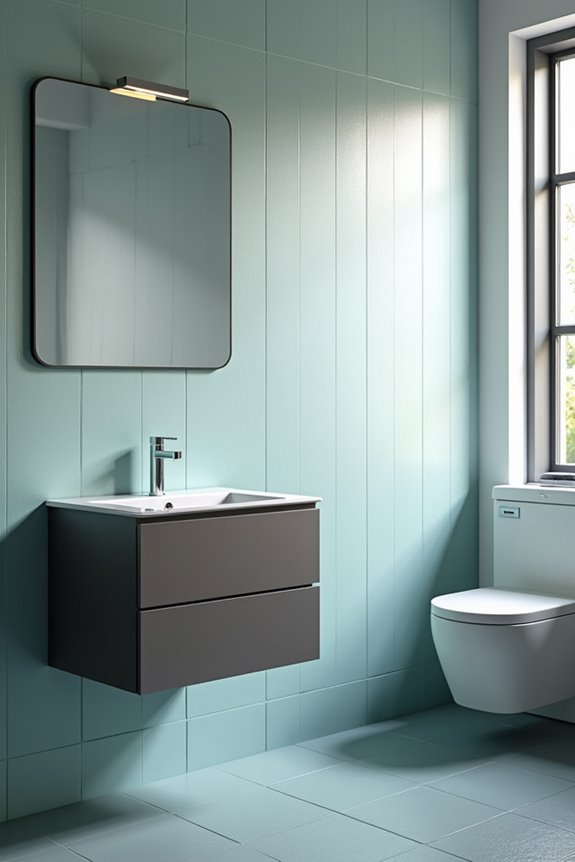
do you go wall-mounted or freestanding?
Wall-mounted vanities fix to your wall, creating precious floor space that makes compact bathrooms feel bigger. They require plumbing adjustments though, and you’ll sacrifice under-sink storage. Freestanding vanities sit on legs or a base, giving you flexibility with sizes and styles while keeping that open area underneath for towels and supplies.
Think about your lifestyle. Need easy maintenance access? Freestanding wins. Want contemporary vibes and maximum floor space? Wall-mounted delivers. Both options affect countertop height, toe-kick clearance, and door-opening space, so measure your bathroom carefully. Consider your storage needs honestly—this decision impacts your daily routine and bathroom accessibility for years to come.
Compare Custom Vanities to Ready-Made Options
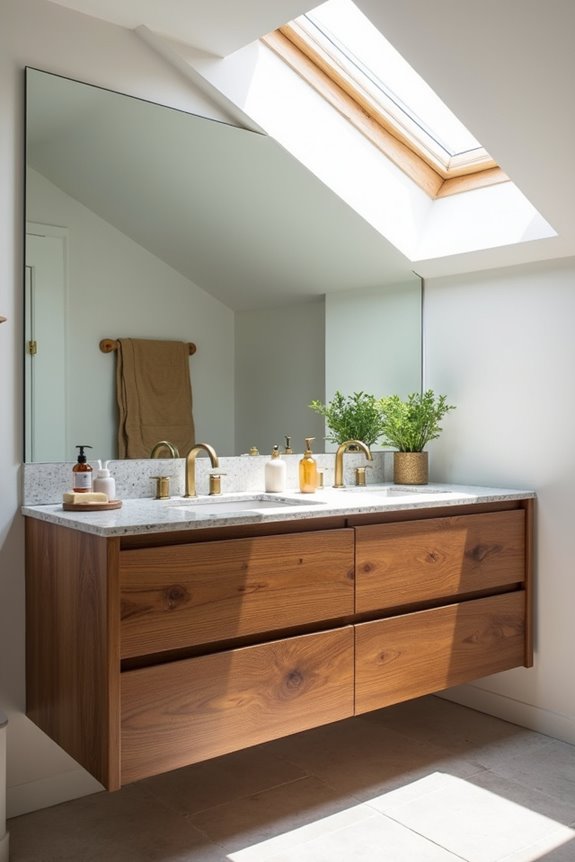
When you’re staring at vanity options, you’ll quickly realize that custom builds and ready-made units pull in completely different directions—custom vanities let you design everything from the 24-to-60-inch base width down to your exact countertop material and hardware finish, but they’ll cost you more and take weeks or months to arrive, while prefab options hit your budget faster and install quicker with standard dimensions and pre-selected colors that might leave you compromising on what you actually want. The flexibility of custom design works well when you’ve got an awkward corner or specific plumbing setup that standard sizes won’t accommodate, yet that advantage disappears when you see the price tag and timeline. Ready-made vanities mean you’re picking from what’s already in stock—limited but available immediately.
What matters most: figure out whether your bathroom demands that perfect-fit precision or whether you can live with the trade-offs that come with faster, cheaper solutions.
Cost and Budget Comparison
Most bathroom vanity projects break down into two distinct paths: custom builds or ready-made units, and the cost difference between them is significant. When you’re budgeting for your vanity project, you’ll need to consider more than just the piece itself.
Here’s what impacts your total investment:
- Custom vanities run higher upfront due to bespoke materials and longer lead times, but fit perfectly in non-standard spaces
- Prefab vanities cost less initially and install immediately, though they may limit your countertop options
- Installation costs vary based on plumbing requirements and whether existing fixtures need relocating
- Room remodel steps—like wall prep or flooring adjustments—add expenses worth accounting for
The real consideration is weighing immediate savings against long-term satisfaction. Ready-made works great for standard bathrooms. Custom builds justify their expense when your space demands it.
Design Flexibility and Customization
How much control do you actually want over your vanity’s look and feel? If you’re someone who envisions a specific design, custom vanities give you that freedom. You’ll personalize everything—base, countertop, backsplash, sink, and hardware—to match your exact vision. You can choose material finishes that emulate wood or stone at a lower cost, tailoring storage options to fit your unique layout perfectly.
Prefab vanities, though, work differently. They come in standard dimensions with limited color choices, meaning you’re picking from what’s already available. Installation happens faster, but you’re sacrificing design flexibility. If your bathroom has an unusual space fit or specific storage needs, custom vanities solve those puzzles. Prefab options won’t bend to accommodate quirky measurements. Your choice depends on whether you prioritize speed and budget or personalization and precision.
Measure Your Bathroom to Determine Vanity Size
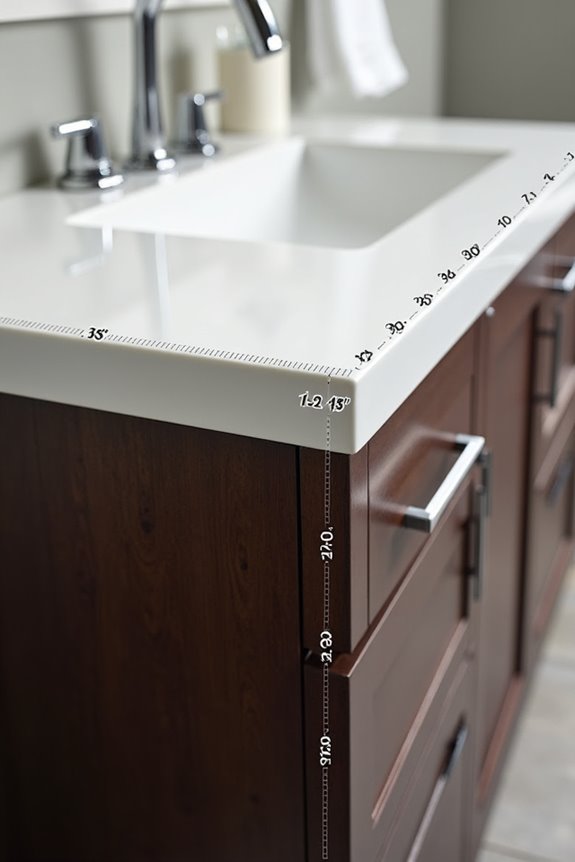
Before you commit to that vanity you’ve spotted online, measure your actual bathroom space—because even the most beautiful cabinet won’t work if it doesn’t fit.
I learned this the hard way. Start by taking these measurements:
- Width, depth, and height of your bathroom to establish the vanity’s footprint
- Plumbing rough-ins and their exact locations, since they determine where your vanity can actually go
- Clearance space in front of the vanity—aim for at least 30 inches for comfortable movement
- Ceiling height relative to mirror placement for proper visibility
Don’t forget about adjacent fixtures like toilets or showers. You’re creating a functional layout, not just squeezing in furniture. These bathroom measurements directly impact your vanity size and whether you’ll actually enjoy using your space.
Find Your Plumbing Before You Pick a Spot
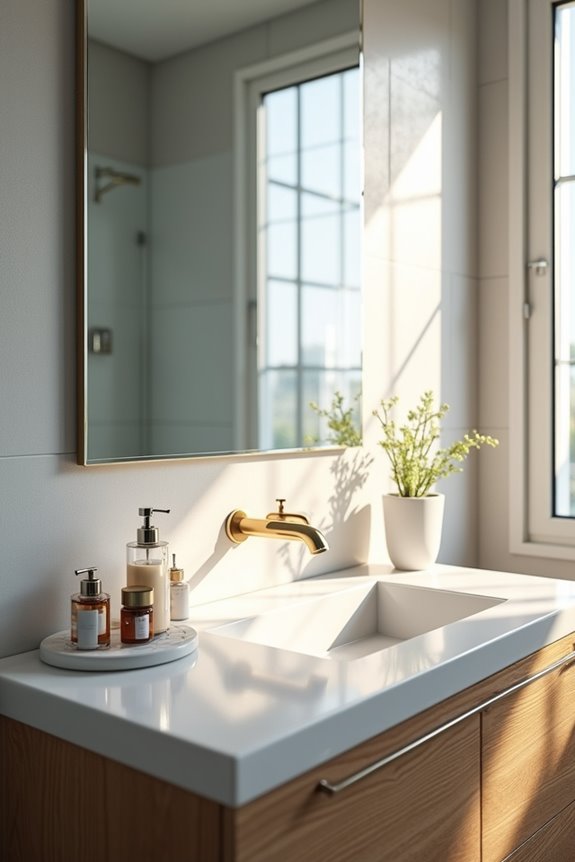
Once you’ve got your measurements locked in, it’s time to find where your plumbing actually lives—because no vanity size matters if the pipes aren’t where you need them to be. I learned this the hard way: I picked a vanity I liked, only to discover the rough-ins didn’t align with my plan.
Start by locating your existing supply lines and drains. Check under your current sink, trace where they run, and mark their positions. You’ll need clearance around traps and shutoffs—these need space for maintenance access and future upgrades.
If your plumbing’s centralized beneath the vanity, confirm there’s adequate space to reach everything comfortably. Moveable plumbing exists, sure, but rerouting supply lines and drains costs money and creates complications. Work with what you’ve got, and your vanity placement becomes simpler.
Determine How Much Storage You Actually Need
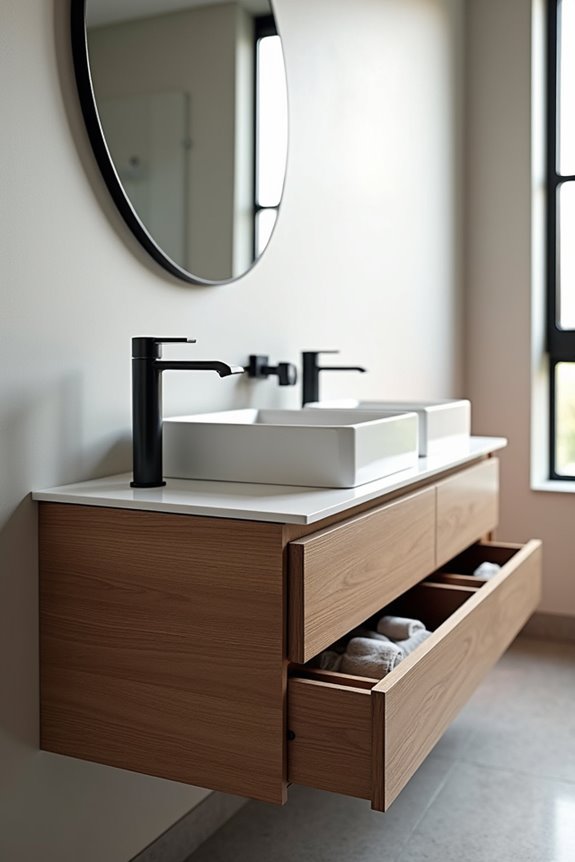
Since your plumbing’s locked in place, it’s time to get real about what you’re actually storing in that vanity—because a beautiful cabinet that can’t hold your stuff is just expensive clutter.
Take inventory of your daily routines. I’m talking about what actually lives in your bathroom:
- Skincare products, makeup, and personal grooming tools
- Hair styling equipment and supplies
- Cleaning supplies and medications
- Towels, toiletries, and backup inventory
Count your household users too. More people means more storage capacity needed. You’ll want enough drawers and cabinet space to keep everything organized and accessible, not scattered across countertops creating visual chaos. Plan for deeper cabinets if you’re storing bulky items like hair dryers or straighteners. The goal? A clutter-free vanity with accessible clearance where you can actually move around. That’s when storage becomes functional.
Select Vanity Materials That Withstand Moisture
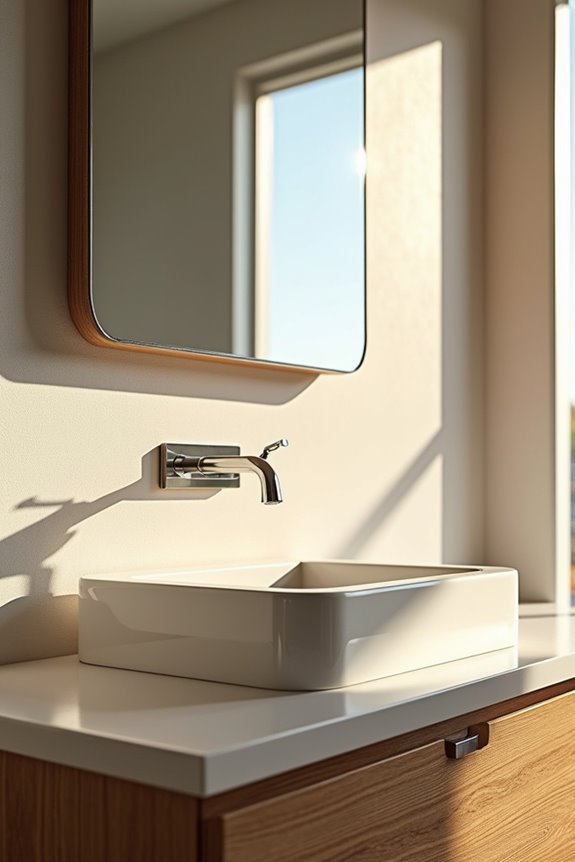
What’ll sink your bathroom vanity faster than anything else? Moisture. Choosing the right materials is essential for keeping your vanity looking great for years.
Engineered materials like melamine, high-pressure laminate, and MDF with moisture-resistant coatings work well here. They won’t warp or swell when humidity creeps in. If you’re set on sealed wood, commit to proper maintenance—it’s doable but demanding.
For countertops, solid surface options like quartz beat out porous materials such as marble every time. They resist water absorption and stay easier to clean. Your vanity’s hardware matters too; bathroom-rated finishes and moisture-resistant components prevent rust and deterioration.
Think of it this way: investing in moisture-resistant materials upfront saves you headaches and money later.
Pick the Right Countertop for Your Lifestyle
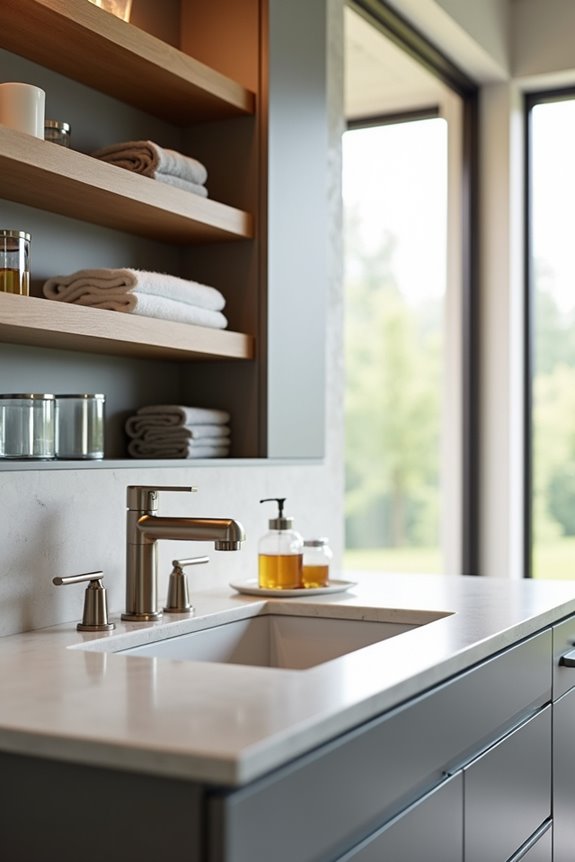
Your countertop choice makes or breaks your vanity’s functionality, so I’ll help you match materials to how you actually live—whether you’re rushing through morning routines with wet hands or you’ve got time for maintenance rituals. Some options like quartz handle splashes and spills without flinching, while marble requires sealing every few years, and that’s the kind of commitment you need to honestly assess before installing. Think about your style preferences too, because custom vanities open doors to nearly any material and finish, whereas prefab options narrow your choices but keep costs down.
Durability and Maintenance Needs
The countertop you choose will shape your bathroom routine for years to come, so it’s worth thinking through how much upkeep you’re actually willing to handle. Different materials demand different levels of care, and understanding this matters for your peace of mind.
- Quartz offers non-porous durability with minimal maintenance—you’ll wipe spills quickly without worrying about stains or sealing
- Natural stone like granite requires periodic sealing to maintain moisture resistance, demanding more hands-on commitment
- Solid surface options like Corian provide seamless, non-porous surfaces that resist moisture without sealing needs
- Porcelain slabs deliver exceptional heat resistance and durability, though installation requires skilled professionals for tight seals
Your lifestyle determines what works best. If you’re busy and prefer low-maintenance solutions, quartz or solid surfaces eliminate constant upkeep. Natural stone suits those who’ll commit to regular sealing schedules. Consider honestly—which approach fits who you actually are?
Material and Style Alignment
How do you want your bathroom to feel—sleek and modern, or warm and traditional? Your countertop materials and edge profile shape that answer. Quartz works beautifully with polished chrome hardware for contemporary spaces, while natural stone pairs well with brass finishes for traditional settings. Custom vanities let you explore wood-look options and unique edges—beveled or ogee profiles add classic charm, whereas flat edges convey modern sophistication. Prefab options offer affordability and quick delivery, though they limit customization. Your hardware finishes should coordinate across vanity, fixtures, and accessories for visual continuity. Consider durability too: granite needs periodic sealing, but quartz handles moisture well. This alignment between style and substance means your bathroom functions for daily life while matching your aesthetic preferences.
| Material | Best Style | Maintenance |
|---|---|---|
| Quartz | Modern | Low |
| Granite | Traditional | Sealing needed |
| Laminate | Budget-friendly | Basic |
| Solid surface | Contemporary | Minimal |
| Concrete | Custom | Moderate |
Align Vanity Style With Your Bathroom Design
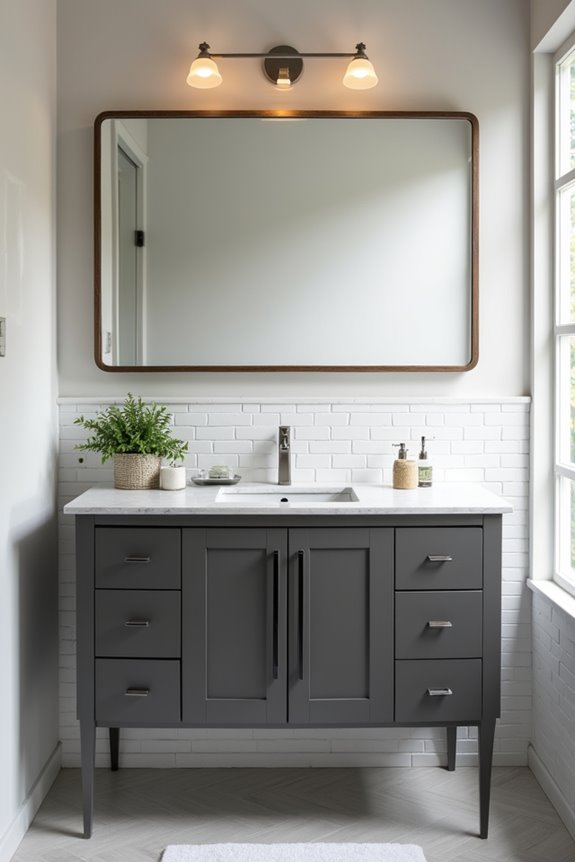
A vanity mismatched with your bathroom’s style can derail the entire design—alignment matters more than you might think.
Ever notice how a vanity that doesn’t match your bathroom’s vibe can throw off the entire space? That disconnect matters. That’s why aligning your vanity style with your bathroom design is important.
Here’s how to approach this:
- Choose your aesthetic: Traditional, modern, or transitional styles should echo your existing cabinetry and fixtures
- Coordinate finish and hardware: Match your vanity’s finishes with mirrors, faucets, and tile for consistency
- Consider storage layout: Think about your daily routine and how counter materials and sink configurations support it
- Decide custom versus prefab: Custom vanities offer broader options reflecting your design direction; prefab vanities install faster with limited choices
When you align these elements with intention, your bathroom becomes a space that works for how you live and looks the way you want it to—and that payoff is worth the effort.
Choose Hardware Finishes and Knobs That Match
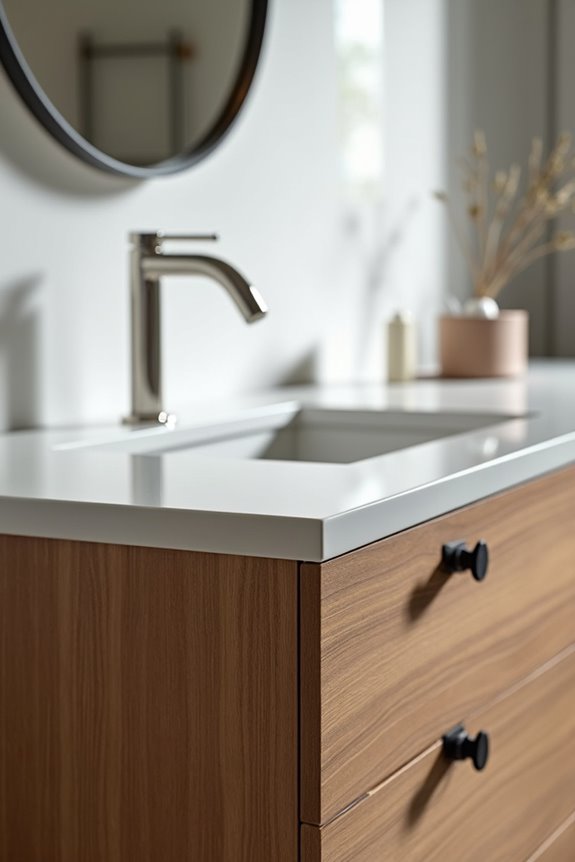
Once you’ve nailed down your vanity style, the hardware finishes and knobs you pick will significantly impact the overall look. You’ve got real options here: polished chrome and brushed nickel for that clean, reflective feel, matte black for contemporary edge, or brass and brushed brass for warmth, and each one needs to either match your other bathroom fixtures or intentionally contrast them depending on the vibe you’re going for. The knob or pull shape matters too—whether you choose basic round knobs, modern squares, or elongated pulls—because it should align with your vanity’s overall personality while holding up against all that bathroom moisture without corroding over time.
Hardware Finishes Available
Because bathroom vanities live in humid, moisture-rich environments, the hardware finish you choose matters more than you might think—it’s not just about looks, though that’s certainly important. You’re making a choice that affects durability, maintenance, and how your entire bathroom functions and appears.
Here’s what I recommend considering:
- Polished chrome and brushed nickel offer classic appeal and excellent moisture resistance
- Brass and brushed brass bring warmth and vintage charm to traditional spaces
- Black finishes create bold, modern contrast against lighter countertops
- Burnished bronze delivers sophisticated depth and hides water spots naturally
The hardware finish you select should coordinate with your faucet, mirror frame, and countertop edges. When these elements align, your vanity functions well and presents a unified design approach that makes your bathroom feel deliberately planned and complete.
Coordinating With Vanity Style
How do you pull together all those hardware choices—the knobs, pulls, and finishes—so your vanity looks deliberate rather than haphazard?
Match your cabinet hardware with other bathroom fixtures like faucets, mirrors, and lighting. When you choose matte black knobs, pair them with matte black faucets and lighting. This coordinating design ties everything together visually.
Consider whether you want classic or modern style. Round knobs feel softer and traditional, while elongated pulls read sleek and contemporary. Your hardware finish’s durability matters too—select moisture-resistant materials that withstand bathroom humidity and frequent cleaning.
Mixing finishes works well when intentional. Pairing brushed nickel cabinet hardware with chrome accents, or brass pulls against matte fixtures, adds personality. The key is ensuring these finishes coordinate throughout the space, making your bathroom feel designed rather than random.
Matching Overall Bathroom Decor
What makes a bathroom feel intentional rather than haphazard? Matching your vanity finishes with everything else in the room. When you coordinate your cabinet hardware with faucets and mirrors, you create a cohesive appearance that brings the space together.
Here’s how to approach hardware coordination:
- Choose vanity finishes—polished chrome, brushed nickel, or matte black—that match your faucet and mirror styles
- Consider your countertop materials; brass hardware complements warm stone, while chrome suits cool surfaces
- Select knob shapes that reflect your cabinet doors’ aesthetic, whether round, square, or elongated pulls
- Keep consistent spacing across drawers for a unified, polished appearance
This attention to bathroom decor details makes your vanity function as a design statement. These finishing details create a space that looks deliberately designed rather than random.
Position Your Mirror and Plan Lighting
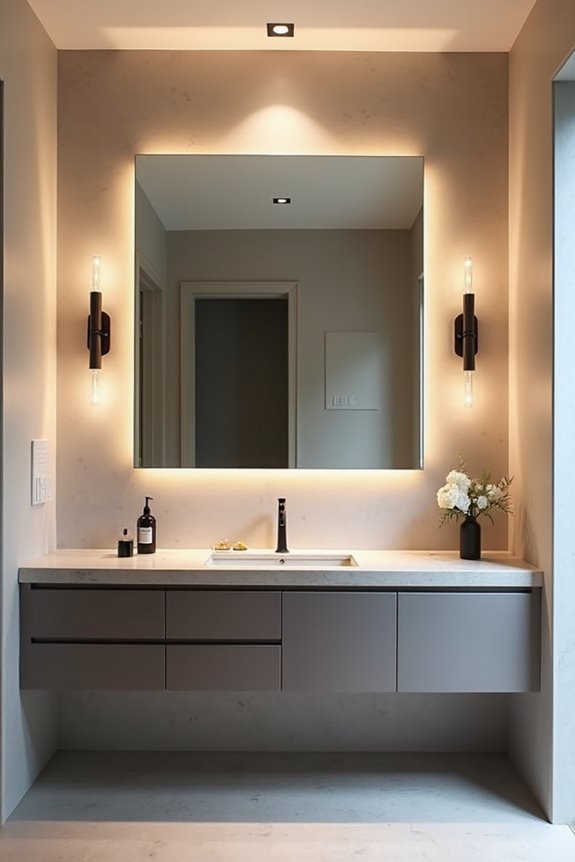
Once you’ve selected your vanity, the mirror and lighting setup will significantly affect your daily routine—poor placement means you’re either squinting in shadows or blinded by glare every time you need to shave or do your makeup. I position my mirror at eye level, centered above the vanity, aiming for 2–4 inches of framing on each side for balance. For vanity lighting, I install sconces flanking the mirror plus overhead fixtures to eliminate shadows. Layered lighting—ambient, task, and accent—supports everything you do. Don’t forget electrical outlets near your vanity with GFCI protection; they’re necessary for safety and convenience. Plan your mirror size carefully; it should match your vanity width, creating that polished, intentional appearance you’re working toward.
Understand Maintenance: What Does This Material Require?
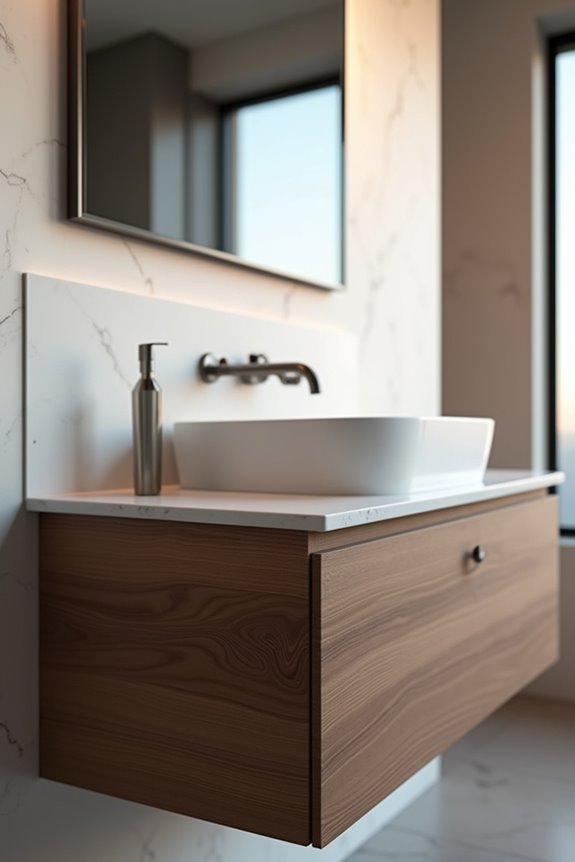
Your vanity’s material will absolutely determine how much work you’re putting in during those weekly cleanings, and honestly, this is where a lot of people get blindsided after installation. I’ve learned that different materials demand different care levels, and picking the wrong one can turn your bathroom routine into a frustrating chore.
- Marble countertops need periodic sealing to fight staining and moisture—more frequently in high-use bathrooms
- Quartz and solid-surface countertops stay non-porous, resisting stains and moisture with minimal sealing required
- Natural stones like granite require regular maintenance to prevent water invasion and etching damage
- Corrosion-resistant hardware and finishes protect against humid bathroom environments, keeping your vanity looking fresh
Understanding your bathroom vanity materials upfront means you’ll invest time wisely, not scrambling later. Choose what fits your lifestyle.